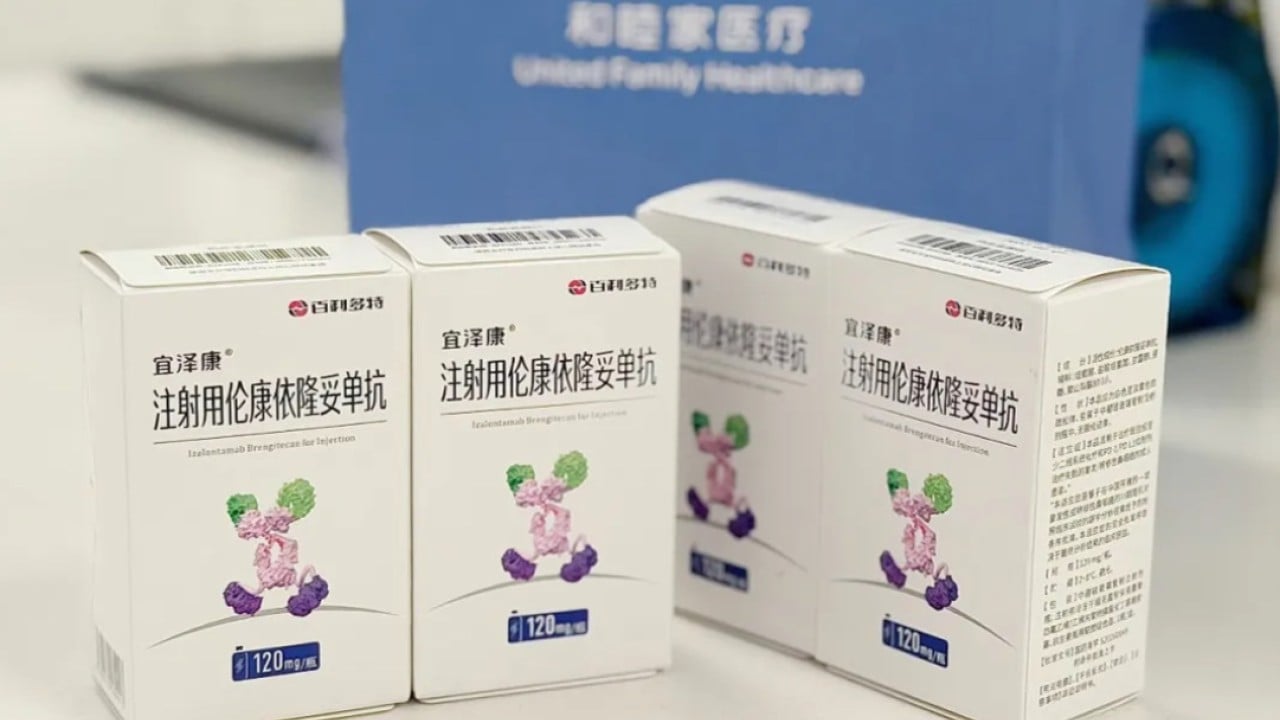
Everyone in biotech media is currently hyperventilating over a headline that reads like a press release written by an over-caffeinated investor relations intern.
Chinese drug iza-bren doubles lung cancer survival window in phase 3 trial.
Stop. Put down the celebratory champagne. Read the fine print.
When mainstream outlets run with "doubles survival window," they are banking on the public not knowing the difference between Progression-Free Survival (PFS) and Overall Survival (OS). They are betting you won't look at the comparator arm. They are hoping you don't notice the geographic bottleneck that has tripped up nearly every promising Chinese oncology asset trying to crack the Western regulatory wall over the last decade.
I have spent years watching billion-dollar licensing deals evaporate because executives fell in love with a shiny Phase 3 Kaplan-Meier curve out of Shanghai or Beijing, only to watch the FDA tear it to shreds over trial design. Iza-bren—known in clinical circles as BL-B01D1, the first-in-class EGFR x HER3 bispecific antibody-drug conjugate (ADC) developed by SystImmune and partnered with Bristol Myers Squibb in a massive $8.4 billion deal—is undoubtedly a fascinating piece of molecular engineering.
To call it an instant victory for lung cancer patients globally, however, is lazy journalism. It ignores the brutal realities of toxicity management, the shifting standard of care in the West, and the widening chasm between statistical significance and actual clinical utility.
The "Survival Window" Illusion
Let's dissect the exact wording that is currently making the rounds: "doubles lung cancer survival window."
In oncology, words matter. When a headline says "survival window" instead of "overall survival," your bullshit detector should immediately start screaming. Almost universally, that phrasing is a media-friendly euphemism for Progression-Free Survival (PFS).
PFS measures the time from randomization until the tumor grows by a specific percentage on a CT scan, or the patient dies. It does not prove patients live longer. It proves the tumor stayed quiet for a few extra months before roaring back—often with aggressive, treatment-resistant mutations.
To understand why this distinction is critical, we have to look at the history of ADCs in non-small cell lung cancer (NSCLC). Time and again, we have seen drugs crush their PFS endpoints, generate breathless headlines, and then fail to show a statistically significant improvement in Overall Survival (OS) when the data finally matures. Look at the regulatory turbulence surrounding datopotamab deruxtecan (Dato-DXd) from AstraZeneca and Daiichi Sankyo. Huge PFS hype. Massive expectations. Then came the OS reality check, forcing a strategic retreat to a narrower patient subset.
When you double a median PFS from, say, 4 months to 8 months in a heavily pretreated patient population, that is clinically meaningful for a patient who has run out of options. Nobody is denying that. But framing a PFS readout as "doubling survival" misleads desperate patients and their families into thinking we have found a cure, when what we have actually found is a temporary roadblock.
The Bispecific ADC Gamble
What makes iza-bren different? On paper, the mechanism is brilliant.
Traditional ADCs target one protein on the surface of a cancer cell, attach a toxic chemotherapy payload via a chemical linker, and deliver that poison directly inside the tumor. Think of it as a guided missile. Iza-bren is a bispecific ADC. It simultaneously targets two receptors commonly overexpressed in epithelial tumors: EGFR (epidermal growth factor receptor) and HER3 (human epidermal growth factor receptor 3).
Why target both? Because tumors are slippery. When you block EGFR—a classic target in lung cancer—the cancer cell often upregulates HER3 as an escape hatch to keep growing. By hitting both receptors at the exact same time, iza-bren theoretically slams the door on that primary resistance mechanism while delivering a potent topoisomerase I inhibitor payload (Ed-04).
Bristol Myers Squibb didn't drop $800 million upfront—with up to $8.4 billion on the table—because they were bored. They saw early Phase 1 data presented at ASCO showing impressive response rates in patients with EGFR-mutant NSCLC who had already failed third-generation tyrosine kinase inhibitors (TKIs) like osimertinib (Tagrisso) and platinum-based chemotherapy.
Here is the catch nobody wants to talk about in the victory-lap articles: hitting two targets doubles your toxicity surface area.
EGFR is not just on cancer cells. It is on your skin, your gut lining, and your hair follicles. HER3 is expressed across normal gastrointestinal and epithelial tissues. When you unleash a bispecific ADC carrying a topoisomerase payload into the human bloodstream, you aren't just bombing the tumor. You are causing collateral damage.
In early trials, iza-bren showed formidable rates of hematologic toxicity. We are talking high-grade neutropenia (dangerously low white blood cells), thrombocytopenia (low platelets), and anemia. Managing a patient on a drug that nukes their bone marrow requires intense clinical infrastructure, prophylactic growth factors, and aggressive dose reductions. In a pristine, tightly controlled Phase 3 trial run at top-tier academic hospitals, oncologists can nurse patients through those side effects. In a community clinic in rural Ohio or a mid-sized hospital in Europe? High discontinuation rates and treatment-related mortality become a very real threat.
The Comparator Arm Trap
If you want to know whether a Phase 3 trial is genuinely disruptive or just cleverly engineered to win, ignore the experimental arm for five minutes and look at the control arm. Who was iza-bren fighting against?
In most Chinese Phase 3 trials evaluating post-TKI, post-platinum lung cancer therapies, the control arm is standard single-agent chemotherapy—usually docetaxel.
Beating docetaxel is the lowest bar in modern thoracic oncology. Docetaxel was approved in the late 1990s. It is a brutal, archaic cytotoxic chemotherapy with a dismal response rate (often hovering around 10% to 15%) and a median PFS of roughly 3 to 4 months. Calling a next-generation bispecific ADC a triumph because it doubled the progression-free window against a 30-year-old chemotherapy drug is like bragging that a Ferrari beat a 1998 Honda Civic in a drag race. Of course it did. That was the whole point of building the Ferrari.
Furthermore, the treatment algorithm in the United States and Europe has already moved past the scenario tested in single-region Chinese trials.
In the West, patients with EGFR-mutant lung cancer are increasingly receiving combinations upfront—like osimertinib plus chemotherapy (the FLAURA2 regimen) or amivantamab plus lazertinib (the MARIPOSA regimen). By the time a Western patient reaches the third-line setting, their tumor biology—and their bone marrow reserve—looks radically different from a patient in a trial conducted exclusively in mainland China, where access to novel combinations and reimbursement structures dictate a completely different sequence of care.
The FDA's "China-Only" Allergies
Let's address the elephant in the room. Every biotech analyst knows it, yet mainstream health reporters routinely gloss over it: the FDA does not approve cancer drugs based solely on data generated in China.
Remember Innovent Biologics and Eli Lilly with sintilimab? In 2022, they walked into an FDA advisory committee meeting with glowing Phase 3 lung cancer data generated entirely in China. The FDA's Oncology Drugs Advisory Committee (ODAC) voted 14-to-1 against approval. They crushed it. Why? Because single-country data lacks ethnic diversity, often relies on outdated comparator arms that don't reflect US medical practice, and raises questions about trial conduct and regulatory oversight.
Bristol Myers Squibb knows this history intimately. That is why BMS isn't taking this Chinese Phase 3 readout straight to the FDA for a rubber stamp. They are running global, multi-regional Phase 3 trials (like IZABRIGHT-Lung01) that include patients in North America and Europe.
This means the headline claiming a breakthrough is describing a dataset that cannot—and will not—get the drug approved in the United States on its own. Western patients are still years away from seeing iza-bren outside of a clinical trial, assuming the global studies replicate the Chinese results without hitting a toxicity wall.
What Everyone Is Getting Wrong About the ADC Arms Race
If you step back from the individual headlines, a much bigger, uglier picture emerges in oncology drug development. We are currently trapped in an ADC gold rush that is prioritizing incremental gains over true biological breakthroughs.
Right now, there are dozens of companies developing anti-HER3 ADCs, anti-TROP2 ADCs, anti-MET ADCs, and bispecific combinations of all of the above. Look at Daiichi Sankyo and Merck's patritumab deruxtecan (HER3-DXd), which already posted strong Phase 2 data in EGFR-mutant lung cancer and filed for FDA approval, only to hit manufacturing and regulatory delays. Look at Summit Therapeutics and Akeso's ivonescimab (a PD-1 x VEGF bispecific antibody), which famously beat Keytruda in a Chinese Phase 3 trial, sending shockwaves through Wall Street—yet still faces the exact same hurdle of proving its worth in a global, multi-regional population before it changes Western clinical practice.
We are witnessing an explosion of Chinese biotech innovation. That part is undeniable. Companies like SystImmune (a subsidiary of Sichuan Biokin Pharmaceutical) are no longer making "me-too" knockoffs; they are engineering sophisticated bispecific molecules faster and cheaper than Western pharma giants.
The problem is not the science coming out of China. The problem is how we interpret the clinical data.
When a drug uses a topoisomerase I inhibitor payload—which almost all of these new ADCs do—you run into a massive, unaddressed clinical problem: cross-resistance.
If a patient gets Dato-DXd (topoisomerase payload) and progresses, will iza-bren (topoisomerase payload) work afterward? Probably not, or at least not nearly as well. Because the cancer cells have already figured out how to pump out that specific class of poison, switching the target on the outside of the cell from TROP2 to EGFR/HER3 doesn't solve the resistance mechanism inside the cell.
By flooding the clinic with ten different ADCs that all carry variations of the exact same chemotherapy warhead, pharma companies are fighting over market share rather than giving oncologists genuinely distinct weapons.
Answering the Real Questions Patients and Investors Should Ask
When news like this breaks, search engines light up with the same predictable questions. Most of them are built on flawed premises. Let's fix them.
1. "Is iza-bren a cure for lung cancer?"
No. Stop using that word for metastatic solid tumors. Advanced EGFR-mutant non-small cell lung cancer is a chronic, adaptive disease. Iza-bren buys time—potentially valuable, life-extending time—by delaying tumor progression. Eventually, the cancer finds a way around the drug.
2. "When will iza-bren be available in the US?"
Not because of this trial. This specific Phase 3 readout was conducted in China. For US availability, you have to watch the readout of BMS's global trials. Realistically, even if everything goes smoothly, we are looking at late 2027 or 2028 before a commercial launch in Western markets.
3. "Does this make targeted pills like Tagrisso obsolete?"
Not even close. Targeted oral therapies (TKIs) are vastly easier to tolerate than an intravenous bispecific ADC that causes severe bone marrow suppression. Iza-bren is being positioned for what happens after those pills stop working, or potentially as an aggressive combination partner—though combining a toxic TKI with a toxic bispecific ADC is a tightrope walk that makes most seasoned oncologists nervous.
The Uncomfortable Truth About My Skepticism
I have to be fair here. Being a contrarian doesn't mean ignoring when a molecule actually has teeth.
There is a very real chance that iza-bren's dual-targeting mechanism genuinely outperforms single-target ADCs like patritumab deruxtecan. Preclinical models show that binding both EGFR and HER3 simultaneously increases receptor internalization—meaning the cancer cell swallows the drug faster and dumps more of the toxic payload inside itself than it would with a standard monospecific antibody. If BMS can dial in the dosing schedule to keep patients out of the hospital for low white blood cell counts, iza-bren could easily become the undisputed king of the post-TKI lung cancer setting, generating billions in annual revenue and validating that massive $8.4 billion price tag.
History in oncology, however, favors the skeptics. We have seen too many "miracle" Phase 3 readouts from single-region trials shrink dramatically when exposed to the messy, heterogeneous reality of global patient populations.
How to Read the Next Biotech Headline Without Getting Played
If you are an investor, a clinician, or a patient trying to navigate the firehose of oncology news, throw away the press releases and apply three ruthless filters to every "breakthrough" headline you see:
- Demand the OS curve. If a company announces "positive Phase 3 results" and talks endlessly about PFS or response rates without mentioning Overall Survival, it means the survival data isn't mature yet—or worse, it missed. Wait for the deaths to be counted before declaring victory.
- Check the zip codes. Was the trial run globally, or in a single country? Single-region data is a hypothesis generator, not a global regulatory slam dunk.
- Look at the Grade 3/4 Adverse Events. Efficacy gets a drug approved; tolerability determines whether doctors actually prescribe it. If more than 50% of patients require dose reductions or interruptions to survive the treatment, the real-world efficacy will always fall short of the clinical trial numbers.
Iza-bren is a remarkable feat of protein engineering, and its Phase 3 performance in China proves that bispecific ADCs are a force to be reckoned with.
Until it proves it can extend actual human lifespans—not just delay CT scan progression—in a diverse, global patient population without destroying their bone marrow in the process, keep the champagne on ice.