Metal screams when it bends at speed. It is a sound you never forget, a violent, tearing shriek that vibrates straight through the soles of your shoes and settles permanently into the base of your skull.
I know that sound because I lived inside it for three seconds on a rainy Tuesday in November five years ago, watching headlights spin across wet asphalt while my own hands remained locked onto a steering wheel that no longer controlled anything. Nobody died that night. My airbags deployed, my nose broke, and a paramedic named Ray spent twenty minutes picking safety glass out of my hair while asking me what day of the week it was. I remember thinking about the absurdity of the flashing red lights reflecting off the puddles, how cinematic it looked from the outside, and how utterly hollow it felt from the inside.
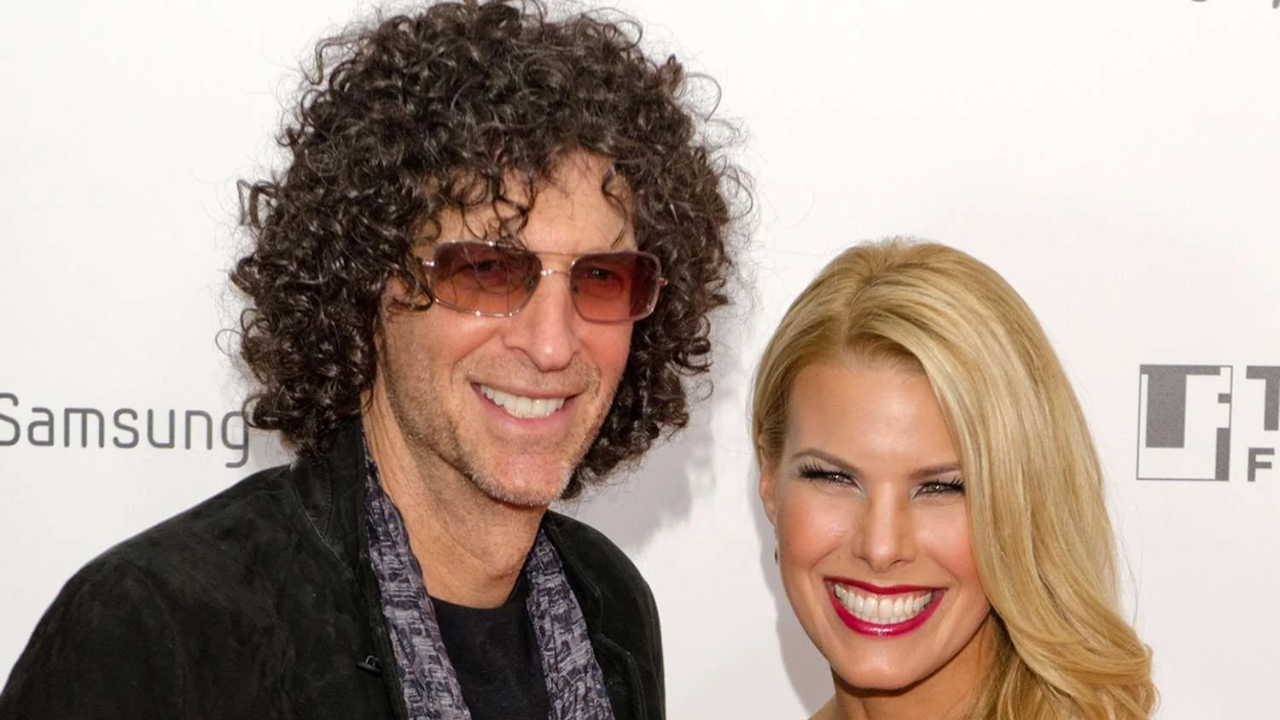
That is the exact sound I heard in my head when the police report surfaced regarding former Bachelor star and Dancing with the Stars champion Melissa Rycroft.
The headlines were written with the usual tabloid efficiency. They gave us the bullet points: a second arrest for driving while intoxicated, a collision in Texas, and the chilling detail that the vehicle she struck was an active ambulance. To the casual scroller thumbing through a morning feed over coffee, it is another piece of disposable celebrity rubbernecking. A fallen reality star. A mugshot. A brief, sharp intake of breath before moving on to the weather forecast.
We have trained ourselves to consume these stories like fast food. We swallow the outrage, digest the schadenfreude, and feel nothing at all.
Stop. Look closer at the geometry of that collision.
An ambulance is not just a large white truck with loud sirens. It is a rolling emergency room, a fragile bubble of urgency carrying someone whose worst day is already happening, staffed by people who have dedicated their lives to pulling strangers back from the brink. When an impaired driver slams into an ambulance, the irony is so heavy it threatens to crush the story beneath its own weight. The person tasked with saving lives suddenly needs saving. The safety net itself gets torn apart in the middle of the intersection.
The Architecture of a Second Mistake
To understand how a woman who spent years as America's televised sweetheart ends up behind the wheel in a repeat DWI incident, you have to strip away the cameras, the spray tans, and the rose ceremonies. You have to look at what happens when the music stops.
Reality television sells a very specific, intoxicating lie. It tells the audience—and, far more dangerously, the participants—that life is a series of curated arcs with neat, televised resolutions. You get your heart broken on national television, as Rycroft famously did during Jason Mesnick’s season of The Bachelor in 2009, and then you get redeemed on the ballroom floor, hoisting a mirrorball trophy while confetti rains down on your shoulders. Everything hurts for an episode or two, and then the lighting changes and you win.
Real life does not have producers. It does not cut to commercial when the anxiety gets too loud.
Think of the human brain under chronic stress as a house with faulty wiring. On the outside, the brick is immaculate, the lawn is manicured, and the porch light glows warmly for the neighbors. Inside the walls, however, the insulation has worn thin, and every time someone turns on too many appliances at once, sparks fly in the dark. You can paint the living room a dozen times, and you can smile for every family photo on the mantle, but the heat behind the drywall keeps building until something catches fire.
When someone faces a first arrest for driving under the influence, the public treats it as a moral failing, a moment of reckless arrogance that should be cured instantly by shame, fines, and a mugshot plastered across the internet. We assume that humiliation is an effective vaccine. If you get burned once, you never touch the stove again.
Anyone who has ever wrestled with alcohol, or watched someone they love slowly disappear behind a glass of wine at four in the afternoon, knows that shame is not a vaccine. Shame is an accelerant.
Consider a hypothetical woman—let’s call her Claire—who mirrors the thousands of high-functioning mothers and professionals quietly unraveling in suburban driveways across the country tonight. Claire does not wake up wanting to hurt anyone. She wakes up wanting the tight, suffocating band around her chest to loosen for just an hour. She makes the lunches, answers the emails, smiles at school pickup, and absorbs the relentless, unspoken demand to appear effortlessly intact. By evening, a drink isn't a party; it is an anesthetic. And the terrifying chemistry of that anesthetic is that the very organ you need to tell you do not get into that car is the first organ the substance puts to sleep.
According to the National Highway Traffic Safety Administration, roughly one-third of all drivers arrested or convicted of driving while intoxicated are repeat offenders. That statistic should stop us cold. It means that for millions of people, the handcuffs, the legal bills, the terror of the first arrest, and the crushing weight of public disgrace were still not enough to override the misfiring circuitry in their own heads.
What Happens Inside the Back of the Rig
While the internet debates celebrity accountability and dissects every pixel of a booking photo, there is another perspective that rarely makes the evening news.
Let’s step inside that ambulance seconds before impact.
In the back of a moving emergency vehicle, paramedics operate in a state of controlled chaos. There are no seatbelts when you are leaning over a stretcher trying to start an intravenous line on a bouncing chassis at forty-five miles an hour. Your entire world narrows to a pulse oximeter, a bag-valve mask, and the steady, practiced rhythm of your partner driving up front. You rely on one fundamental, unspoken contract with every other driver on the road: when the lights flash and the siren wails, the sea parts. People pull to the right. They stop. They give you the space you need to keep a stranger breathing.
When that contract breaks, physics takes over without mercy.
A standard Type III ambulance weighs somewhere between ten and fourteen thousand pounds. Even when struck by a standard passenger vehicle, the kinetic transfer violently whips the cab and the patient compartment sideways. Equipment mounted to the walls—oxygen tanks, cardiac monitors, heavy trauma bags—suddenly turns into airborne shrapnel. The medic standing over the patient is thrown against aluminum cabinetry. The driver in the front seat feels the steering wheel wrench violently out of their hands as the rear axle loses traction.
Nobody clocks into a twelve-hour shift on an ambulance expecting to become a trauma patient themselves. Yet data from the Centers for Disease Control and Prevention consistently shows that emergency medical services workers suffer nonfatal injury rates significantly higher than the national average for all private-sector workers, with motor vehicle crashes remaining one of the leading causes of line-of-duty fatalities.
This is the invisible stake that disappears when a story gets filed under celebrity gossip. Every time an impaired driver turns a key in the ignition, they are not merely gambling with their own reputation, their career, or their mugshot. They are unilaterally rewriting the odds for every nurse driving home from a double shift, every teenager walking a dog at dusk, and every paramedic kneeling on the floor of a speeding rig trying to keep someone’s grandfather alive.
The Lie of High-Functioning Control
Why do people do it a second time?
People ask that question constantly, usually with a mixture of genuine bewilderment and righteous anger. How can someone with resources, family, money for a rideshare, and a painful history of already having been caught make the exact same choice again?
The answer is uncomfortable because it refuses to let the rest of us feel safely superior.
We like to believe that reckless behavior belongs exclusively to villains—to people who are fundamentally different from us, wired without empathy or common sense. It is deeply unsettling to confront the reality that an impaired driver is often someone who loves their children fiercely, donates to charity, remembers birthdays, and would weep uncontrollably at the mere thought of harming another human being.
Alcohol use disorder and situational substance abuse do not announce themselves with a villain's monologue. They operate through quiet, incremental erosion. You drive home after two drinks once, and nothing happens. You make it safely into your garage, close the door, and your brain quietly files that experience under safe. Six months later, during a week when your marriage is straining or your career feels like it is slipping through your fingers, two drinks become four. Because you are upright, coherent, and capable of holding a conversation, you mistake your tolerance for sobriety.
Tolerance is a biological trick. Your liver adapts, your posture stays straight, and your voice stops slurring, creating the illusion that you are entirely in command. Meanwhile, your peripheral vision has narrowed into a tunnel, your depth perception has quietly dissolved, and your reaction time has slowed by critical fractions of a second—fractions that translate into forty or fifty feet of extra stopping distance at highway speeds.
You do not feel drunk. You feel normal. You feel like yourself, just slightly quieter inside. And that illusion is precisely what hands you the keys.
Beyond the Spectacle of Public Shame
Watch how the cultural machinery responds whenever a recognizable name lands in a police blotter.
Within minutes, comment sections turn into digital coliseums. People demand maximum prison sentences. They mock the person's appearance. They dig up old interviews about motherhood, faith, or personal growth and hold them up like evidence in a fraud trial, gleefully pointing out the hypocrisy between the curated public persona and the messy, destructive private reality.
I understand the anger. If you have ever buried someone killed by a drunk driver—if you have ever stood beside an empty chair at Thanksgiving because someone couldn't be bothered to call a cab—fury is not an overreaction. Fury is grief with nowhere else to go.
Yet if our actual goal is fewer shattered windshields and fewer ambulances knocked off their axles, public humiliation is a broken tool.
Look at the history of how we have treated impaired driving over the last forty years. In the 1970s, drunk driving was frequently treated with a wink and a slap on the wrist; police officers would sometimes follow an erratic driver home just to make sure they made it into their driveway. Then came the necessary, hard-fought awakening led by grieving mothers who refused to let these deaths be dismissed as mere "accidents." Laws tightened. Blood alcohol limits dropped. Mandatory minimums, ignition interlock devices, and public awareness campaigns slashed alcohol-related traffic fatalities dramatically over the following decades.
We built a legal system designed to punish the crime. What we still have not built—culturally or medically—is an honest conversation about the mental and emotional collapse that happens before the car ever leaves the driveway.
When we turn a repeat DWI arrest into pure entertainment, we reinforce the exact stigma that keeps people from raising their hands while they are still sitting on the couch. A woman struggling with alcohol in a culture that demands glossy perfection looks at the pillory waiting for her if she admits she is losing control, and she chooses secrecy instead. Secrecy isolates her. Isolation deepens the anxiety. And the anxiety sends her straight back to the bottle.
It is a closed loop, and every snarky headline tightens the circle.
The Heavy Silence After the Sirens Fade
I still think about Ray, the paramedic who pulled glass out of my hair on that wet November night.
Before he closed the back doors of the ambulance, he looked at the crumpled remains of my front bumper and shook his head—not with anger, just with a profound, bone-deep exhaustion. He told me that the hardest part of his job wasn't the blood or the broken bones. It was the sheer predictability of it all. Night after night, shift after shift, watching ordinary people collide with preventable disasters because nobody stopped the chain reaction three hours earlier.
There is no neat television ending here. There is no rose ceremony, no swelling orchestral score, no triumphant slow-motion walk off a dance floor. In the real world, a collision leaves behind bent steel, traumatized first responders, a family sitting in stunned silence around a kitchen table, and a long, grueling reckoning in a fluorescent-lit courtroom.
Tomorrow morning, the news cycle will move on to another scandal, another mugshot, another brief flare of collective outrage. The headlines will fade, the thumbnails will be replaced, and the feeds will refresh.
Out on the highway, though, the asphalt is still wet, the sirens are still wailing, and thousands of people are reaching for their keys right now, convinced they are completely fine to drive.