The coffee in the District V bistro is bitter, but the man holding the porcelain cup doesn't seem to notice. He is staring at a television screen bolted to the far wall, where the face of Viktor Orbán—the man who has defined the gravity of Hungarian life for nearly two decades—is being dissected by news anchors. For years, the air in Budapest has felt heavy, like the static before a summer storm that never quite breaks. People spoke in whispers about "the system," a sprawling architecture of patronage and media control that felt as permanent as the Parliament building’s Gothic spires.
Then came Péter Magyar.
He didn't arrive as a revolutionary from the fringes. He walked out from the very heart of the machine. He was an insider, a man who knew where the levers were hidden and how much they creaked. When he launched the Tisza party, named after the river that winds through the Hungarian heartland, many dismissed it as a momentary flicker. They were wrong.
Recent polling data has turned that flicker into a wildfire. For the first time in fourteen years, the invincible Fidesz party isn't just looking over its shoulder; it is watching a competitor pull ahead. The latest numbers from pollsters like Median and 21 Research Center show Tisza widening a lead that once seemed mathematically impossible. In a country where the state-controlled media usually acts as a velvet curtain, the curtain is being shredded.
The Anatomy of a Breaking Point
To understand why a nation suddenly shifts its weight, you have to look past the spreadsheets. You have to look at the grocery receipt.
Imagine a grandmother in Debrecen. Let’s call her Ilona. For years, Ilona voted for Orbán because he promised stability. He promised to protect the "Hungarian way of life" from outside influences, from Brussels, and from the shifting tides of globalism. But stability is an empty word when your pension stays flat while the price of bread and milk climbs toward the ceiling. Hungary has weathered some of the highest inflation rates in the European Union.
When the cost of existence outpaces the narrative of national pride, the narrative begins to fail.
The stakes aren't just about who sits in the prime minister’s office. They are about the invisible infrastructure of a society. When a single party controls the courts, the schools, and the nightly news, the "stakes" are the very definition of truth. For a long time, the opposition in Hungary was a fragmented collection of voices that couldn't agree on a lunch menu, let alone a platform. They were the perfect foil for Orbán—easy to paint as disorganized or beholden to foreign interests.
Magyar changed the physics of the room. By speaking the language of the disillusioned conservative, he gave people like Ilona permission to change their minds without feeling like they were betraying their country. He didn't come from the "liberal elite" that Fidesz spent years demonizing. He came from the office down the hall.
The Trump Factor and the Global Mirror
The tremors in Budapest are being felt in Washington, particularly in the corridors of Mar-a-Lago. It is no secret that Viktor Orbán has become a North Star for a specific brand of American conservatism. Donald Trump has frequently praised Orbán as a "strongman," a leader who knows how to handle his borders and his critics with equal firmness.
For the Trump campaign, Orbán’s Hungary was the proof of concept. It was the living laboratory for "illiberal democracy," a place where traditional values and hardline nationalism could be leveraged to create a seemingly permanent grip on power. If the laboratory explodes, the experiment looks a lot less appealing to the rest of the world.
But politics is rarely a clean mirror. While Orbán looks to Trump for international validation, Magyar is looking at the Hungarian youth. On the streets of Budapest, you see them: twenty-somethings who have never known a leader other than Orbán. They aren't interested in the Cold War grievances or the grand historical traumas that Fidesz frequently invokes. They want a passport that works, a salary that allows them to move out of their parents' apartments, and a government that doesn't feel like a suffocating blanket.
The Momentum of the Crowd
There is a specific sound to a political shift. It isn't found in the speeches; it’s found in the footsteps.
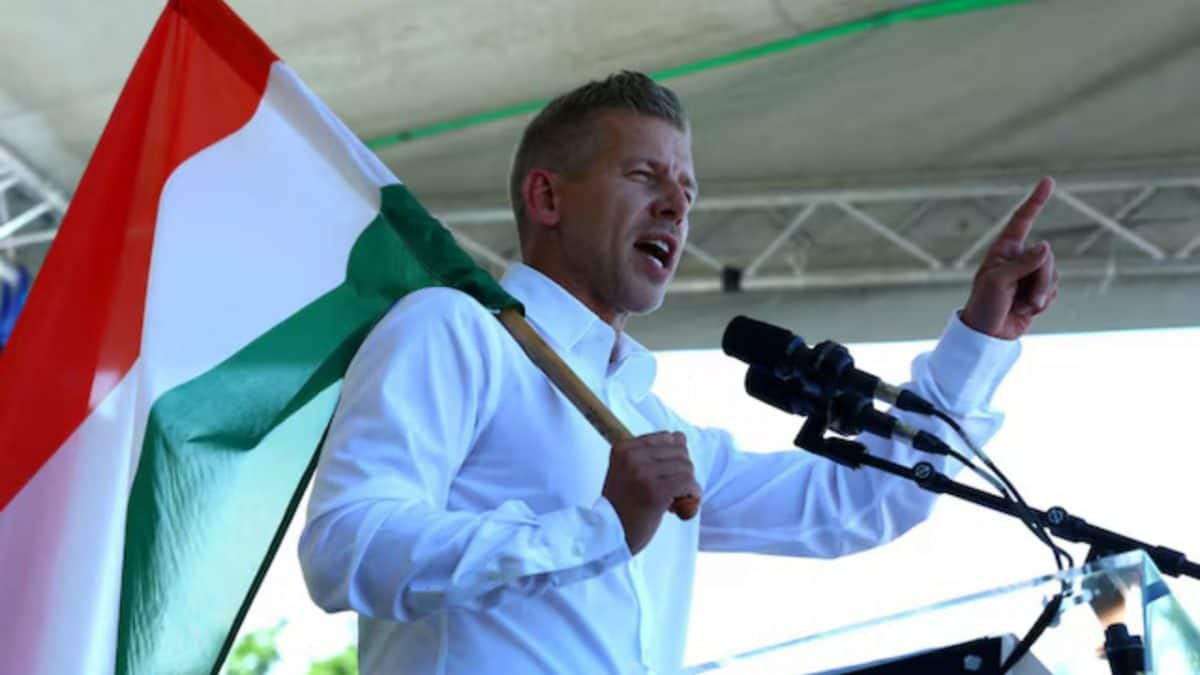
In the spring and summer of 2024, the Tisza party rallies didn't just fill squares; they flooded them. These weren't just the usual activists. These were families. These were police officers off-duty. These were the "silent majority" that the government had claimed for so long.
When Magyar stands on a stage, he doesn't use the polished, booming rhetoric of a career politician. He sounds like a man who is tired of the same old stories. He talks about corruption not as an abstract moral failing, but as a theft of the future. He points to the crumbling hospitals and the teachers leaving the profession, and he asks a simple question: Where did the money go?
The government’s response has been a blitz of "negative campaigning." They have labeled Magyar a traitor, a puppet, and a danger to the nation. In the past, this playbook worked with surgical precision. But there is a law of diminishing returns with fear. If you tell a person the wolf is at the door every day for a decade, eventually, they stop locking the door and go outside to see for themselves.
The Invisible Stakes
We often talk about elections as if they are sporting events, with winners and losers and a final score. But in Hungary, the shift represents something deeper: a test of whether a deeply entrenched system can be moved by the sheer will of public opinion.
If Tisza continues to lead, it challenges the idea that "captured" democracies are a one-way street. It suggests that there is a point where the human desire for transparency and a fair shake outweighs the comfort of a familiar strongman.
The man in the bistro finishes his coffee. He puts a few coins on the table—more coins than he would have needed two years ago for the same cup. He looks at the screen one last time. There is no cheering, no outward sign of rebellion. But as he walks out into the bright light of the Danube embankment, he isn't looking at the statues of the past. He is looking at the people walking toward him, each one carrying the quiet, heavy weight of a choice they finally feel empowered to make.
The concrete isn't just cracking. The ground underneath is moving.