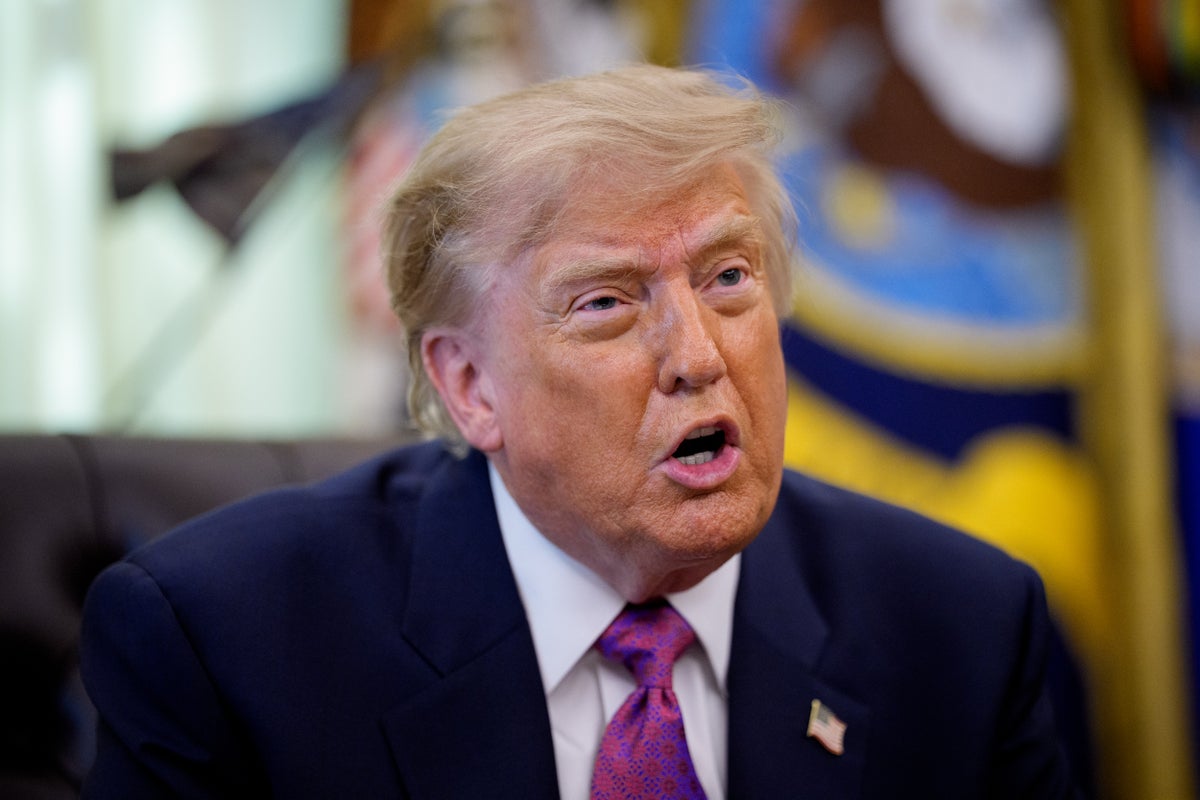
Every single digital column inches away from actual analysis wastes your time with the same predictable reflex. Donald Trump spends a Sunday morning hitting golf balls, boards his plane, opens Truth Social, and lets loose about a Kennedy Center judge or municipal vandalism. The media complex immediately shifts into its default outrage gear. Pundits furrow their brows on cable news, opinion writers draft melodramatic warnings about the erosion of institutional norms, and your social media feed fills with earnest hand-wringing about presidential decorum.
Everybody misses the entire point because everybody wants to miss the entire point.
The lazy consensus treats these digital outbursts as anomalies, emotional lapses, or accidental slip-ups by a undisciplined candidate. That framing is profoundly wrong. It fundamentally misunderstands how modern political attention architecture works. These posts are not a distraction from his strategy; they are the strategy. And the establishment's insistence on treating them as a bug rather than a core feature tells you everything you need to know about why mainstream political commentary remains completely blind to how power actually operates today.
The Attention Monopoly and the Cost of Outrage
Let us look at the mechanics of what happens every time a major political figure drops a grievance-laden post onto a proprietary social network. The traditional media machine acts as a massive, automated amplifier. Outlets that claim to oppose him dedicate entire homepage slots, breaking news alerts, and panel discussions to breaking down every capitalized adjective.
This creates a closed-loop economic system. Traditional media companies need clicks, views, and ad impressions to survive a secular revenue decline. Trump needs uninterrupted dominance of the news cycle to starve competitors of oxygen. By taking the bait every single time, editorial boards across the country functionally act as his outsourced super PAC, buying him millions of dollars in free earned media while convincing themselves they are holding him accountable.
I have watched corporate communications teams and political campaigns blow millions of dollars trying to engineer viral moments, spending months in strategy sessions trying to manufacture authenticity. Meanwhile, a raw, unvarnished post about local judges or public art gets more raw distribution in four minutes than a quarter-million-dollar PR campaign generates in a month.
The common narrative assumes that public figures should project serene, detached institutional stability. That playbook worked in 1995. In an environment saturated with endless content, quiet dignity is just a synonym for invisibility. By breaking every unwritten rule of elite decorum, the former president ensures that no other topic can breathe. When a headline focuses on his social media vocabulary, it guarantees that policy debates, legislative maneuverings, and rival candidate announcements are entirely erased from the public consciousness.
The Myth of the Neutral Referee
Beneath the pearl-clutching over social media tirades lies a deeper, more dangerous delusion: the belief that there is such a thing as a neutral civic arena where everyone plays by the same gentlemanly rules.
When headlines scream about attacks on judicial figures or cultural institutions, they rely on the public imagining a pristine courtroom or a timeless monument operating outside the messy currents of partisan politics. But culture and law are not detached from politics; they are the primary terrain where politics is fought. Pretending that a local arts institution or a municipal court appointment is a sacred, untouchable cow is a tactical move designed to immunize those systems from critique.
When an outsider figure labels institutional actors as vandals or partisans, they are performing a very specific political function. They are stripping away the mystique of neutrality. Whether you agree with the specific target or not, the underlying diagnostic is accurate: modern cultural and legal institutions are deeply politicized. The establishment's outrage is rarely about the defense of truth; it is about defending the monopoly these institutions hold on defining what counts as legitimate authority.
Consider the obsession with presidential tone. For decades, political scientists and polite society have treated tone as a proxy for competence. If you speak in measured cadences, use the right acronyms, and respect the institutional vocabulary, you are deemed serious. If you write in ALL CAPS, use blunt vernacular, and air your grievances directly to the public, you are deemed unfit.
This is an arbitrary class filter masquerading as an objective standard of governance. It rewards polished technocrats who can quietly manage the status quo while executing policies that voters frequently detest, and it punishes anyone who threatens the monopoly on narrative control.
The Uncomfortable Truth About Direct Access
We have to admit the undeniable downside of this communication model: it degrades public discourse into a permanent, low-grade brawl. It replaces complex policy debates with tribal signaling. When every issue is compressed into a three-hundred-character grievance, nuance dies, complexity is punished, and compromise becomes politically lethal for everyone involved.
Yet pretending that we can simply shame our way back to the era of fireside chats and stately press briefings is pure fantasy. The gatekeepers are gone. The editorial boards that used to decide what the public was allowed to think about have been bypassed by technology.
Trump did not invent this reality; he merely weaponized it faster and more ruthlessly than anyone else in American politics. While establishment politicians were still holding private fundraisers and releasing focus-grouped press statements written by risk-averse consultants, he was building a direct, unmediated emotional pipeline to tens of millions of voters.
Every time a commentator writes a deeply serious, thousand-word essay dissecting why a weekend golf club post violates the unwritten norms of the republic, they are whistling past the graveyard of their own irrelevance. They are analyzing the smoke while refusing to look at the furnace.
Stop treating these digital broadsides as erratic outbursts. Stop acting like the outrage cycle is something inflicted upon the public rather than something eagerly manufactured by both the sender and the receivers for mutual benefit.
The next time a social media post dominates the news cycle, ask yourself a different question. Who benefits from you looking at the screen right now, and what are they hoping you won't notice while you're busy being offended?