The tarmac at Sunan International Airport does not breathe. It is a vast, grey expanse of concrete, scrubbed of every stray pebble, waiting for the heavy wheels of an Ilyushin Il-96. When the Russian Federation's official aircraft finally descends through the humid mist of Pyongyang, it isn't just a plane landing. It is a bridge being built in real-time over a chasm of global isolation.
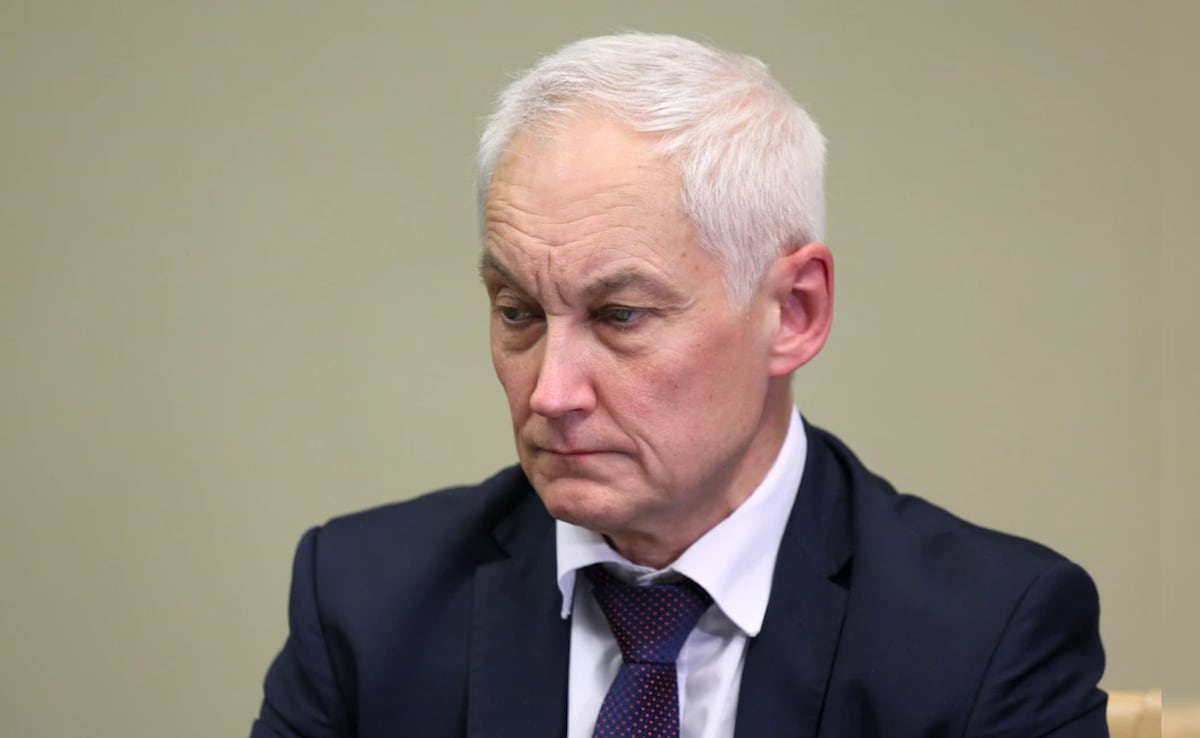
Stepping off that plane is the Russian Defence Minister, Andrey Belousov. He is not a career general with a chest full of Soviet-era brass. He is an economist by trade, a man of spreadsheets and logistics, sent to meet a regime that has turned the survival of the state into a religion. This meeting is not about the grand ceremonies or the synchronized goose-stepping that usually defines North Korean optics. It is about the brutal, silent math of a long-term war of attrition.
The Weight of the Crate
To understand why this trip matters, you have to look past the official handshakes and focus on the wooden crates moving across the border at Tumangang. For decades, the world treated North Korea as a hermit kingdom, a strange anomaly frozen in 1953. But war has a way of turning yesterday’s relics into today’s essentials.
Russia, a superpower with a military-industrial complex that once vied for global dominance, now finds itself in a grinding conflict in Ukraine where the primary currency is the 152mm artillery shell. Modern warfare, despite the talk of drones and satellite uplinks, remains a gluttonous beast that eats steel and gunpowder. When your own factories are running three shifts a day and still falling short, you look to the one place on earth that never stopped preparing for a massive, conventional ground war.
Pyongyang is that place. It is a fortress-nation sitting on stockpiles of ammunition that match Russian specifications perfectly. The "human element" here is found in the factory workers in the hills of northern Chogang province, living on meager rations, producing shells that will eventually be fired over a sunflower field in the Donbas. Their labor is now a vital organ in the Russian war effort. In return, the Kremlin offers the one thing the Kim regime craves more than anything: legitimacy and the technical blueprints to make their missiles reach further and hit harder.
A Dance of Two Pariahs
There is a specific kind of tension in the air when two men who are both under heavy international sanctions sit down to talk. It is a bond born of necessity, a "marriage of convenience" that has matured into a strategic partnership. Belousov’s arrival follows a trail blazed by Vladimir Putin himself just months prior, signaling that this isn't a one-off transaction. It is a structural shift in the geopolitics of the East.
Consider the perspective of a North Korean citizen seeing the Russian flag flying alongside their own. For years, the narrative was about self-reliance, the Juche ideology. Now, the story has shifted. They are told they are the arsenal of a great power. This psychological shift is mirrored in Moscow, where the elite have abandoned their long-standing desire to be accepted by the West. They have embraced a new reality where their closest allies are those who have already learned to live behind a wall.
The talks in Pyongyang cover more than just ammunition. They involve "mutual defense," a phrase that sends a chill through Seoul and Tokyo. If Russia provides North Korea with advanced satellite technology or nuclear submarine designs, the balance of power in the Pacific doesn't just tip—it shatters.
The Invisible Stakes
We often talk about these diplomatic visits in terms of "strategic interests" or "geopolitical ripples." Those are bloodless words. The reality is much more visceral.
The stake for the Russian soldier in a trench near Pokrovsk is whether or not the next crate of shells to arrive actually fires, or if it’s a "dud" from a 1970s North Korean stockpile. The stake for the North Korean mother is whether the "humanitarian aid" promised by Russia—tons of grain and fuel—actually reaches her provincial town to stave off another winter of hunger. These are the quiet, desperate trades being made behind the heavy curtains of the Kumsusan Guest House.
There is also the matter of the "volunteers." Rumors of North Korean engineering troops or laborers being sent to the front lines have moved from the fringe of intelligence reports to the center of high-level briefings. While neither side will admit to it in a press release, the presence of North Korean boots on European soil would be a historical pivot point. It would be the first time since the Korean War that these two nations have shared a battlefield so intimately.
The Echo in the Hallway
The cameras capture the smiles. They capture the honor guards and the perfectly timed bows. But they don't capture the silence that follows. After the Russian delegation leaves, the North Korean leadership is left with a new reality. They are no longer just a thorn in the side of the United States; they are a central player in a global realignment.
The West watches these images and sees a "desperation" in Moscow. They see a "rogue state" selling its soul. But that interpretation might be too simple. What we are seeing is the birth of a secondary global economy, one that operates entirely outside the reach of the dollar and the SWIFT banking system. It is a dark mirror of the globalized world we thought we knew.
As the sun sets over the Taedong River, the lights in the government buildings stay on. Belousov and his counterparts are not debating philosophy. They are looking at maps of rail lines. They are calculating the tonnage of freight. They are figuring out how to keep a war running when the rest of the world wants it to stop.
The plane will eventually take off, banking hard to the north to avoid sensitive airspace, carrying commitments that will be felt in the heat of explosions thousands of miles away. The handshake in Pyongyang is not a sign of peace. It is the sound of the world’s gears grinding into a new, more dangerous position.
Somewhere in the deep silence of the North Korean countryside, a train whistle blows, and a long line of dark green wagons begins to roll toward the Russian border.