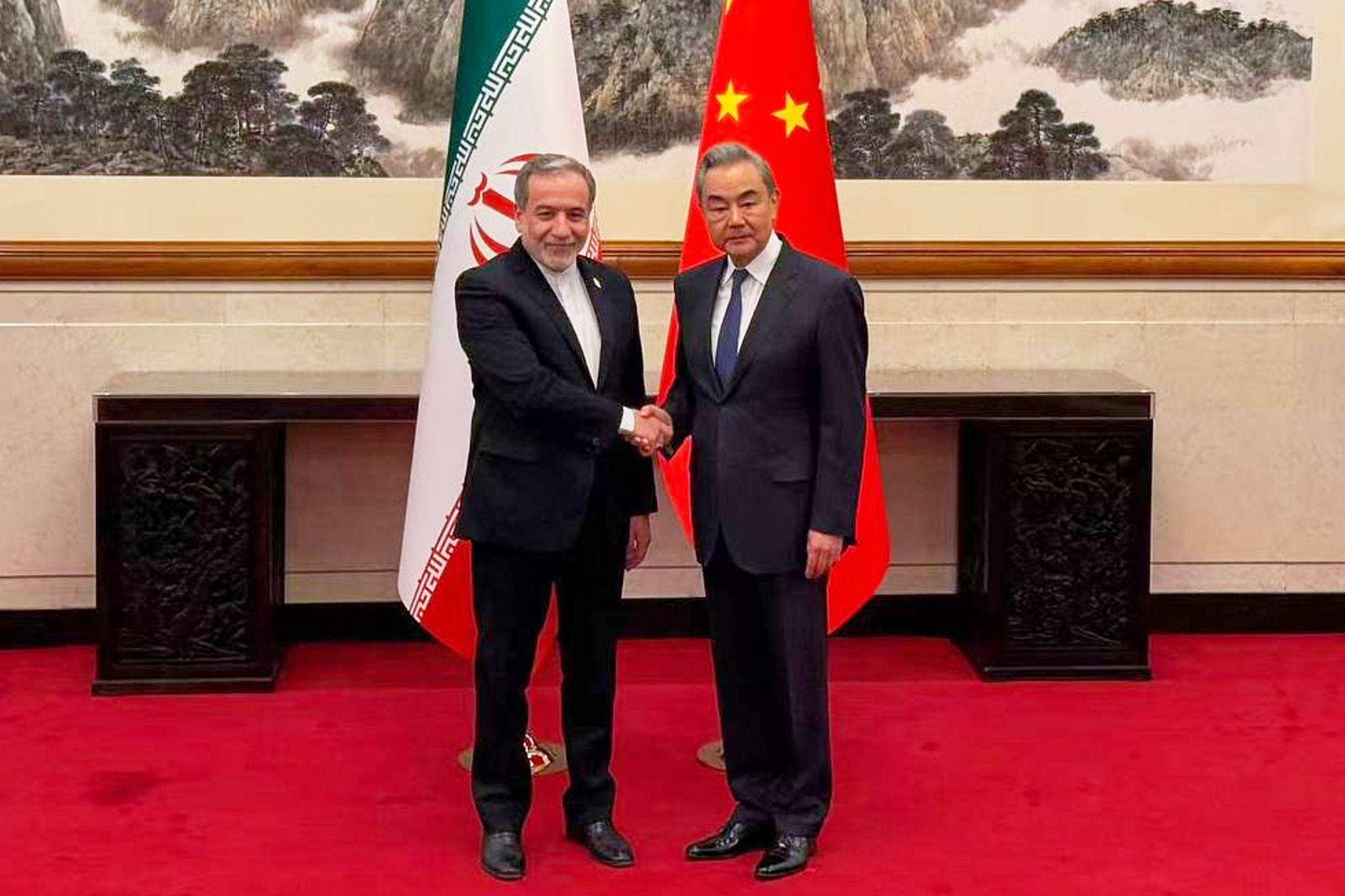
The headlines are bleeding with "peace" and "ceasefire." Beijing is currently playing the part of the concerned adult in the room, wagging a finger at Washington and Tehran while the drone strikes continue to light up the Persian Gulf. They want you to believe they are the global stabilizer, the only power capable of cooling a region that has been on fire for decades.
It is a lie. A calculated, profitable, geopolitical masterpiece of a lie.
The "comprehensive ceasefire" China is currently demanding is not an olive branch. It is a tactical pause designed to cement a new status quo where the United States bleeds its remaining treasury into the sand while China buys every drop of discounted oil the Iranians can pump. If you think Beijing actually wants this conflict to end today, you are fundamentally misreading the board.
The Myth of the Neutral Arbiter
Western analysts love to talk about "regional stability" as if it is a universal good. In the boardroom of a multinational based in Beijing, stability is a secondary metric. Influence is the primary.
For years, the U.S. has acted as the unpaid security guard of the Middle East. We spent trillions of dollars and thousands of lives to ensure that global energy markets remained predictable. China was the primary beneficiary of that security, hitching a free ride on the back of the American carrier groups.
Now, the math has changed. By "calling for peace" while doing absolutely nothing to enforce it, China achieves three specific goals:
- Reputational Arbitrage: They position themselves as the diplomat while painting the U.S. as the warmonger. This plays exceptionally well in the Global South.
- Resource Dominance: While the U.S. sanctions Iranian oil, China buys it at a massive "conflict discount." War makes Iranian crude cheap, and Beijing is the only buyer with the stomach to ignore the Treasury Department.
- Military Distraction: Every Tomahawk missile fired toward an IRGC facility is a missile that isn't being stockpiled in the Pacific.
I’ve spent twenty years watching how state-backed energy giants operate. They don't fear volatility; they price it. While the mainstream media frets over the "humanitarian cost," the Chinese Ministry of Commerce is looking at a ledger where the cost of doing business has never been lower because the U.S. is footing the bill for the chaos.
The Ceasefire Trap
What does a "comprehensive ceasefire" actually look like in the current context? It looks like a win for Tehran and a massive strategic retreat for the West.
When China calls for an immediate halt to hostilities, they are asking for the U.S. to freeze its leverage. If the war stops now, without a dismantling of the proxy networks that started it, Iran remains the dominant regional power, backed by Chinese capital and Russian tech.
Beijing knows the U.S. cannot accept these terms. That is the point. By proposing "peace" that is effectively a surrender, China ensures the war continues while they maintain the moral high ground in the eyes of the UN. It is a win-win. If the U.S. agrees, China wins the region. If the U.S. refuses, China wins the PR war.
Energy Is The Only Metric That Matters
Let’s look at the numbers the "peace" activists ignore. China is the world's largest importer of crude oil. Over 50% of that comes through the Strait of Hormuz. You would think they’d be terrified of a war that could shut that waterway down.
Except it won't shut down. Not for China.
The Iranians know who pays their bills. They aren't going to sink a Chinese supertanker. They are going to sink the ships of countries that respect U.S. sanctions. In a prolonged conflict, Chinese shipping becomes the only safe bet in the Gulf. This isn't just about oil; it’s about the total capture of the maritime insurance and logistics market in the Middle East.
If you are a shipping firm in Singapore or Dubai right now, who do you trust to get your cargo through? The Americans, who are a target, or the Chinese, who are the "mediators"?
Why The U.S. Is Playing Into The Trap
The American mistake is believing that this is still a war about ideology or even counter-terrorism. It isn't. It is a war of attrition.
The U.S. military is designed for high-intensity, short-duration kinetic dominance. We are terrible at "dragging on." Our political system isn't built for it. Our debt ceiling isn't built for it.
China, conversely, operates on a century-long timeline. They are perfectly happy to let this war simmer at a 3 or 4 out of 10 for the next decade. A low-level war keeps oil prices high enough to hurt Western consumers but low enough (for them) to fuel their industrial machine. It keeps the U.S. Navy pinned down in a region that should be a footnote in our 21st-century strategy.
The Counter-Intuitive Truth
If the U.S. actually wanted to "win," we would stop trying to stabilize the region and start making it China's problem.
The moment the U.S. pulls its carrier groups out and says, "Good luck, Beijing, you're the main customer here—you police the Gulf," the Chinese "peace" rhetoric would evaporate in thirty seconds. They would be forced to choose between seeing their energy supply cut off or becoming the very "imperialist" power they spend every day denouncing.
But we won't do that. We are addicted to the role of global sheriff, even as we run out of deputies and ammunition.
Stop Asking "When Will It End?"
The question "When will the U.S.-Iran war end?" is the wrong question. It assumes that the players involved want it to end.
- The IRGC doesn't want it to end; it’s their primary justification for holding power.
- The U.S. Defense Industry doesn't want it to end; the backlogs are at record highs.
- China definitely doesn't want it to end; it is the greatest geopolitical gift they’ve received since the 2008 financial crisis.
We are entering an era of "Permanent Friction." This is not a bug in the global system; it is a feature. War is no longer a breakdown of diplomacy; it is a tool of market competition.
China’s call for a ceasefire is the equivalent of a shark telling a wounded whale to just "stop bleeding." It sounds like advice, but it's actually an invitation to the feast.
Stop looking at the diplomatic cables. Look at the tanker tracks. Look at the currency swaps. Look at who is actually getting rich while the world watches the explosions on the news. The war isn't dragging on because of a failure of diplomacy. It’s dragging on because, for the people who matter, the cost of peace is simply too high to pay.
The U.S. is playing checkers. Iran is playing chess. China is owning the board, the table, and the room where the game is being played. And they aren't about to let the game end just because the pieces are getting a little bloody.
Move your money accordingly. Adjust your strategy. And for heaven's sake, stop believing the "peace" press releases.
There is no ceasefire coming. There is only the next phase of the handout.