The key did not fit. It was a heavy, brass object, smoothed by thirty years of nervous thumbing in the pocket of Hassan’s trousers. For decades, that key represented the click of a heavy wooden door, the scent of wild thyme drying on a kitchen counter, and the specific creak of the third floorboard in a hallway in Mhaibib. But when Hassan returned to the ridge overlooking his village in Southern Lebanon, the door was gone. The kitchen was gone. The floorboard was gone.
In their place was a grey, pulverized geometry of dust.
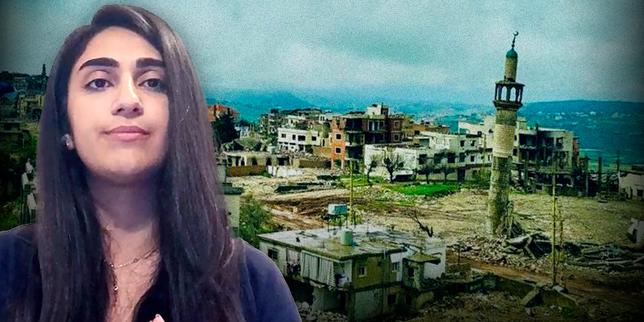
We often speak of war in the language of ballistics or politics. We track the arc of a missile or the rhetoric of a ceasefire. But the reality unfolding across the border between Israel and Lebanon isn't just a conflict of soldiers; it is a systematic dismantling of the concept of home. Recent satellite imagery and ground-level investigations reveal a startling statistic that feels too clinical for the horror it describes. In some border villages, only three houses remain standing out of thirty. In others, the ratio is even grimmer.
This isn't the collateral damage of a missed target. This is the erasure of a map.
The Anatomy of the Void
When a house is hit by a shell, it bears a scar. There is a hole in the roof, a blackened char on the walls, or a collapsed wing. You can see the life that lived there through the wound—a dangling curtain, a stack of ceramic plates, a child’s bed. But what is happening now in the south is different. It is a process of "cleansing" the landscape through controlled demolitions and high-yield explosives that turn reinforced concrete into fine powder.
Consider the village of Ramieh. For generations, it was a cluster of stone and mortar tucked into the hills, a place defined by its proximity to the soil and the ancient olive groves that framed it. Today, if you look at the aerial footage, the village doesn't look like it was bombed. It looks like it was deleted.
The strategy appears to be the creation of a "buffer zone," a term that sounds like a soft cushion in a geopolitical argument. In reality, a buffer zone is a graveyard of memories. To create one, you must ensure that nothing remains to return to. You must ensure that the infrastructure of life—the water pipes, the electrical grids, the schools, and the very foundations of the homes—is rendered unfixable.
This is the invisible stake of the conflict. It is not just about who controls the ridge today, but whether the people who lived there for centuries will ever be able to stand on that ridge again.
The Ghost in the Satellite
The data tells a story that the headlines often miss. Using "Damage Proxy Maps," researchers analyze how radar waves bounce off the earth. When a building is standing, the waves scatter in a predictable pattern. When that building is replaced by a pile of rubble, the signature changes. In the stretch of land along the "Blue Line," these signatures are blinking out like dying stars.
In the village of Blida, the destruction has reached a level of totality that defies the logic of tactical necessity. When 90% of a civilian settlement is leveled, the message is no longer about neutralizing a specific threat located in a basement. The message is that the basement, the house above it, and the street it sits on are no longer allowed to exist.
Imagine a hypothetical architect, let’s call her Maya, tasked with rebuilding such a place. She arrives with her blueprints and her surveying tools. She looks for the landmarks. The old mosque with the blue tile? Dust. The pharmacy at the corner? A crater. The stone wall built by the village elders in the 1940s? Scattered pebbles. Without landmarks, how do you find the boundaries of a life? How do you tell a family where their bedroom used to be when the very earth has been reshaped by the weight of the explosions?
The difficulty is not just in the cost of the cement. It is in the psychological weight of returning to a void.
The Mechanics of Displacement
There is a specific sound to this kind of destruction. It isn't the sudden whiz-bang of an airstrike. It is the rhythmic, industrial thud of demolition. Military engineers move through the streets, planting charges in a sequence designed to bring structures down into their own footprints. It is an orderly way to create chaos.
The people watching this from their phones in displacement camps in Beirut or Tyre aren't seeing a battle. They are watching a live-streamed eviction from history.
One woman, displaced from Aita al-Shaab, described the feeling of seeing her neighborhood leveled on a social media video. She didn't talk about the financial loss. She talked about the jasmine plant. It had taken ten years to climb the trellis of her porch. When the house was brought down, the jasmine was buried under three tons of concrete. That plant was her mother’s favorite. It was the scent of her summer mornings.
When we talk about "30 houses reduced to three," we aren't just talking about real estate. We are talking about 27 jasmine plants. 27 wedding albums. 27 sets of growth marks scratched into doorframes. 27 lineages of belonging that have been severed.
The Logic of the Scorched Earth
The justification offered for this level of destruction usually centers on "denying cover." The argument is that if there are no buildings, there are no places for an adversary to hide. It is a cold, mathematical approach to security. If $X$ equals the presence of a threat, and $Y$ equals the civilian infrastructure, then $X + Y$ must be eliminated to solve for peace.
But the math is flawed. It ignores the human variable.
History has shown us time and again that you cannot bomb a vacuum into existence and expect it to stay empty. Nature abhors a vacuum, and so does human identity. By erasing the physical manifestations of a community, you don't erase the community’s claim to the land. You only sharpen the grief into something harder, something more permanent.
The "buffer zone" might be clear of buildings, but it will be thick with the ghosts of what was taken.
Beyond the Rubble
The sun sets over the Mediterranean, casting long, orange shadows across the wreckage of the south. From a distance, the ruins look like ancient archaeological sites, as if they have been dead for centuries. But the dust is still fresh. The smell of pulverized stone and burnt plastic still hangs in the air.
The international community watches the numbers climb. We see the percentages of destruction rise from 20% to 50% to 80%. We read the reports. We look at the "Video" tags on news sites. But to truly understand what is happening, you have to look past the grey piles of the satellite images.
You have to see Hassan, standing on a ridge with a brass key that no longer has a lock.
He isn't looking for a "buffer zone." He isn't looking at a tactical map. He is looking for the third floorboard that used to creak under his feet when he went to get a glass of water in the middle of the night. He is looking for the geometry of his own life, and finding only the wind blowing through the space where his world used to be.
The silence that follows a controlled demolition is the loudest sound in the world. It is the sound of a future being unmade, one brick at a time, until there is nothing left but the dust and the memory of the scent of jasmine.