Benjamin Netanyahu stood on the roof of the Kirya military headquarters in Tel Aviv on March 1, 2026, and told the world that the "dictator" was dead. By announcing the elimination of Iranian Supreme Leader Ali Khamenei and dozens of his senior officials, the Israeli Prime Minister has not just crossed a red line; he has erased the very concept of the status quo in the Middle East. This is no longer a shadow war or a campaign of "mowing the lawn" against proxies. It is an all-out effort to dismantle the Iranian state as we know it, launched in coordination with the United States under Operation Rising Lion.
The statement Netanyahu delivered on Sunday afternoon was as much a call for internal revolution as it was a report of military success. He claimed that Israeli forces are now operating in the heart of Tehran with "increasing strength," urging the Iranian people to seize a "once-in-a-generation opportunity" to topple the clerical regime. This is the culmination of a four-decade obsession for Netanyahu. He described it as striking the "terrorist regime squarely in the hip," a phrase that suggests a crippling blow meant to prevent the Islamic Republic from ever standing again. Read more on a connected subject: this related article.
The Architecture of a Preemptive War
While the immediate headlines focus on the death of Khamenei, the mechanics of this operation reveal a far more complex and dangerous reality than a single successful strike. For months, the intelligence community has been tracking a shift in Israel's strategic mindset. Following the 12-day war in June 2025, which saw Iranian missiles cause significant damage inside Israel, the Netanyahu government moved from a policy of deterrence to one of absolute preemption.
The current strikes, which have utilized more than 1,200 munitions in the first 24 hours alone, are not just hitting the usual suspects like the Revolutionary Guard (IRGC) headquarters or missile silos. They are targeting the "deep state" of Iran: More reporting by NPR delves into comparable perspectives on this issue.
- The Nuclear Network: Despite claims that the program was "obliterated" last year, intelligence suggests the existence of a facility known as Pickaxe Mountain, a site buried so deep it requires the kind of ordnance and delivery systems only the U.S. can provide.
- Leadership Continuity: The goal is to decapitate the multi-layered elite. By targeting not just the Supreme Leader but the entire successor pool, Israel and the U.S. are betting on a total collapse of command and control.
- The Energy Jugular: In a shift from purely military targets, recent reports indicate strikes near energy assets, signaling that the economic survival of the regime is now on the table.
This is a massive gamble. The assumption is that by removing the head of the snake, the body—the IRGC, the Basij, and the regional proxies—will wither. But history suggests that ideological systems with deep roots do not simply evaporate. Instead, they often splinter into more radical, less predictable factions.
The Trump Connection and the Global Fallout
The coordination with Washington is the most striking feature of this escalation. After months of stalled nuclear negotiations in Geneva, the White House appeared to lose patience with what it described as Iran’s refusal to dismantle its program. The "significant progress" reported by Omani mediators just days ago was evidently not enough to satisfy the requirements of the Trump administration.
The U.S. has not just provided political cover; it has actively participated in strikes against ballistic missile sites and command centers. This is the second time in less than a year that the U.S. has directly attacked Iranian soil. It signals a definitive end to the era of diplomacy. The White House has confirmed the deaths of at least three U.S. service members in retaliatory strikes, a cost that suggests the administration is fully committed to a regional war if that is what it takes to ensure "regime change."
Meanwhile, the retaliation has been swift and broad. Iran has targeted U.S. bases in Qatar, the UAE, Bahrain, and Iraq. In Israel, the "Shield of Judah" air defense system is being tested like never before. A missile strike in Beit Shemesh on Sunday killed nine people, including several children, proving that even the most advanced interceptors have a saturation point.
The Internal Iranian Fracture
Netanyahu’s direct address to the Iranian public—calling out Persians, Kurds, Azeris, and Baluchis by name—is a transparent attempt to spark a civil war. He is betting on the deep-seated resentment that has fueled protests for years. But there is a fine line between supporting a liberation movement and being seen as a foreign invader.
When a foreign power kills a national leader, even an unpopular one, it often triggers a rally-around-the-flag effect. We are already seeing this in Karachi, Baghdad, and Istanbul, where thousands have taken to the streets to condemn the attacks. If the Iranian public views this as a war against their nation rather than just their government, the "opportunity" Netanyahu speaks of could turn into a protracted insurgency that keeps the region in flames for a generation.
The Economic Brinkmanship
The closing of the Strait of Hormuz is no longer a theoretical threat. The IRGC has moved to block the waterway, and at least 150 oil and gas tankers are currently sitting idle in the Gulf. The strike on a tanker off the coast of Oman on Sunday suggests that the conflict is moving toward an "energy war" that will have immediate consequences at gas pumps in London, New York, and Tokyo.
Israel is currently isolated, its airspace closed and its citizens huddled in shelters. Netanyahu frames this as a necessary price for "existence and our future." He has staked his entire political legacy, and the safety of his country, on the belief that the Iranian regime is a house of cards.
The next 72 hours will determine if he is right. If the IRGC collapses and the Iranian people take to the streets as he predicted, Netanyahu will be seen as the architect of a new Middle East. If the regime holds and the proxy network launches a full-scale counter-attack from Lebanon and Yemen, the region faces a catastrophe that no amount of air superiority can solve.
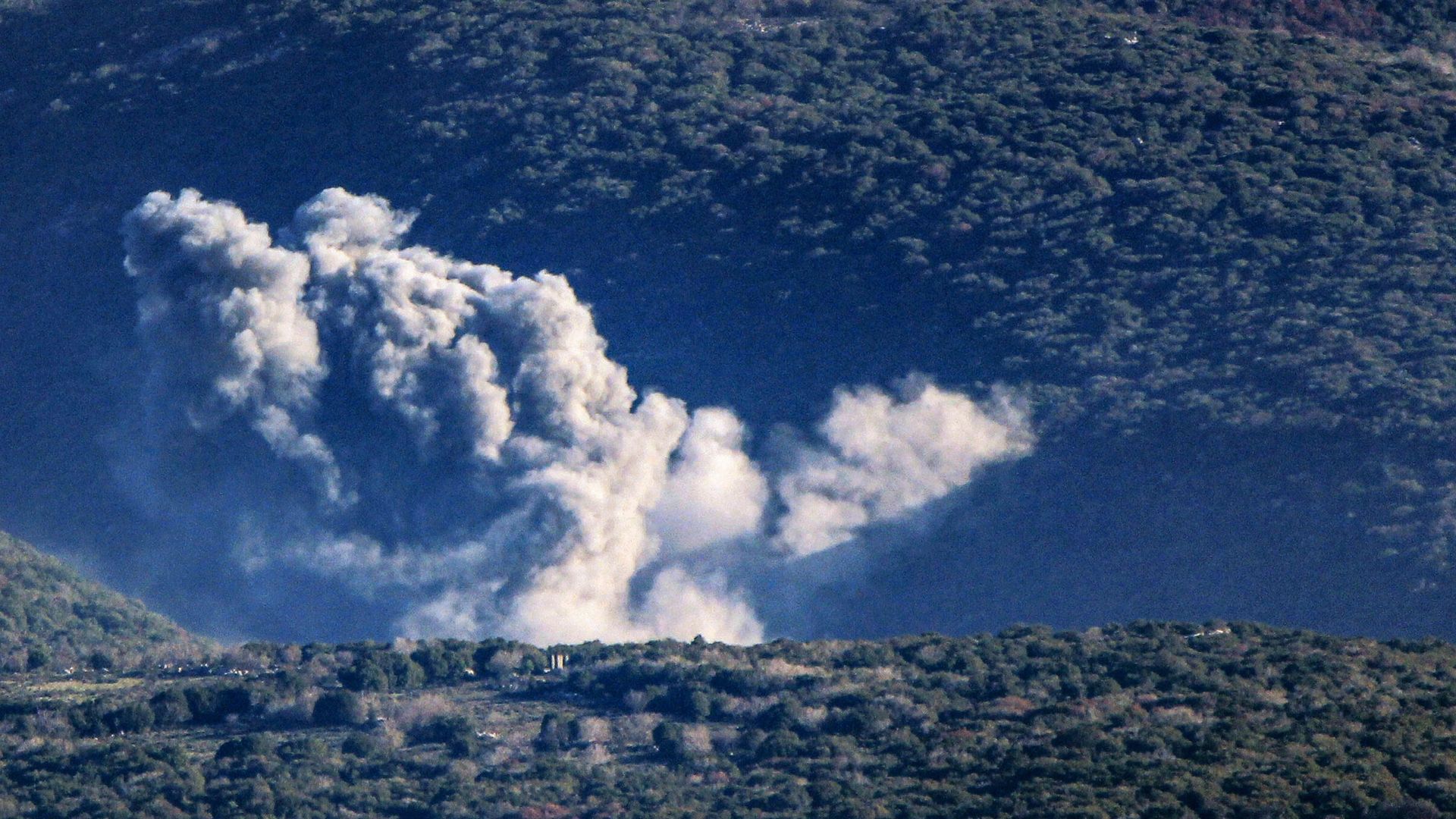
The smoke rising over Tehran today is not the end of a process. It is the beginning of a violent reconfiguration of the global order. Israel and the United States have made their move. Now, the world waits to see if the Iranian state can survive without its head, or if the entire Middle East is about to follow it into the abyss.
One thing is certain: the era of the shadow war is over. The "total strength" Netanyahu promised has been unleashed, and there is no going back to the way things were.