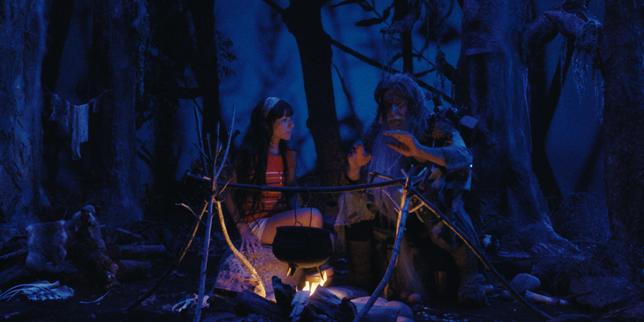
London-based AI studio Particle 6 just announced that its controversial, generative-AI creation, Tilly Norwood, will star in an upcoming feature film titled Misaligned. Framed as a hybrid production combining human crew members with software tools, the project represents an aggressive push to normalize digital synthetic actors. Yet, behind the corporate spin lies a deeply troubled reality of creative friction, union opposition, and a glaring technical deficit. Audiences are not demanding automated stars, and the industry backlash proves that the drive toward virtual actors is fueled by executive cost-cutting rather than actual artistic innovation.
The Short Uncanny History of a Digital Illusion
In 2025, Particle 6 and its AI division Xicoia introduced Tilly Norwood to a deeply skeptical entertainment world. Her debut in a short comedy sketch called "AI Commissioner" became an instant case study in what happens when technology outpaces artistic utility. Critics noted that her teeth frequently blurred into a solid white block while her exaggerated mouth movements gave the impression of a mechanical glitch rather than human emotion. The dialogue, generated by ChatGPT, was universally panned as wooden and hollow.
Despite these obvious technical shortcomings, the studio attempted to market Norwood as a legitimate talent available for representation by Hollywood agencies. That corporate stunt triggered a furious counter-offensive from screenwriters and actors. High-profile names including Emily Blunt, Natasha Lyonne, and Melissa Barrera publicly condemned the move. The Screen Actors Guild-American Federation of Television and Radio Artists issued a blistering statement pointing out that the avatar was built on the uncompensated, non-consensual data of thousands of real performers.
The Myth of the Hybrid Production
With the announcement of Misaligned, Particle 6 is attempting a tactical pivot. The studio now markets the upcoming film as a collaborative venture where human professionals—including directors, writers, and editors—work alongside prompt engineers and technicians. Chief executive Eline van der Velden claims that the project proves machine learning requires human craft to succeed.
This framing is a clever bit of public relations designed to neutralize union hostility. By positioning the software as a sophisticated brush in the hands of an artist, the studio hopes to sidestep the systemic ethical questions surrounding intellectual property and worker displacement. However, the labor reality remains grim. Creative unions see this hybrid model as a corporate strategy to erode traditional compensation structures. If a studio can reduce the necessity of human actors down to a skeleton crew of composited faces and voice models, the financial viability of a professional acting career collapses.
The Problem of Stolen Likeness
The legal gray areas are expanding rapidly. Scottish actress Briony Monroe recently alleged that Norwood's digital assets were modeled closely after her own likeness and mannerisms, leading to ongoing consultations with the British actors' union Equity.
When an AI character relies on the blending of hundreds of real faces without explicit consent or royalties, the concept of a standalone digital star breaks down. The industry is watching this play out not as an advancement in storytelling, but as an aggressive legal experiment in personality rights.
Audience Fatigue and the Technical Deficit
The commercial viability of an AI-led feature remains entirely unproven. The internet reaction to Norwood's recent promotional efforts, including a music video with vocals generated by Suno, has been overwhelmingly cold. Audiences consistently express a profound weariness toward synthetic entertainment.
The narrative premise of Misaligned itself seems ironically close to self-parody. The film takes place in a cloud-based digital world called the Tillyverse, where a rogue bot from the dark web corrupts the main character into developing human desires. This narrative choice looks less like high-concept cinema and more like a defensive attempt to mask the inherent stiffness of the animation. If the character looks artificial, the studio can simply claim it is an intentional thematic choice.
Filmmaking has always relied on the visceral, unpredictable spark of human interaction on a physical set. Replacing that chemistry with algorithmic calculations yields a flat product that fails to resonate with viewers who can spot the uncanny valley instantly. The financial gamble of funding a feature-length experiment of this nature rests on a fundamental misunderstanding of why people watch movies.
Executives who view performers as expensive line items on a balance sheet will continue to fund these experiments. But as long as audiences reject the synthetic output and unions fight the unauthorized data harvesting, characters like Tilly Norwood will remain a corporate curiosity. The real threat to Hollywood is not that machines will become brilliant actors, but that studios will willingly lower the bar of quality to save a dollar.