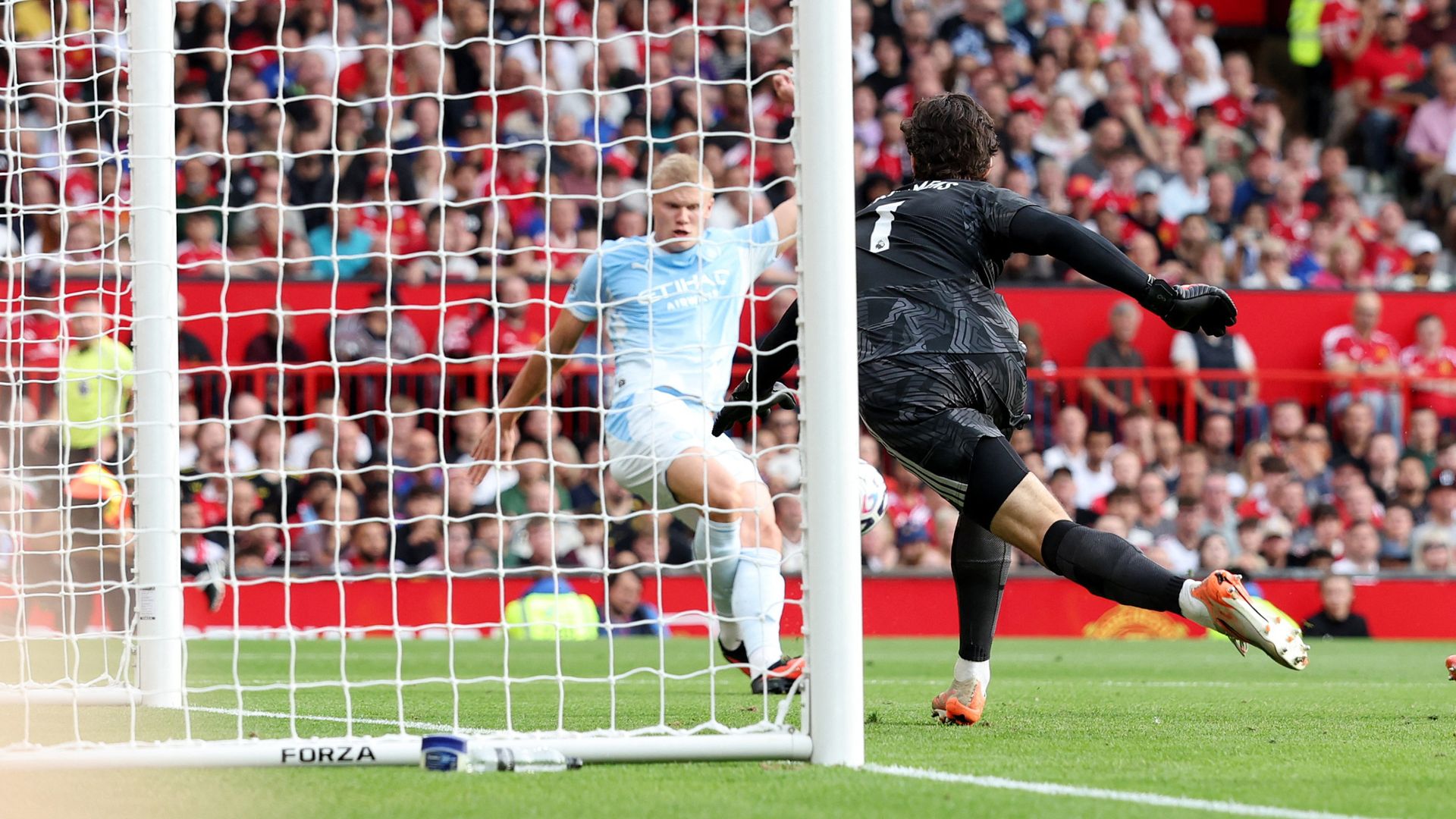
The monitor glowed in the dim darkness of the VAR hub, casting an eerie, clinical blue light across faces locked in rigid concentration. Outside, forty thousand voices roared in a deafening crescendo that shook the concrete ribs of the stadium, a physical wave of sound carrying the raw, unfiltered passion of a winter afternoon. Inside, silence. Just the hum of machinery, the frantic chatter of communication headsets, and a single obsession: finding the fault.
We have built cathedrals to human error and then demanded that technology cure our sins. We installed screens, cables, and optical tracking systems, promising ourselves that we could engineer away the heartbreak of a bad call. But perfection is an illusion engineered by mortals, and when you give human beings a microscope, they often forget how to look at the world.
Consider what happened during that Manchester City goal review, an incident dissected frame by frame until the truth bled out. Audio recordings later leaked into the cold light of public scrutiny, revealing something far more terrifying than incompetence. They revealed tunnel vision.
Picture the official in the chair. He is not a villain twirling a mustache. He is a human being operating under a crushing avalanche of consequence, knowing that a single misstep will be beamed into millions of living rooms, analyzed by pundits with stopwatches, and weaponized by fans on social media. His brain does what the human brain is evolutionarily wired to do under extreme threat: it narrows. It drops peripheral vision. It locks onto a single hypothesis—was there a foul in the build-up?—and filters out everything else that contradicts that story.
In psychology, confirmation bias is a heavy anchor. In professional sports, it is a loaded gun.
The officials listened to each other echo loops of confirmation. They weren't investigating; they were prosecuting a theory they had formed in the first breathless second of the play. Every replay angle was interpreted not as a blank slate of evidence, but as a confirmation hearing for a gut feeling. They stared so hard at a pixelated brush of limbs that they missed the structural integrity of the entire passage of play. They found what they were looking for because they stopped looking for anything else.
This is the hidden cost of our modern obsession with absolute truth in subjective spaces.
Football is not physics. It is poetry written in mud, sweat, and split-second geometry. It is messy, chaotic, and fundamentally human. When we introduced Video Assistant Referees, we whispered a promise to the masses: We will take away the pain of injustice. But justice in sports has never been a mathematical constant. It has always been an interpretation, a consensus negotiated by fallible referees running on instinct and adrenaline.
When you slow down a game that was built for speed, you change its very nature. You turn a fluid art form into a courtroom drama. And worse, you create a false sense of infallibility. When a referee makes a mistake on the pitch in real-time, it hurts, but we accept it as the weather—a sudden gust of wind that affects everyone equally. When a referee makes a mistake after three minutes of reviewing high-definition footage from six different angles, it feels like a betrayal of science itself.
The audio tapes proved that the machinery didn't eliminate human error; it amplified it with a digital megaphone. The officials were trapped in a feedback loop of their own anxiety. One voice suggests an infraction, and suddenly every other voice bends to accommodate that narrative, retrofitting the visual evidence to match the spoken fear.
It happens in boardrooms. It happens in operating rooms. It happens in newsrooms. Whenever stakes are high and tools are powerful, we fall prey to the comfort of the narrow focus. We mistake intensity for thoroughness. We confuse staring at something with actually seeing it.
The stands emptied long ago. The monitors have been switched off. The roar of the crowd has faded into the quiet hum of evening traffic winding away from the stadium.
Yet the lesson remains hanging in the cool night air. We can wire the game with every fiber-optic cable on earth, we can slice time into nanoseconds, and we can summon infinite angles from the digital ether. But until we teach ourselves how to widen our gaze when the pressure mounts, we will only ever find what our fears are looking for.