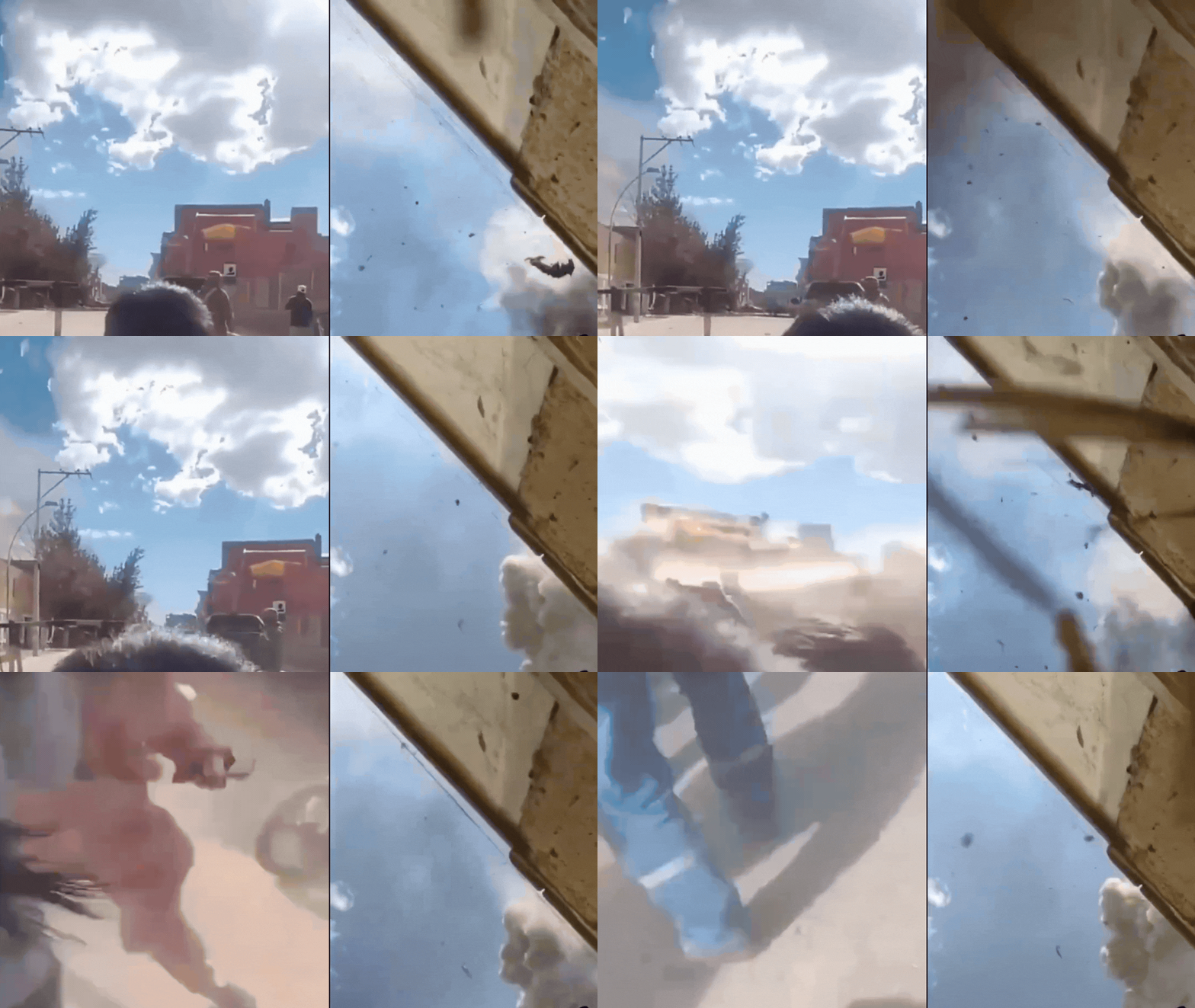
Ten dead. Sixty-two injured. Shuttered windows blasted across Viacha, leaving a civilian neighborhood looking like a war zone just thirty kilometers from La Paz.
The media narrative settled instantly into a comfortable, neat little box. Officials pointed fingers at a defense ministry stockpile of pyrotechnic material, and the global press corps obediently copied and pasted the press release. A tragic accident involving fireworks. Bad storage procedures. Standard military negligence in a developing nation.
It is a tidy explanation designed to put your brain to sleep. It is also entirely missing the point.
Focusing on the pyrotechnics is a symptom of a much deeper institutional rot. When a military installation stores volatile explosive components anywhere near civilian population centers, you do not have an unfortunate accident. You have a ticking design flaw in state infrastructure.
The Pyrotechnic Smoke Screen
Let us look at the mechanics of military logistics. The official line from the RAM-2 Bolívar military base in Viacha points to black powder and celebratory or signaling pyrotechnics. The implication is benign: civilian-grade or standard military signaling gear simply went off due to heat or poor handling.
This framing lets the military command structure off the hook. If fireworks caused the blast, it is treated as an isolated safety violation. A localized slip-up.
Imagine a scenario where a commercial chemical plant stores volatile compounds fifty feet from a residential elementary school. When it blows up, nobody blames the spark plugs; they blame the zoning laws, the regulatory oversight, and the systemic corporate negligence that allowed a powder keg to sit in a populated backyard. Yet when a Latin American military base experiences a catastrophic double detonation, the press treats it like a rogue firecracker factory rather than a systemic failure of national security management.
The numbers don't add up to a simple fireworks mishap. Secondary blasts shattered windows across a one-kilometer radius. That is the footprint of military-grade high explosives or improperly managed ordnance, not party favors.
The Geography Of Institutional Neglect
Why are active explosive storage facilities located within striking distance of civilian homes?
This is the question nobody in official circles wants to answer. Urban sprawl meets archaic military zoning across the Global South. Bases built decades ago in the rural periphery are now swallowed by expanding municipalities. Instead of relocating hazardous munitions depots to secure, unpopulated expanses, defense ministries keep them packed tightly inside urban municipal boundaries to save on transport costs and logistical overhead.
I have seen state infrastructure budgets up close. I have watched defense bureaucrats shave line items off depot maintenance, security upgrades, and distance-buffer compliance to fund administrative bloat. When you penny-pinch on environmental controls and safety isolation zones, you are not saving money. You are purchasing an inevitable catastrophe on an installment plan.
The human cost in Viacha is the direct byproduct of this administrative cowardice. Families sleeping in houses with blown-out frames are paying the price for a defense ministry that treated basic hazard mitigation as optional.
Dismantling The "Accident" Myth
People ask: Was it sabotage, or was it human error?
Both questions fall into the trap of looking for a single bad actor. They assume an individual dropped a match or an operative planted a device.
The structural truth is far more damning. The disaster was caused by an organizational culture that treats ammunition and pyrotechnic storage with casual administrative indifference until the roof caves in. When safety protocols exist only on paper, an explosion is not an anomaly. It is a mathematical certainty.
Take the official response: three days of municipal mourning. Condolences from the executive branch. Promises of a transparent investigation. It is the standard political theater performed whenever institutional negligence turns lethal. They tell you not to speculate while they quietly rewrite the maintenance logs.
Stop buying the fireworks excuse. Stop treating military depots as passive warehouses that misbehave on their own. Demand accountability for the zoning policies and budget allocations that put high-yield ordnance next door to civilian kitchens.
The next blast is already scheduled. The only variable is who will write the press release covering it up.