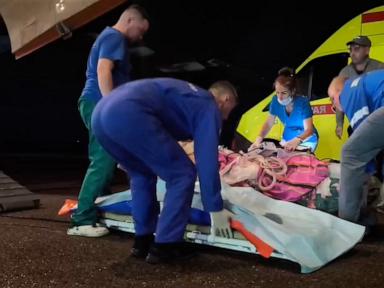
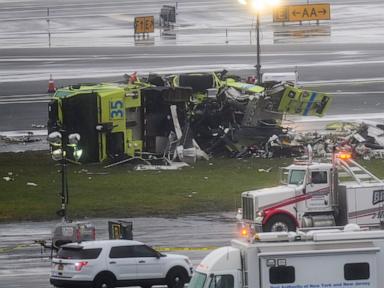
The headlines write themselves. Two controllers walk out the door early on the night of a tragedy, and the mob forms instantly. It is the oldest script in the book. Find a scapegoat, pin the systemic failure on human weakness, and demand heads on spikes.
Everyone wants to point the finger at shift-change negligence because it offers a comforting illusion. It suggests the machine works fine, but a few operators dropped the ball. That narrative is lazy, dangerous, and fundamentally detached from how modern aerospace operations actually function. If you found value in this post, you should check out: this related article.
I have spent decades watching aviation safety culture get hollowed out by bean counters and bureaucrats who treat fatigue management as a spreadsheet exercise rather than a physics problem. When an operation goes sideways, the human at the console is almost never the root cause. They are the final, overloaded circuit breaker in a system designed to fail long before they clocked out.
Let us dismantle the prevailing narrative. For another perspective on this event, check out the recent update from The Guardian.
The Myth of the Individual Operator
The standard critique focuses on staffing protocols, shift overlap, and adherence to manual schedules. The public hears that controllers abandoned their posts and assumes a dark, empty tower guiding blind planes into the night.
That is not reality. Facilities operate under redundant architectures, sector handoffs, and multi-layered airspace management. Focusing on whether someone left ten minutes early ignores the structural rot underneath.
When you run a workforce to exhaustion, scheduling rules stop being safety guardrails and start being administrative fiction. If a facility is chronically understaffed—and almost every major terminal radar approach control facility in the country is—then every shift is a high-wire act with no safety net.
Blaming the worker who left early is like blaming the last passenger to board an overbooked flight for the airline's engine failure. It confuses a symptom with the disease.
The Physics of Fatigue
We treat human attention like a light switch. It is either on or off.
Cognitive science tells a different story. Long before a controller makes a catastrophic error, their working memory degrades, situational awareness narrows, and response latency spikes. This happens in environments with relentless traffic volume, outdated automation, and high-frequency radio congestion.
Expecting flawless performance from humans working rotating shifts across twenty-four-hour cycles is biological malpractice. The Federal Aviation Administration operates on staffing models drafted decades ago, ignoring modern insights into circadian rhythms and cognitive load.
When an agency builds a roster that relies on mandatory overtime and skeleton crews just to keep the lights on, fatigue is not an anomaly. It is the business model.
What the System Gets Wrong About Oversight
Safety culture in aviation is supposed to be proactive. Instead, it is purely reactive and punitive.
When investigators zero in on individual infractions, they poison the well of operational reporting. If every procedural deviation or early departure is treated as a criminal offense rather than a data point, workers stop flagging systemic vulnerabilities. They hunker down, cover their tracks, and pray they do not get caught in the next audit.
That creates a culture of silence. The people who know where the bodies are buried—the front-line workforce—learn that speaking up or exposing structural cracks makes them targets for administrative discipline.
Imagine a scenario where an air traffic facility director openly tells their shift supervisors to cut corners on staffing counts because headquarters refuses to approve overtime budgets. If that same facility experiences an incident, who goes under the bus? The frontline controller, every single time. The executives who forced the staffing constraint remain safely tucked behind corporate insulation.
The Real Cost of Cheap Infrastructure
We want state-of-the-art safety on a discount budget.
The technology stack supporting many regional towers and control centers relies on software architectures older than the operators staring at the screens. Upgrades are chronically delayed, over-budget, and plagued by procurement failures that would bankrupt any private tech firm in a quarter.
While politicians grandstand about personnel accountability, they vote on budgets that defer maintenance on critical radar feeds and communication relays. They would rather fund a ribbon-cutting ceremony for a regional airport expansion than pay for the unglamorous backend engineering required to modernize national airspace management.
When you underfund the infrastructure, you shift the burden of safety entirely onto human endurance. And human endurance has a hard ceiling.
Fixing the Wrong Problem
If your solution to a fatal transit disaster is simply firing or suspending the staff who cut a shift short, you have guaranteed that the next disaster is already on the schedule.
Real reform requires abandoning the illusion that we can legislate away human fatigue with stricter attendance policies. It means accepting three hard truths.
First, stop treating staffing shortages as budget line items to be optimized. Treat them as active emergencies. If a facility cannot staff safe shift overlaps without mandatory six-day weeks, cap the traffic volume until the bodies arrive.
Second, decouple safety reporting from punitive HR actions. If a controller speaks up about unsustainable workloads or operational hazards, protect them with absolute whistleblower immunity.
Third, modernize the technology so that human error is caught by automated tripwires rather than tragic coincidence. The automation exists. The capital exists. What is missing is the institutional courage to deploy it without worrying about quarterly optics.
Stop hunting for convenient villains. The system is broken by design, and no amount of moral panic over shift schedules will fix a machine engineered to grind down the people running it.