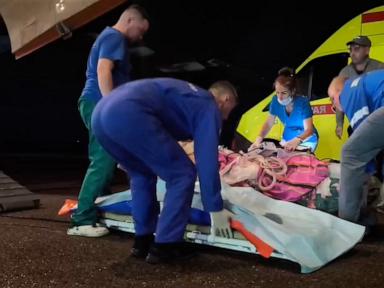
Fifteen people are dead after a fire tore through a gas and chemical facility in Russia's Far East. The immediate global reaction is entirely predictable. Headlines scream about regulatory failure, corporate negligence, and missing safety valves. Pundits demand stricter inspections, harsher fines, and more oversight.
Everyone wants to point the finger at a bad actor or a skipped protocol because it offers a comforting illusion. It implies that industrial disasters are anomalies caused by rule-breakers, and that if we just write enough bureaucratic code, physics will behave. Also making waves recently: Why Qatar Is Making Another Desperate Push to Save the Strait of Hormuz.
That view is dangerously naive.
I have spent two decades walking the concrete floors of high-risk processing plants, heavy chemical refineries, and remote extraction sites from Western Siberia to the Gulf of Mexico. I have seen multi-million-dollar safety audits filed away while actual operational decay festered in plain sight. More insights regarding the matter are detailed by NPR.
The lazy consensus treats industrial accidents as moral failures. The reality is far worse. These disasters are systemic outputs of complex, aging infrastructure operating at the absolute razor edge of economic viability under extreme environmental constraints.
The Myth Of The Paper Protocol
The mainstream narrative assumes that accidents happen because someone didn't read the manual. Safety manuals in heavy industry are often doorstops designed to protect corporate legal teams rather than operators in the field.
When a gas and chemical plant catches fire in a remote territory, the root cause is rarely a lack of signs telling workers not to smoke. It is structural fatigue compounded by supply chain bottlenecks, deferred maintenance cycles, and an institutional incentive structure that rewards throughput over stability.
Let us look at the operational reality of remote industrial hubs. These facilities operate in punishing climates. Extreme thermal cycling—freezing winters giving way to blistering summers—wreaks havoc on metallurgy. Pipes fatigue. Seals degrade. Valves freeze and crack.
When replacement parts are difficult to source due to sanctions, logistics, or budget constraints, plant operators face a brutal choice. They can shut down production, incurring massive financial penalties and risking their employment, or they can patch the system together and keep running.
They patch it. They always patch it, until they can't.
Blaming a localized safety violation for a catastrophe of this scale is like blaming a single drop of rain for a flash flood. The flood happened because the dam was structurally compromised upstream.
The Economics Of Catastrophe
We need to talk about the uncomfortable math that nobody in the corporate boardroom wants to admit. Safety is expensive. Reliability is a capital sink.
Every dollar spent on preemptive overhauls, advanced non-destructive testing, and redundant automated shutdown systems is a dollar stripped from short-term yield. In regions where economic pressures are acute, capital expenditure on infrastructure renewal is the first line item to face the budget knife.
When a facility is pushed to operate at 105% capacity to meet output targets, safety margins evaporate. The system is engineered to handle nominal conditions with a buffer. But the real world does not operate in nominal conditions. It operates in spikes, surges, and unexpected thermal loads.
Imagine a scenario where a facility manager flags a degrading compressor seal three months before a catastrophic leak. In an ideal world, the plant stops, depressurizes, swaps the seal, and resumes operations. In the real world, stopping that compressor halts upstream extraction, which backs up pipeline pressure, which triggers a cascading shutdown across an entire regional grid costing millions daily.
So the manager signs off on running it for another quarter. The seal holds until it doesn't.
Was that a safety violation? Technically, yes. Was it an individual human error? No. It was a predictable mathematical outcome of a system designed to prioritize continuity over caution.
Why More Oversight Fails
The knee-jerk regulatory response to every major industrial fire is identical. Politicians call for more inspections. They want independent committees, digital tracking systems, and stiffer penalties for non-compliance.
This approach misunderstands the nature of complex socio-technical systems. More paperwork does not create physical resilience. In fact, hyper-regulation often backfires by creating a compliance theater.
When plants are buried under an avalanche of bureaucratic reporting requirements, local engineering teams spend half their working hours filling out compliance forms rather than inspecting pipe racks. They learn how to check the right boxes to satisfy distant inspectors while the physical plant deteriorates beneath them.
True safety is not achieved by auditing people to death. It is achieved by building redundancies, respecting physical limits, and giving frontline workers the absolute, unquestioned authority to shut down a billion-dollar operation the second something sounds wrong, without needing permission from a vice president three time zones away.
Until industrial leadership structures are redesigned to reward zero-production periods when maintenance demands it, these tragedies will repeat.
The fire in the Far East was not an unpredictable act of god, nor was it simply the result of a careless worker. It was a bill that came due for decades of deferred maintenance and magical thinking about the limits of material science.
Stop asking how many rules were broken. Start asking why the system was built to break in the first place.


