The rain in Berlin always smells of soft coal and wet granite, a damp reminder of winter mornings that refuse to surrender. On a gray Tuesday inside a conference hall near the Spree, a roomful of people who had spent forty years chaining themselves to railroad tracks to stop the transport of nuclear waste quietly voted to change their minds.
There was no confetti. No champagne corks popped. Just the dry rustle of paper ballots falling into plastic boxes, and the heavy, sinking realization that reality had finally broken through the barricades.
For decades, the European Green movement defined itself by a simple, unyielding creed: the atom is the enemy. It was a stance born in the smoke of Chernobyl and forged in the fiery aftermath of Fukushima. It was an identity written on protest banners, chanted in streets, and hammered into party platforms with religious fervor. To be green meant to hate the atom. It meant believing that wind and sun alone could carry the weight of industrial civilization without buckling.
Then came the dark winters. Then came the gas shutoffs, the soaring power bills, and the brutal arithmetic of an energy grid running on empty.
Consider what happens when ideology collides with physics. Physics does not care about your manifesto. Physics demands electrons.
To understand why this shift matters so profoundly, you have to look past the policy documents and step into a hypothetical living room in rural Lower Saxony. Imagine a woman named Klara. She is sixty-two, her hands calloused from decades of tending an organic orchard, her lungs sensitive to the sulfurous haze that settles over the valley whenever the coal plants ramp up to cover a wind drought. Klara remembers the seventies. She remembers the police batons, the tear gas, the sheer moral clarity of lying across tracks to block the Castor casks. To her, anti-nuclearism wasn't a policy preference; it was a badge of honor worn by a generation that believed it was saving the earth from radioactive poison.
Now imagine Klara sitting at her kitchen table in the biting chill of November, watching her heating bill climb while the local wind turbines stand motionless under a dome of heavy, windless high pressure. The coal plant down the road is bellowing black smoke into the gray sky, burning lignite—the dirtiest coal on the planet—just to keep the lights on in Berlin.
The math no longer adds up. The moral clarity has turned to fog.
When political parties drop longstanding opposition to nuclear power, it looks like a sudden pivot on paper. In human terms, it is a painful, grinding surrender of dogma to survival.
The numbers tell a story that poetry cannot soften. Nuclear energy provides baseload power—steady, reliable, unblinking electricity that does not depend on whether the sun is shining or the wind is howling. For years, opponents argued that renewables could scale fast enough to replace both fossil fuels and nuclear at the same time. It was a comforting dream. But as nations rushed to shutter their reactors out of fear, they found themselves trapped in a cruel paradox: closing nuclear plants forced them to burn more gas and coal, driving carbon emissions straight up. Germany's hurried exit from nuclear power, known as the Atomausstieg, cost billions and left the country more dependent on imported fossil fuels than ever before, culminating in a geopolitical crisis when those supplies were choked off.
Mistakes are heavy things to carry. Admitting them requires a rare kind of courage.
When the green delegates stood up to vote on altering their stance, they weren't embracing radiation because they suddenly loved it. They were conceding a harsher truth. The enemy was never the atom. The enemy was carbon. And in the war against a warming atmosphere, refusing to use every tool in the armory is a luxury humanity can no longer afford.
Language matters here. For years, politicians talked about phasing out nuclear power as if it were a clean medical procedure—a simple excision of a tumor. But the reality was messier. It meant ripping out the beating heart of a low-carbon grid and replacing it with fossil fuel life support.
Let us be honest about the fear. Radiation is invisible. It has no taste, no smell, no sound. It is easy to fear what you cannot sense, whereas the smoke billowing from a coal stack is at least visible, even if its carbon dioxide is just as invisible as a stray gamma ray. Human psychology is notoriously bad at assessing long-term systemic risk versus immediate, visceral dread. We panic over the remote possibility of a meltdown while walking willingly into the slow, grinding suffocation of climate change.
The pivot among environmentalists is not an endorsement of lax safety standards or a dismissal of waste management challenges. Nuclear power is hard. It is expensive to build, slow to permit, and burdened by a legacy of trust issues. But advanced reactor designs—smaller, safer, capable of consuming their own waste or running on alternative fuels—are moving from drawing boards to reality.
When a political movement built on pure opposition begins to entertain nuance, the ground beneath our feet shifts.
Think of the children growing up in towns shadowed by cooling towers. They don't care about the partisan purity of the 1980s. They care about whether their world will be habitable. They care about whether the air in their lungs is clean. If splitting the atom is what keeps the lights on without choking the sky, then the old battle lines start to look less like sacred borders and more like scars.
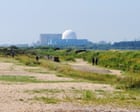
The rain keeps falling on the Spree. The politicians pack up their folders and head out into the damp evening. The banners are rolled up and stored in basements, perhaps for good. Out in the countryside, the cooling towers of remaining plants stand silent against the twilight, no longer pariahs of the transition, but awkward, indispensable allies in a race against time.
The debate is far from over. The ghosts of past disasters will not vanish overnight. But the wall of absolute denial has cracked. And through that fracture, a different kind of light is beginning to filter through.