The physical transformation of the executive mansion under executive direction bypasses traditional legislative authorization, creating an institutional stress test that exposes the operational limits of judicial standing and interbranch oversight. When the highest court in the nation votes five to four to permit the continuation of a four-hundred-million-dollar construction project on federal property, the underlying mechanics involve more than architectural expansion. The core conflict centers on resource allocation authority, procedural jurisdiction, and the structural friction between executive unilateralism and legislative appropriations power.
The Structural Mechanics of the Dispute
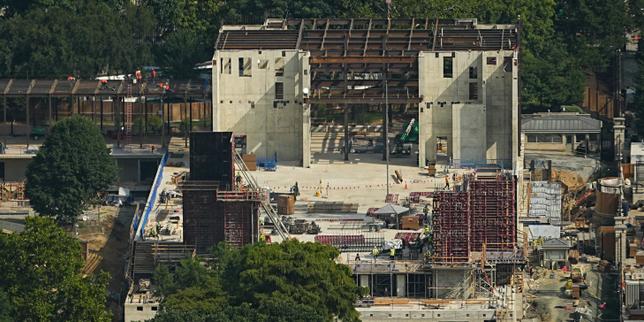
Analyzing the controversy requires separating the physical asset from the legal vector. The project entails a ninety-thousand-square-foot structure rising up to seventy feet, replacing the historical East Wing footprint with a multi-level facility that integrates subterranean national security infrastructure alongside above-ground entertainment space.
Two distinct legal tracks define the operational battleground:
- Subterranean security architecture encompassing continuity-of-government bunkers and command facilities, which lower courts permitted to proceed without interruption.
- Above-ground superstructure additions, which triggered protracted injunctions due to the absence of explicit statutory authorization from the legislative branch.
The federal government anchored its emergency defense in operational necessity. Sworn declarations from intelligence and military leadership framed the construction timeline as an urgent national security requirement, arguing that halting the build schedule would induce catastrophic project degradation and compromise asset readiness. Conversely, plaintiffs, spearheaded by preservation advocates, argued that the executive branch cannot unilaterally redirect federal real estate or bypass statutory prohibitions against unauthorized construction on public grounds within the district.
The Standing Doctrine as a Procedural Bottleneck
The five-to-four majority bypassed the central constitutional question of executive authority by ruling on procedural grounds rather than substantive merits. The court determined that the primary plaintiff, a historic preservation organization, lacked legal standing to challenge the East Wing transformation.
Standing doctrine requires a concrete, particularized injury. The majority concluded that the institutional plaintiff failed to establish the precise threshold of harm necessary to maintain a federal lawsuit of this magnitude, viewing the asserted injuries as generalized grievances rather than direct, actionable harms. This procedural mechanism allowed the court to vacate lower court injunctions without endorsing the legality of the underlying construction.
The dissenting faction, led by the chief justice, contested this procedural barrier. The dissent maintained that aesthetic and historical degradation of public trust assets constitutes a cognizable injury comparable to environmental harms recognized in settled jurisprudence. Under this view, the absence of judicial intervention permits an ongoing infringement on the legislature's power of the purse and its exclusive authority over federal property management.
The Cost Function of Interbranch Friction
The financial and operational reality of the project introduces a distinct set of constraints. Funded entirely through private philanthropic contributions rather than direct federal appropriations, the asset sidesteps traditional budgetary allocations while remaining anchored to public land. This funding model disrupts standard oversight vectors. When a project utilizes external capital to alter a sovereign asset, the traditional legislative controls associated with fiscal appropriations do not trigger automatically.
The timeline urgency cited by the administration relied on sunk-cost economics. With project completion metrics passing structural tipping points, halting construction would inflict irreversible financial and logistical friction. The court factored this operational momentum into its calculus, ruling that the federal government established the probability of suffering irreparable harm if an emergency stay were denied.
The Strategic Play
Litigation concerning the underlying merits of the project will continue in lower tribunals, but the procedural clearance granted by the highest court shifts the operational equilibrium permanently. Because the physical superstructure is slated for completion before the litigation can wind through a final adjudication on the merits, opponents face a fait accompli. Future challenges to executive asset management must establish broader legislative standing doctrines early in the administrative cycle or secure immediate injunctive relief before sunk-cost thresholds neutralize judicial leverage.