Boarding a plane to the Caribbean won't pause a mortgage repayment in suburban Sydney or Melbourne. In late October 2026, Australian Prime Minister Anthony Albanese flew out to Antigua and Barbuda for the Commonwealth Heads of Government Meeting (CHOGM), hoping international diplomacy would offer a clean circuit breaker from a bruising run of domestic headaches. According to reporting from The Guardian and Michael West Media, the trip was framed by political observers as an effort to reset the government's narrative on the world stage while "spot fires burn" back home.
It didn't work out as a quiet escape. While Albanese met with King Charles and fellow leaders across the 56-nation bloc, the Reserve Bank of Australia (RBA) was preparing for—and subsequently delivered—its fifth interest rate hike of 2026, lifting the official cash rate by 25 basis points to 4.85 per cent on November 3. Learn more on a related issue: this related article.
Voters notice when a leader leaves the country right before economic pain hits. You can't spin a 4.85 per cent cash rate from a podium in St John's.
What Actually Happened During Albanese's CHOGM Trip
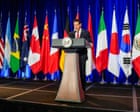
Albanese's visit to Antigua and Barbuda marked the first time an Australian prime minister had traveled to the Caribbean since 2009, and his second CHOGM after attending the 2024 summit in Samoa. Ahead of his departure, the prime minister's office emphasized that the gathering was an opportunity to collaborate with close partners on climate change, ocean preservation, trade, investment, and the rise of artificial intelligence. Further analysis by Reuters delves into similar views on this issue.
Foreign policy has historically been comfortable territory for Albanese. Standing alongside figures like King Charles and Canadian Prime Minister Mark Carney projects statesmanship. It shifts television cameras away from Canberra's daily political trench warfare.
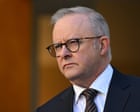
Yet even the international stage refused to stay calm. As reported by The Guardian and Daily Tarjuman, the broader diplomatic calendar was complicated by geopolitical friction, including disputes over historical slavery reparations at CHOGM and boycotts by roughly a third of attending nations over Russian Foreign Minister Sergei Lavrov's presence at related G20 meetings. Meanwhile, at a press conference in Antigua, Albanese still had to field questions directly about the Australian economy, rising interest rates, backpacker visas, and Australia's bid for a temporary seat on the United Nations Security Council.
Distance doesn't mute domestic press packs. Honestly, traveling abroad during a cost-of-living squeeze often sharpens the contrast between official summits and household budgets.
The RBA's Fifth Rate Hike and the Economic Reality Back Home
The core problem waiting in Australia wasn't a minor media distraction. It was persistent inflation forcing the central bank's hand again.
In the lead-up to the November 3 RBA board meeting, financial markets had already priced in a move to 4.85 per cent. When the Monetary Policy Board released Decision Number 2026-30, six members voted to raise the cash rate by 25 basis points while three voted to hold it at 4.60 per cent. The RBA stated that inflation remained elevated, broadly based, and revised higher in updated staff forecasts.
Look at what Australian households were absorbing over the preceding 12 months, as documented in The Guardian's economic reporting:
- Inflation jumped to 4 per cent in late September 2026, reigniting fears of a pre-Christmas tightening cycle.
- Transport costs climbed 8.7 per cent over the year, driven heavily by fuel price spikes tied to Middle East conflict involving the US, Israel, and Iran.
- Housing costs rose 5.2 per cent annually, compounding pressure on both renters and variable-rate borrowers.
- Food prices increased another 3.2 per cent over the same 12-month stretch.
While Albanese was in the Caribbean, Treasurer Jim Chalmers was left holding the domestic spotlight. Chalmers argued in parliament that sticky inflation was partly driven by a faster-than-expected recovery in the private sector. Critics didn't buy that framing. Shadow Treasurer Tim Wilson accused Labor's budget settings of forcing families to pay more for everyday essentials, while the International Monetary Fund (IMF) had already urged the federal government in September to trim public spending to help cool price pressures.
Even within Labor's own ranks, anxiety boiled over. New South Wales Premier Chris Minns publicly warned that another rate rise would cause local shops to close and never reopen. Internally, federal Labor MPs pressured the leadership over cost-of-living management, prompting Albanese to concede in late October that budget savings were needed—even as Finance Minister Katy Gallagher cautioned that finding overall net savings before December's mid-year update would be tough without cutting health or education.
The Domestic Spot Fires Burning Behind the Scenes
Interest rates were the biggest blaze, sure, but they weren't the only fires licking at the government's credibility in late October 2026. Several self-inflicted political controversies eroded Labor's standing right before Albanese boarded his flight.
The $6 Million Marrickville Golf Club Grant
In his own inner-Sydney electorate, Albanese faced sustained scrutiny over a $6 million federal grant awarded to the Marrickville Golf Club under a $560 million invitation-only funding scheme. Transparency advocates pointed out that the program disproportionately funded projects in Labor-held seats. Worse, Albanese initially claimed the money was intended to contain raw sewage—a statement he was forced to retract on October 27, admitting it was inaccurate because water and sewerage infrastructure falls under New South Wales state responsibility. Constitutional experts quoted by The Guardian went so far as to describe the grant process as "grey corruption".
Staffing Rows With Crossbenchers and One Nation
Parliamentary management also looked messy. Independent Senator Fatima Payman publicly criticized the prime minister over staffing allocations, while One Nation leader Pauline Hanson accused Albanese of trying to exert undue political influence by making an unsolicited offer of a $200,000-a-year adviser role to one of her MPs, David Farley.
Polling Slides to Midterm Lows
When voters feel squeezed at the supermarket checkout and see headlines about golf club grants, polling numbers react fast. A Guardian Essential poll of 1,087 Australians published in late October 2026 showed Labor's primary vote tied with Pauline Hanson's One Nation at 28 per cent each, with the Coalition sitting at 23 per cent. Albanese's personal disapproval rating hit 56 per cent, matching his highest disapproval mark in Essential polling since taking office in 2022.
Essential Media executive director Peter Lewis noted that while voters weren't necessarily sold on One Nation's policy credentials—majorities still rated One Nation worse on managing the economy and pandemics—the electorate was punishing Labor for local cost-of-living pain rather than blaming external shocks like US trade turbulence or Middle East energy disruptions.
Why Foreign Summits Rarely Rescue Struggling Leaders
Political advisers love international summits because the optics are controlled. Flags line the stage. Communiqués get signed. Domestic opponents look parochial if they attack a prime minister while he is representing the nation overseas.
In practice, that halo fades within hours.
Voters judge governments on what happens to their bank accounts between paydays, not on bilateral pull-asides in St John's. Back in March 2026, commentators questioned whether cutting fuel excise would inadvertently stoke inflation and force the RBA into more hikes. By November, five rate increases in a single calendar year had turned mortgage stress into the defining political issue in Australia.
There's also a timing trap. When a leader departs right before an unpopular economic decision, it can look like an attempt to dodge accountability—leaving the treasurer to absorb the initial blow while the prime minister fields questions from thousands of kilometers away. Even when the trip has genuine diplomatic merit, such as advancing trade ties or UN Security Council diplomacy, domestic frustration filters every soundbite.
What Changed After November and What to Watch Next
If you're trying to make sense of where Australian politics and interest rates go from here, the picture shifted noticeably in the weeks immediately following Albanese's return.
First, look at the economic data that landed after the November 3 hike. While the RBA pushed the cash rate to 4.85 per cent on a 6–3 split vote, three board members had already warned against hiking too aggressively. By mid-November 2026, fresh employment figures showed the Australian economy shed 43,500 jobs as unemployment climbed to a four-year high. According to Market Index analysis of cash rate futures and Macquarie economists, that sudden labor market cooling effectively wiped out market bets on a sixth rate hike, shifting expectations toward potential RBA rate cuts starting around August to October 2027.
Second, watch how Labor handles December's mid-year budget update (MYEFO). Having publicly acknowledged that spending restraint is required without cutting core health and education services, Albanese and Chalmers have very little room to maneuver. Any new spending announcements will immediately be attacked by the Coalition and scrutinized by economists as inflationary fuel.
Third, keep an eye on how the government reframes its economic message. As Essential Media's polling analysis highlighted, Labor has struggled to convince voters that global shocks—from Middle East energy spikes to US tariff volatility—are driving domestic prices. Unless the government pairs disciplined budget cuts with cleaner grant governance and a clearer cost-of-living narrative, no amount of international travel will stop those domestic spot fires from spreading.
For full coverage of the prime minister's overseas remarks on the economy and rate rises, watch PM addresses Australian economy and interest rates in Antigua, which captures Albanese's press conference at the CHOGM summit directly addressing the domestic economic pressures analyzed above.