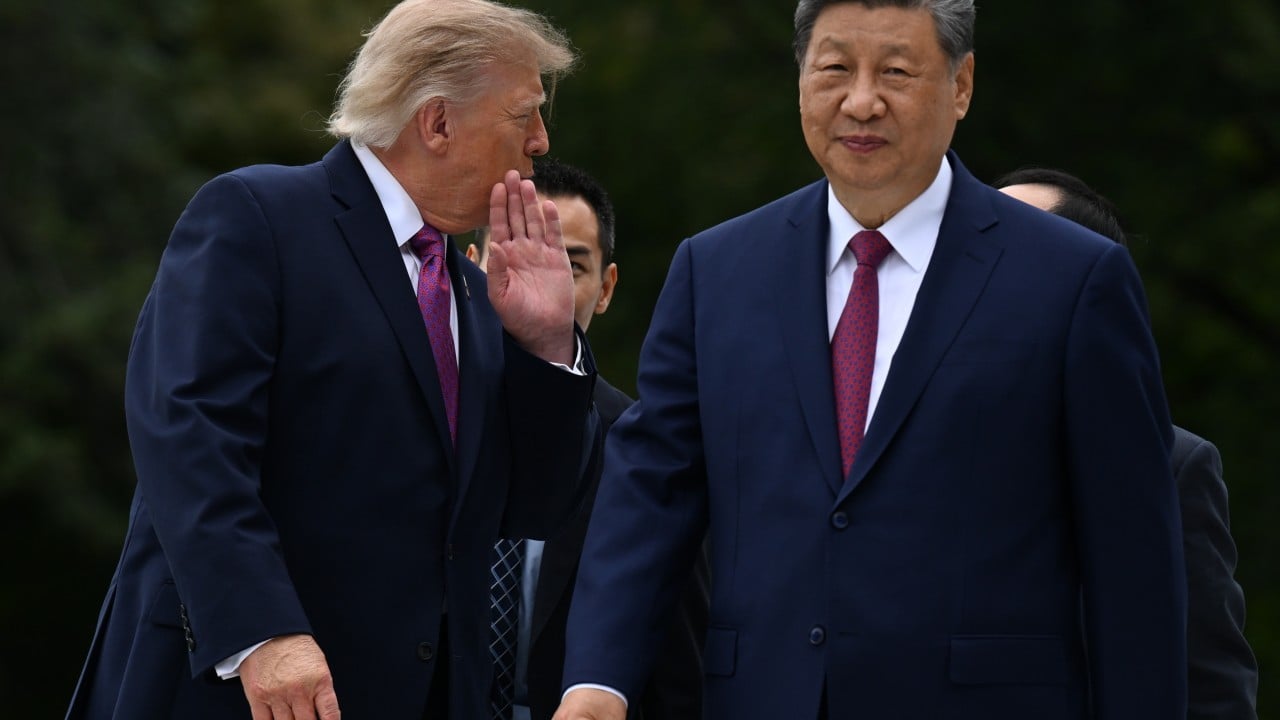
Diplomacy fails when a mediator mistakes a structural security dilemma for a transactional trade dispute. When President Donald Trump pressed Chinese President Xi Jinping to end Beijing’s diplomatic and economic freeze against Japan, Xi’s refusal was not an act of personal stubbornness; it was the predictable output of asymmetric leverage and incompatible domestic incentives. Understanding this impasse requires stripping away the diplomatic theater to examine the underlying game theory governing Washington, Beijing, and Tokyo.
The Architecture of the Sino-Japanese Freeze
To analyze why Washington’s intervention stalled, one must first define the precise mechanisms of the freeze itself. Beijing’s posture toward Tokyo is not a single policy lever, but a calibrated system of economic statecraft and diplomatic signaling designed to impose targeted costs without triggering a full-scale military crisis.
This architecture rests on three distinct pillars:
- Regulatory Weaponization and Supply Chain Friction: Rather than imposing blanket tariffs that invite immediate World Trade Organization retaliation or harm domestic Chinese assembly plants, Beijing utilizes selective regulatory enforcement. This includes prolonged customs inspections for Japanese industrial components, targeted import bans on specific sectors—most notably Japanese seafood and agricultural goods following the Fukushima treated water release—and heightened administrative scrutiny of Japanese corporate operations inside mainland China.
- Diplomatic Downgrading and High-Level Suspension: Beijing systematically suspends bilateral security dialogues, maritime crisis-management mechanisms, and ministerial summits. By restricting communication channels, China increases the perceived risk of accidental escalation in the East China Sea, forcing Tokyo to expend greater defense resources on continuous surveillance and deterrence.
- Grey-Zone Maritime Pressure: The continuous deployment of China Coast Guard vessels into the contiguous zones and territorial waters surrounding the Senkaku/Diaoyu Islands operationalizes the diplomatic freeze. This establishes a new baseline of physical presence, testing the operational readiness of the Japan Self-Defense Forces and the credibility of the U.S.-Japan Mutual Security Treaty.
The Asymmetry of Bargaining Power
A mediator can only force a resolution when they possess credible carrots that outweigh the disputants' cost of compliance, or credible sticks that make the status quo unsustainable. In this trilateral dynamic, Washington’s leverage over Beijing regarding Tokyo is structurally deficient.
Trump’s approach to foreign policy historically relies on bilateral deal-making—linking disparate issues such as tariffs, market access, and geopolitical concessions into a single transactional negotiation. However, this model breaks down when applied to core sovereignty and regional hegemony disputes. For Xi Jinping, the freeze against Japan is tied directly to three non-negotiable strategic objectives:
- Deterring Regional Containment: From Beijing’s perspective, Japan is the indispensable linchpin of the U.S. alliance architecture in the Indo-Pacific. Tokyo’s historic doubling of its defense budget, its acquisition of counterstrike capabilities, and its deepening security integration with Washington, Seoul, and Manila represent an existential threat to China’s regional freedom of action. Rewarding Tokyo with diplomatic normalization while Japan actively strengthens its military posture against China would signal strategic weakness.
- The Taiwan Contingency Calculus: Beijing views the security of the Taiwan Strait and the posture of Japan as inextricably linked. Japanese officials have increasingly stated that a crisis in Taiwan constitutes an existential threat to Japan, given the proximity of Okinawa and the vulnerability of Japanese sea lanes. Maintaining diplomatic and economic pressure on Tokyo is Beijing’s primary method of raising the anticipated cost of Japanese intervention in a future Taiwan conflict.
- Domestic Legitimacy and Nationalist Constraints: Under Xi, the Chinese Communist Party has tied its political legitimacy to the narrative of national rejuvenation and uncompromising defense of historical and territorial claims. Publicly capitulating to American pressure to ease restrictions on Japan—a nation carrying immense historical friction in Chinese domestic politics—would incur severe domestic political costs for Xi, eroding his strongman image among both party elites and the broader public.
The Cost Function of Concession
In international relations theory, a state only alters a coercive policy when the marginal cost of maintaining the coercion exceeds the marginal benefit. Currently, the cost function favors Beijing’s intransigence.
The Costs to China of Maintaining the Freeze:
The economic blowback to China from restricting Japanese trade and investment is real, particularly as the Chinese economy faces structural headwinds, deflationary pressures, and declining foreign direct investment. Japanese firms have steadily diversified their supply chains toward Southeast Asia and India—a trend accelerated by Beijing’s coercive measures. However, Beijing views these economic losses as acceptable attrition—a necessary price to pay for securing geopolitical dominance in its immediate periphery.
The Costs to China of Capitulating to Washington:
If Xi were to lift the freeze in response to Trump’s requests, Beijing would suffer immediate strategic degradation without receiving commensurate structural relief from the United States. Even if Washington offered temporary tariff reductions or rhetorical praise in exchange for a Sino-Japanese thaw, Beijing knows that the broader bipartisan consensus in Washington remains firmly committed to technological containment and military deterrence against China. Trading a permanent geopolitical concession (normalizing ties with a rearming Japan) for a temporary, reversible economic concession from Washington violates basic strategic logic.
The Failure of Issue Linkage
The central analytical error in attempting to broker this thaw lies in flawed issue linkage. Issue linkage works when two parties value the linked goods differently, allowing for a mutually beneficial trade. For example, Country A cares deeply about intellectual property protection, while Country B cares deeply about agricultural tariffs; a swap is viable.
In the U.S.-China-Japan triangle, the goods are non-fungible. Trump attempted to link bilateral U.S.-China trade and diplomatic optics with a fundamental pillar of East Asian security architecture. To Xi, the U.S.-Japan alliance is not a tradeable asset; it is the primary structural obstacle to Chinese regional hegemony.
By pressing Xi on Japan without offering a fundamental restructuring of the U.S. military presence in the Western Pacific—a concession Washington cannot and will not make—the American side presented a demand with zero structural backing. Xi’s refusal was a rational rejection of a lopsided bargain.
Operational Consequences for Multinational Enterprises and Policymakers
Because this deadlock is rooted in structural security competition rather than transient diplomatic friction, the freeze will persist regardless of high-level summitry. Stakeholders operating in the Indo-Pacific must adjust their operational baselines accordingly.
1. Supply Chain Decoupling is Permanent, Not Cyclical
Corporate leaders who view current Sino-Japanese trade friction as a temporary storm to be weathered are misreading the environment. Businesses reliant on seamless integration between Japanese precision manufacturing and Chinese final assembly face permanent regulatory risk. Capital allocation must prioritize redundancy, shifting critical nodes out of mainland China to insulate operations from sudden administrative freezes.
2. The Weaponization of Economic Interdependence Will Escalate
Beijing has demonstrated that it will absorb domestic economic pain to enforce geopolitical red lines. Future flashpoints—whether involving semiconductor export controls, maritime incidents near the Senkaku Islands, or diplomatic visits to Taiwan—will trigger immediate, asymmetric retaliation against Japanese commercial interests in China. Risk models must price in sudden asset freezes, arbitrary detentions of corporate personnel under expanded counter-espionage laws, and abrupt market closures.
3. Trilateral Security Integration Will Accelerate
Xi’s refusal to budge validates the thesis in Tokyo and Washington that Beijing cannot be coaxed into regional moderation through diplomatic engagement alone. The failure of Washington’s mediation removes any remaining political obstacles in Tokyo to deeper military integration with the United States. Expect accelerated joint command structures, co-development of missile defense systems, and expanded joint naval patrols in the South and East China Seas.
Strategic Execution
Do not expect a diplomatic breakthrough between Beijing and Tokyo brokered by Washington. The structural incentives governing all three capitals lock them into a trajectory of managed confrontation.
Policymakers in Washington and Tokyo must abandon efforts to secure bilateral normalization from Beijing through top-down diplomatic appeals. Instead, strategy must focus on denial and resilience: hardening supply chains against Chinese economic coercion, establishing alternative export markets for targeted Japanese industries, and accelerating trilateral defense integration to ensure that the military balance of power in the First Island Chain remains decisively unfavorable to Chinese revisionism. Until Beijing calculates that coercion drives Tokyo closer to Washington rather than splitting the alliance, the freeze will remain intact.