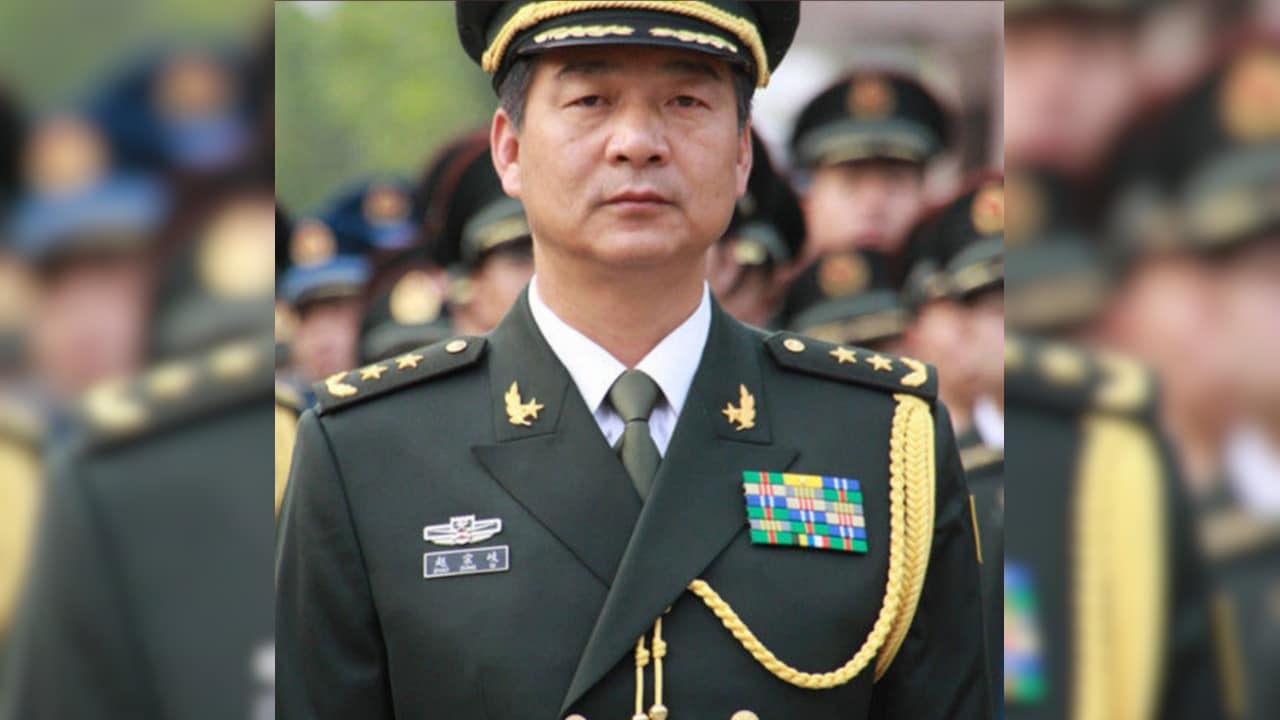
The political dismantlement of retired General Zhao Zongqi offers a rare window into the administrative mechanics governing China's armed forces. When the Standing Committee of the Chinese People's Political Consultative Conference stripped Zhao of his advisory membership and associated positions, observers treated the event as a belated settling of accounts for the 2017 Doklam standoff and the 2020 Galwan Valley clashes. Yet, viewing this action purely through the lens of historical border skirmishes misunderstands how state power actually consolidates. The removal is a structural necessity of supreme command consolidation, operating on institutional timelines that outlast individual operational tenures.
The trajectory of Zhao’s career maps directly onto the structural evolution of the People's Liberation Army. Enlisting during the height of Maoist-era military culture, Zhao accumulated combat exposure during the Sino-Vietnamese War, transitioned through regional military commands, and eventually ascended to lead the newly formed Western Theater Command in 2016. This command controls operational strategy across Tibet, Xinjiang, and the contested borders with South Asia.
Institutional reorganization under the Central Military Commission transformed theater commands into joint operations hubs. Zhao was tasked with operationalizing this doctrine along the Himalayan frontier. His early tenure coincided with an assertive posture designed to establish tactical dominance in high-altitude zones. The 72-day Doklam standoff and the subsequent lethal engagements in the Galwan Valley reflected an operational methodology prioritizing local tactical initiative to assert territorial claims.
The strategic cost function of these escalations created systemic friction for Beijing's broader diplomatic architecture. While localized friction signaled resolve, it also triggered strategic counter-balancing among regional adversaries and strained bilateral trade stability. Consequently, generals who interpret national objectives through a purely kinetic lens often run afoul of political leadership once macroeconomic and diplomatic priorities shift. Zhao reached mandatory retirement age and stepped down from active command in December 2020. The passage of nearly six years between his retirement and his current political stripping indicates that retirement does not insulate former commanders from retrospective political evaluation.
To decode why senior figures face sudden erasure years after stepping down, we must examine the architecture of political discipline within state hierarchies.
The Mechanics of Retrospective Accountability
Active-duty service shields commanders through operational necessity. While a general commands troops along a volatile border, the central leadership prioritizes operational continuity over administrative audits. Once an officer transitions to civilian or advisory bodies like the political consultative conference, that operational shield dissolves.
The current wave of dismissals targeting top military brass, including recent actions against high-ranking members of the Central Military Commission, demonstrates that institutional loyalty is treated as a continuous variable rather than a fixed asset. Xi Jinping's anti-corruption and political rectification campaigns function as structural resets. They prevent the entrenchment of autonomous power centers within theater commands. A theater commander controlling vast geographic expanses and hardened mountain brigades inevitably accumulates localized authority. Left unchecked, this authority breeds institutional fiefdoms that run counter to centralized control.
The absence of explicit corruption charges or formal investigative disclosures in Zhao’s case is an intentional administrative choice. Publicly detailing operational failures along the Indian border would force transparency regarding tactical setbacks and force-on-force friction points that Beijing prefers to obscure. Conversely, executing an administrative purge via internal party mechanisms allows the center to neutralize potential alternative centers of gravity without debating military doctrine in the public sphere.
Evaluating the Regional Fallout
The removal of the primary architect of Himalayan border operations alters the risk calculation for neighboring states, yet it does not signal a permanent softening of territorial posture. Command structures within the theater operate on institutionalized directives rather than personal whims. The successor generations of commanders inherit modernized logistical networks, year-round forward-deployed infrastructure, and integrated surveillance grids engineered during Zhao's tenure.
The operational reality along the frontier remains governed by permanent structural drivers: high-altitude logistics, water security, and strategic depth requirements. While individual generals are replaceable administrative units, the operational infrastructure they built remains operational.
Analyze force deployments through the lens of institutional inertia rather than individual leadership styles, recognizing that strategic directives originate from civilian leadership rather than field commanders.