The bass does not just sound; it lives inside the sternum. If you have ever stood sixty feet from a stack of subwoofers in an open field under a Swiss summer sky, you know the sensation. It is a physical weight, a steady, rhythmic pressure that replaces your own heartbeat with something heavier, faster, and shared. Thousands of bodies moving as one single organism. No one is a stranger when the percussion is that loud.
Until the sharp, dry crack cuts through the low-end rumble.
It does not sound like a gunshot at first. To ears conditioned by hours of synthesized percussion and digital handclaps, a 9mm round sounds like a glitch. A bad patch cable. A heavy spark from a generator. People keep dancing for half a second. A shoulder bumps a shoulder. A smile is exchanged.
Then the smell hits. Cordite. Sharp, chemical, ancient.
And the crowd breaks.
The Geography of a Night Gone Wrong
Aarau is not supposed to be a place where violence wears a heavy coat. It is clean, orderly, municipal. The kind of Swiss town where train schedules are treated as moral obligations and the river flows with an alpine clarity that makes you feel safe just looking at it. On the outskirts, tucked away from the postcard-worthy timber houses and quiet cobblestone alleys, an unauthorized techno gathering had drawn a crowd.
Young people. Twenty-somethings looking for the edge of the weekend. Students, apprentices, dreamers, people who work forty hours a week in banks or bakeries just to spend Saturday night losing themselves in a fog of strobe lights and repetitive beats.
They thought they were escaping the rules. They had no idea they were walking into a tragedy.
Around midnight, an argument erupted. It is always something small, isn't it? A spilled drink, a territorial shove near the sound system, a perceived slight amplified by exhaustion and adrenaline. But this time, someone brought iron to a paper fight.
Five shots. Or six. Witnesses lose count when panic becomes the primary sensory input.
When the smoke cleared from the damp grass, a twenty-two-year-old woman lay dying. Five others were scattered across the trampled earth, bleeding from various wounds, clutching limbs, crying out for friends who were already running toward the treeline. The suspects vanished into the dark, leaving behind a silence so absolute it felt heavier than the music had moments before.
What We Talk About When We Talk About Safety
We like to think of Switzerland as a sanctuary. A glass-walled vault where the rest of the world’s chaos bounces off harmlessly. We talk about crime statistics the way meteorologists talk about barometric pressure—distant, scientific, manageable.
When a young woman loses her life over what was likely an alcohol-fueled ego clash in a makeshift dance venue, the numbers fail.
Statistics do not bleed. A twenty-two-year-old woman bleeds. Her name hasn’t echoed across every international headline yet, but her absence is already tearing through a family kitchen in a town not far from where she fell. Her friends who were holding glow sticks minutes before are now staring at their own hands, wondering how the world could change its entire configuration in less time than it takes to play a track.
We crave safe spaces. We build underground parties, secret warehouses, forest clearings, and rooftop pop-ups because the legal, commercial clubs feel sterile, corporate, and restrictive. We want authenticity. We want to dance without a bouncer checking our IDs for the fourth time or a security camera humming above our heads.
We trade surveillance for freedom.
And sometimes, tragically, we trade safety for anonymity.
The Anatomy of the Hunt
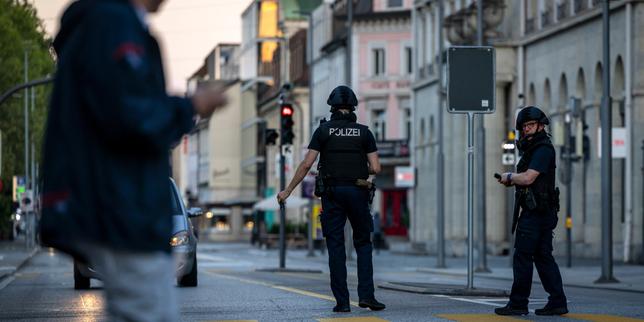
As dawn broke over Aarau, the contrast was brutal. The morning sun hit the wet grass where empty plastic cups and scattered shoes bore witness to the night's panic. Police tape fluttered in the early breeze. Investigators moved methodically through the debris, measuring distances, bagging spent casings, looking for digital footprints on encrypted messaging apps where underground parties are hastily organized.
The suspects are in flight. Across borders that are porous despite the cameras. In a continent where you can cross into three different countries before lunch, a man with a smoking barrel has a terrifying head start.
Law enforcement is appealing for witnesses. They always do. Did you see a man in a dark hoodie? Did you record a video on your phone just as the music cut?
People are hesitant to talk. In the counter-cultural margins where these unauthorized raves thrive, talking to the police is treated as a cardinal sin. There is a code of silence born from a desire to protect the scene from police crackdowns. But a code of silence built to protect a DJ from a noise fine is entirely different from a code of silence sheltering someone who took a life.
If you were there, you know who you are. You remember the exact moment the strobe light caught the glint of steel. You remember the sudden shove to your left. You remember the face of someone running away.
Silence is no longer loyalty. It is complicity.
The Last Track
The bassline is gone from that field now. The generators have been hauled away. The police tape has been gathered up and tossed into heavy-duty plastic bags.
What remains is the haunting realization that violence does not require a warzone; it only requires an ego, an accessible weapon, and a moment where accountability is drowned out by a kick drum.
We will keep dancing. Human beings are stubborn creatures of rhythm. We need spaces to let go, to sweat out the anxiety of modern life, to feel the collective pulse of our peers. We cannot live in glass cages, terrified of every shadow at the edge of the clearing.
But the next time the subwoofers start to shake the ground beneath your feet, take a second look at the people standing in the dark beside you. Notice the exits. Pay attention to the boiling points. Realize that the fragile bubble of our youth and our joy is protected only by the basic human decency we extend to the stranger dancing next to us.
When the music stops, we have to look each other in the eye.
And right now, the silence in Aarau is deafening.