Tehran’s threat to close the Bab al-Mandab Strait is not a localized geopolitical temper tantrum; it is the execution of a dual-chokepoint denial strategy designed to break global supply chains. By explicitly linking the security of the Bab al-Mandab to the already constrained Strait of Hormuz, the Iranian leadership is attempting to enforce a total maritime blockade on West Asian energy and trade corridors. This systemic risk analysis deconstructs the economic mechanisms, operational constraints, and strategic realities of a synchronized shutdown of the world's most critical maritime arteries.
The Dual Chokepoint Leverage Framework
Global maritime commerce relies on structural nodes that cannot be bypassed without severe cost penalties. Tehran's current posture shifts operational pressure from a single-point disruption to a multi-theater denial model.
                  [Global Energy & Freight Markets]
                     /                         \
                    /                           \
[Chokepoint 1: Strait of Hormuz]       [Chokepoint 2: Bab al-Mandab]
   * Direct Iranian Control               * Proxy Control (Houthi Movement)
   * 20% of Global Oil Supply             * Gateway to Suez (12-15% Global Trade)
                    \                           /
                     \                         /
                [Compounded Supply Chain Disruption]
                 - Alternative routes closed (East-West Pipeline)
                 - $120-$150/bbl Short-Term Crude Projection
The Strait of Hormuz Baseline
Directly controlled by Iranian territorial positioning, this channel serves as the primary exit vector for roughly 20 percent of global oil consumption. The restricted transit environment imposed here since early 2026 has already forced unprecedented re-routing and driven baseline global inflation upward.
The Bab al-Mandab Multiplier
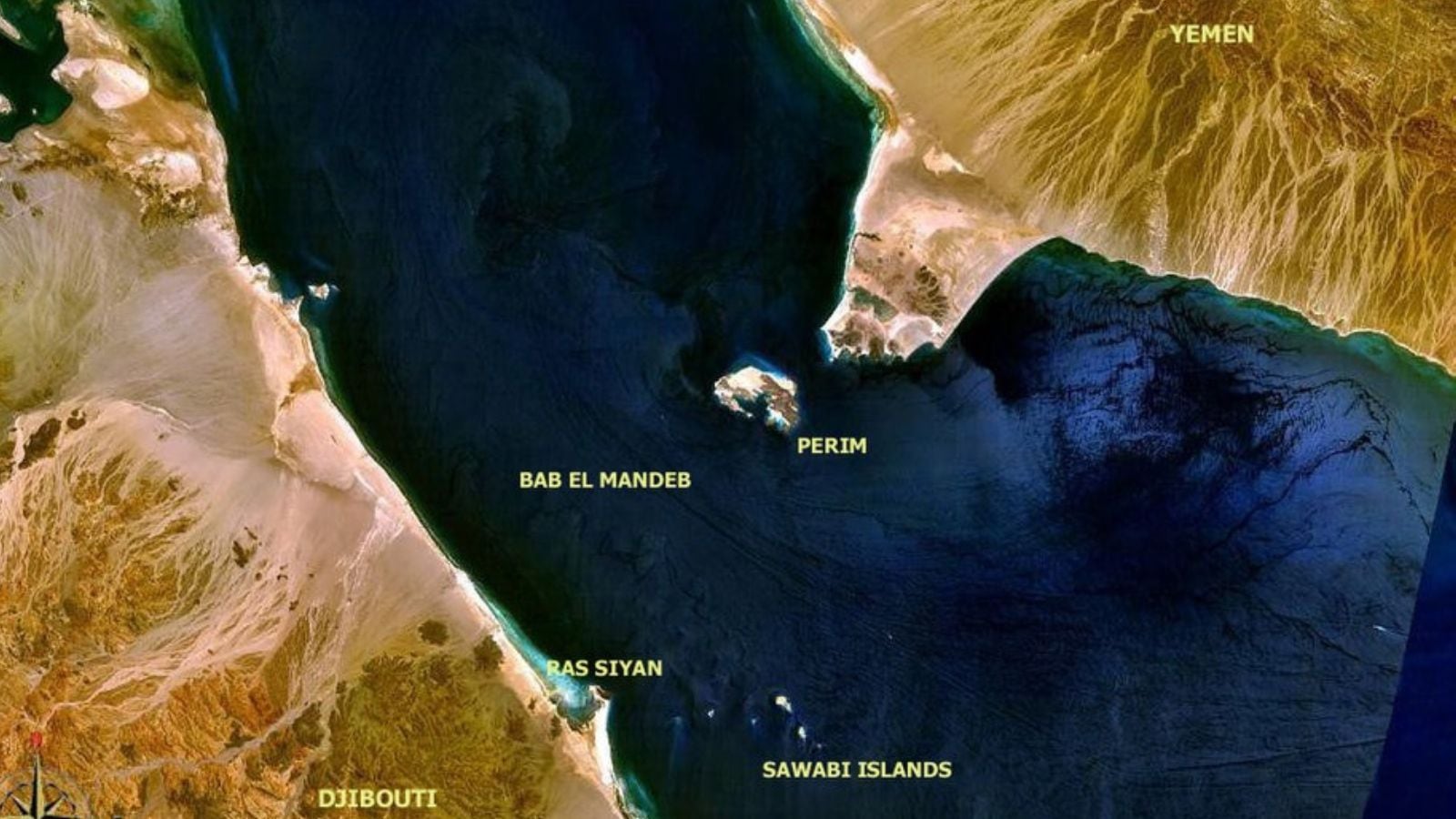
Positioned between Yemen and the Horn of Africa, this 29-kilometer-wide passage handles 12 to 15 percent of global maritime trade and serves as the southern gateway to the Suez Canal. It represents the explicit vulnerability in Europe-Asia trade loops.
By weaponizing both vectors simultaneously, the Axis of Resistance eliminates the primary mitigation strategies used by sovereign states and commercial fleets during isolated crises.
The Collapse of the Saudi Mitigation Vector
The strategic value of the Bab al-Mandab has escalated due to infrastructure modifications made by Gulf oil producers to insulate themselves from Iranian action in the Persian Gulf. Saudi Arabia’s primary contingency mechanism for a Hormuz shutdown is the East-West Pipeline (Petroline), which possesses a nominal capacity of approximately 5 million barrels per day. This infrastructure transports crude from eastern fields to the Red Sea port of Yanbu, completely bypassing Hormuz.
The structural flaw in this mitigation strategy is geographical dependency. Crude loaded at Yanbu bound for high-demand Asian markets must transit south through the Bab al-Mandab. If the southern strait is blocked, the East-West Pipeline is rendered functionally obsolete for eastbound trade. The remaining alternative—shipping crude north through the Suez Canal to European markets—faces immediate vessel availability constraints and cannot absorb the volume shifts required by Asian refining infrastructure.
Consequently, a synchronized closure creates a structural dead-end for Gulf energy exports, trapping millions of barrels per day within regional pipeline networks.
The Transshipment Cost Function and Fleet Friction
When a chokepoint is compromised, commercial shipping lines execute a basic trade-off calculation: absorb the risk premium of transit or incur the operational penalties of diversion. In the case of the Bab al-Mandab, a total blockade forces a mandatory detour around Africa's Cape of Good Hope.
This diversion changes the fundamentals of maritime logistics:
- Distance and Time Expansion: A standard voyage from Singapore to Rotterdam increases by roughly 6,500 kilometers, adding 10 to 14 days of transit time depending on vessel speed.
- The Velocity of Capital Deficit: Longer transit times reduce the effective capacity of the global shipping fleet. If a container ship takes 30 percent longer to complete a round trip, 30 percent more vessels are required to maintain identical weekly cargo volumes. This structural capacity deficit drives spot freight rates up across unaffected routes.
- Fuel Consumption Asymmetry: The added open-ocean transit requires immense fuel expenditures. At current bunker fuel prices, a round-trip detour adds hundreds of thousands of dollars in direct operating costs per vessel.
The previous partial disruptions between 2023 and 2025 cost the global economy an estimated $20 billion annually. A total, enforceable blockade would multiply this figure as insurance markets reprice risk. Under a complete denial scenario, underwriting premiums for Red Sea entry cease to exist; underwriters simply withdraw coverage entirely, making the route legally and financially untransitable for commercial fleets.
Escalation Scenarios and Asymmetric Warfare Mechanisms
Iran lacks the blue-water navy required to execute a conventional, legally defined blockade of the Bab al-Mandab. Instead, the tactical execution relies entirely on asymmetric sea-denial capabilities deployed via the Houthi movement in Yemen.
Anti-Ship Cruise Missiles and Ballistic Vectors
The narrowness of the Bab al-Mandab allows low-cost land-based systems to hold multi-million-dollar commercial assets at risk. The deployment of solid-fuel anti-ship ballistic missiles provides virtually zero radar warning time for passing civilian hulls.
Unmanned Surface Vessels
Low-profile, explosive-laden remote-controlled boats deployed from the Yemeni coastline can breach the hulls of slow-moving tankers, creating catastrophic environmental and structural damage that effectively freezes commercial appetite for the route.
Subsea Cable Vulnerabilities
The Bab al-Mandab is not merely a surface trade corridor; it is a critical choke point for global digital infrastructure. Over a dozen international fiber-optic cables traverse the seabed of the strait, carrying an estimated 17 to 20 percent of global internet traffic between Europe and Asia.
The kinetic threat to these lines represents a direct vulnerability for international financial systems, where even localized data routing delays can disrupt cross-border transactional liquidity.
The Macroeconomic Liquidation Horizon
Energy and financial markets operate on predictive pricing models that are poorly equipped for structural multi-chokepoint failures. The closure of Hormuz has already set a high baseline for global energy costs; layering a Bab al-Mandab blockade atop this baseline breaks current pricing models.
Investment banking analyses suggest that an isolated, prolonged closure of Hormuz risks driving crude oil prices into the $120 to $130 per barrel range. If the resistance axis successfully executes the "balanced regulation of the two straits"—closing the Bab al-Mandab simultaneously—crude pricing enters uncharted territory, with conservative forecasts targeting $150 per barrel and extreme escalation models pointing to $200.
The consequence for Western economies is a severe stagflationary shock. Central banks, already battling sticky inflationary inputs, would be forced to maintain higher interest rates to combat energy-driven price increases, even as industrial output slows due to component shortages and broken supply lines.
Furthermore, this volatility directly impacts highly leveraged speculative markets, including decentralised finance and automated on-chain vaults, where sudden shifts in global risk premiums trigger cascading asset liquidations.
The Strategic Reality and Operational Limits
The execution of a dual-strait closure has clear operational and geopolitical boundaries. A strategy based on total trade denial cannot be maintained indefinitely due to internal and external constraints.
- The Retaliation Threshold: Complete closure of the Red Sea gateway triggers direct kinetic intervention from international coalitions. The United States administration has signaled that attacks on critical infrastructure will meet severe military responses. A total blockade guarantees the direct targeting of Iranian and Houthi command nodes, port infrastructure, and domestic energy facilities.
- Decoupling from Global Allies: Iran relies heavily on illicit and semi-legitimated trade networks with non-Western nations to sustain its domestic economy. A total shutdown of the Bab al-Mandab disrupts Chinese energy supply lines and commercial trade with East Africa and South Asia. Tehran cannot isolate Western trade without simultaneously causing severe economic friction for its most critical economic partners.
- Suez Canal Bankruptcy: Egypt’s economy relies heavily on Suez Canal transit fees, which previously generated upwards of $10 billion annually. A total blockade of the southern approach drains the canal of traffic, forcing a critical sovereign partner into financial distress and shifts regional diplomatic balances against Tehran.
The strategic play is not the permanent physical closure of the Bab al-Mandab, but rather the maintenance of a highly volatile, high-friction environment that imposes a permanent risk premium on Western allies. Corporations must adjust their logistics models to assume that the Red Sea route is permanently unstable.
Supply chain management must pivot from just-in-time efficiency to high-inventory redundancy, permanently pricing in the structural costs of longer routes, higher insurance premiums, and systemic West Asian maritime instability.