The math of owning a car in Europe just changed. If you think filling up your tank hurts right now, you aren't alone. Millions of drivers across Europe are actively avoiding the petrol station, and it's dragging down fuel sales at a speed we haven't seen in years.
This isn't a slow trend. It's a sudden, aggressive shift.
When the conflict involving Iran escalated earlier this year, it didn't take long for the ripple effects to smash into local pumps. The virtual shutdown of shipping traffic through the Strait of Hormuz sent global energy markets into absolute chaos. Brent crude oil, the global benchmark, shot past the $100-per-barrel mark. While politicians scramble and trade analysts debate supply lines, everyday drivers are taking matters into their own hands. They are simply refusing to buy.
Recent data from April shows a massive 3.5% year-on-year drop in European fuel sales. It's the first real contraction since mid-2024, and the sharpest drop the continent has seen since late 2023. People aren't just driving less; they are altering their entire lives to starve their cars of fuel.
The Brutal Reality of Pump Shock
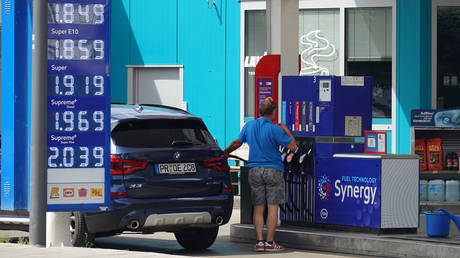
We need to look at the actual numbers to understand how deeply this is hitting home. Vague concepts about market volatility don't mean much until you see what people are paying at retail stations. According to tracking data from Global Petrol Prices, retail fuel costs skyrocketed between late February and May.
In the United Kingdom, gasoline prices jumped by roughly 19%. Across Germany, drivers saw spikes between 10% and 15%. Diesel took an even uglier turn. Because diesel is the lifeblood of global freight and heavy industry, its price shot up even faster than gasoline across most European hubs.
Look at how individual countries are reacting to these insane spikes.
- Germany and Norway: Both nations just reported double-digit drops in fuel sales.
- The United Kingdom: Total fuel consumption plummeted by a staggering 10% compared to the exact same time last year.
- The Broader EU Market: The European Commission is already facing the reality that the continent has paid an extra €47 billion just to import fossil fuels since this conflict began.
Honestly, the behavioral shift is fascinating. In March, right as the war kicked off, there was a frantic wave of stockpiling. Drivers panicking about potential rationing filled up every tank they owned. But by April and May, that panic buying dried up. Now, the goal is pure conservation.
Governments are Running Out of Cash to Help You
You might wonder why your local government doesn't just step in and fix this. The truth is, they tried, and it's already blowing a hole through their budgets.
Germany and Spain alone poured over €11 billion into tax reductions and emergency subsidies to artificially lower the price at the pump. But these temporary band-aids cannot last. The European Union recently downgraded its overall 2026 economic growth forecast specifically because the Strait of Hormuz crisis is driving up inflation.
Public finances are already strained. If oil prices stay elevated through the summer, continuing these fuel tax cuts could trigger a legitimate fiscal crisis for several member states. Governments cannot afford to keep subsidizing your morning commute while paying premium rates for emergency oil reserves.
The European Commission is urging member states to roll out voluntary fuel-saving measures instead of financial bailouts. They are leaning heavily on the International Energy Agency (IEA) ten-point plan to cut oil use. This means the pressure to adapt is falling squarely on your shoulders.
How Savvy Drivers Are Beating the Energy Crisis
So, what are people actually doing to keep their money from disappearing into a gas tank? They aren't just sitting at home. They are changing how they move.
The most obvious shift is the explosive return to public transit. However, public transit operators are dealing with their own rising energy costs, prompting fare hikes of roughly 25% in various regions. Even with more expensive tickets, trains and buses remain vastly cheaper than paying to park and fuel a private vehicle.
Carpooling apps and local ride-sharing networks are seeing record user registration numbers across France and Italy. Neighbors who used to ignore each other are suddenly coordinating morning commutes to split a fuel bill that has nearly doubled in less than ninety days.
Then there is the quiet explosion of hypermiling. Drivers are altering their actual physical habits behind the wheel. They are clearing unnecessary weight out of their trunks, dropping their highway speeds from 130 km/h to 110 km/h, and coasting to stops. It sounds minor, but changing how you use your right foot can instantly claw back 15% of your fuel efficiency.
What You Need to Do Right Now
The worst mistake you can make right now is assuming prices will naturally drop back to normal next week. Fitch Ratings predicts that the European gas and oil markets will remain incredibly tight for the rest of the year. You need a personal strategy to insulate your wallet immediately.
First, track your consumption baseline. Stop guessing what you spend. Look at your bank statements from the last thirty days and isolate every single euro spent at a petrol station.
Second, auditing your weekly trips is mandatory. Combine your errands into a single, tightly planned route rather than making three separate trips to the store throughout the week. If a destination is under two kilometers, leave the keys on the counter and walk or ride a bike.
Third, if you run a business or have the luxury of remote work, negotiate for it. Push for extra remote days. Saving just two days of commuting a week cuts your monthly work-related fuel costs by a massive 40%.
The geopolitical landscape isn't changing anytime soon. The drivers winning this crisis are the ones who stop complaining about the pump and start systematically changing their dependency on it.