The waiting room is a universal purgatory. It smells of industrial lemon, old magazines, and a low-frequency hum of anxiety. You sit there, clutching a plastic clipboard, trying to remember exactly when the pain started or how to describe the fog that settles over your brain by 3:00 PM. When the door finally opens, you get fifteen minutes. If you’re lucky, you get twenty.
In that narrow window of time, a human being—your doctor—must process your history, scan your vitals, recall ten years of schooling, and somehow spot the one microscopic anomaly that could save your life. It is an impossible burden. We have spent a century asking healers to act like computers, and we are surprised when they burn out. If you liked this piece, you might want to check out: this related article.
Michael and Susan Dell are betting $750 million that we’ve been asking the wrong things of our medicine.
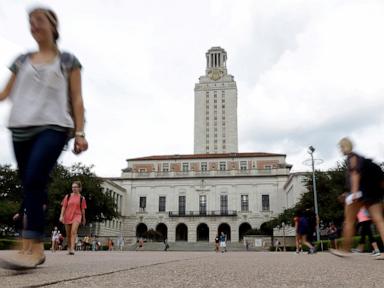
Through the Michael & Susan Dell Foundation, this massive gift to the University of Texas at Austin isn't just about constructing another glass-and-steel tower in the city’s growing medical district. It’s about building the first "AI-native" academic medical center in the world. This isn't a minor upgrade to an existing system. It is a fundamental demolition of how a hospital functions. For another look on this story, refer to the recent update from Everyday Health.
The Ghost in the Exam Room
Consider a hypothetical patient named Elias. Elias is sixty-four, a retired teacher with a penchant for gardening and a stubborn cough that won't quit. In our current world, Elias sees a specialist. The specialist looks at a screen, types notes, asks three questions, and orders a scan. The scan is read by a radiologist who has never met Elias. The results are sent to a portal. Elias waits.
The tragedy of modern healthcare isn't a lack of data; it’s that the data is trapped in silos. The doctor is so busy being a data entry clerk that they miss the way Elias’s hands shake when he mentions his wife.
The Dell Medical School’s new project aims to change the very air Elias breathes when he walks through the door. In an AI-native environment, the "intelligence" isn't a chatbot or a search engine. It’s a subterranean layer of processing that connects everything. While Elias speaks, ambient sensors could potentially note the subtle cadence of his voice—a marker for neurological shifts. The system doesn't just store his records; it cross-references his genetic markers against millions of global case studies in real-time, flagging a rare reaction to a common blood pressure med before the doctor even reaches for a prescription pad.
This is the invisible stake: reclaiming the human connection by offloading the cognitive heavy lifting to the machines.
The Architecture of a New Kind of Hope
The investment will fund two major facilities at UT Austin: the Simon Medical Center and a specialized neurological health building. But the physical footprint is secondary to the philosophical one.
When we talk about $750 million, the numbers lose their meaning. It’s a dry statistic on a balance sheet. To find the pulse of that money, you have to look at the friction it’s designed to eliminate. Medicine is currently a series of handoffs. You move from the GP to the lab, from the lab to the specialist, from the specialist to the pharmacy. Every handoff is a chance for a life-saving detail to fall through the cracks.
The Dells’ vision for an AI-integrated center at UT Austin suggests a world where the "medical record" is a living, breathing entity.
Think of it like a GPS for your internal biology. If you’re driving through a storm, you don't want a paper map from 1994; you want a system that knows there’s a wreck three miles ahead and reroutes you instantly. The University of Texas is positioning itself to be that navigator. By embedding artificial intelligence into the literal foundation of the clinical workflow, they are attempting to shorten the distance between "something feels wrong" and "here is exactly why."
The Burden of the Healer
We have to talk about the doctors.
The suicide rate among physicians is a dark, quiet epidemic. Much of it stems from "moral injury"—the pain of knowing what a patient needs but being prevented from providing it by a mountain of paperwork and a fragmented system.
By designating these new centers as AI-native, UT Austin is making a bold claim about the future of the workforce. If a machine can synthesize the latest research from a journal published in Zurich three hours ago and present it to a surgeon in Austin as they prepare for a procedure, that surgeon is no longer a solitary actor. They are the tip of a spear sharpened by the sum total of human knowledge.
Critics often worry that "AI-native" means "human-free." They fear cold robots and automated voices. But the reality is often the opposite. When the computer handles the billing codes, the data retrieval, and the pattern recognition, the doctor is finally free to do the one thing a machine cannot: look a patient in the eye and offer empathy.
The Dells aren't buying more technology. They are buying time.
Why Austin, Why Now?
There is a specific energy in Central Texas right now—a collision of "old" academic rigor and "new" tech audacity. UT Austin has spent the last decade transforming itself from a regional powerhouse into a global magnet for the semiconductor and software industries.
But technology without a soul is just a faster way to make mistakes.
The $750 million gift is a stabilizer. It anchors the tech boom to the most basic human need: the desire to survive. By placing this center within a public university system, there is a built-in accountability. This isn't a private laboratory for the elite; it is a training ground for the next generation of healers who will never know a world where they have to hunt for a paper file or guess at a drug interaction.
The Simon Medical Center will serve as the primary site for this experiment. It will be a place where the "ambient clinical environment" isn't a buzzword but a reality. Microphones that understand medical context, cameras that can detect the onset of a stroke through facial symmetry, and algorithms that can predict a sepsis crash hours before the heart rate spikes.
These are the tools of a new trade.
The Invisible Edge of the Blade
We are currently living through a period of profound medical uncertainty. We have more tools than ever, yet we feel more disconnected from our care than at any point in history. We spend hours on Google trying to diagnose ourselves because we don't trust that the system has the time to see us clearly.
The Dells’ gift acknowledges this broken trust.
It is an admission that the current model has reached its limit. We cannot train humans to be faster or more accurate than they already are. We have reached "peak human" in the clinical setting. The only way forward is to build a partner.
This partnership is fraught with questions. Who owns the data? How do we ensure the algorithms aren't biased? These are the ghosts that haunt the halls of any AI project. But the alternative is to stay in the lemon-scented waiting room, watching the clock, hoping the doctor had their coffee and isn't distracted by the fifty other files on their desk.
The Last Second
Imagine Elias again. He’s in the exam room at the new Simon Medical Center.
The doctor enters. She doesn't go to a computer. She doesn't open a laptop. She sits on a stool, leans forward, and asks, "How is the garden, Elias?"
Behind the scenes, the AI-native infrastructure has already confirmed that his cough is likely a side effect of a new pollen strain in his neighborhood, cross-referenced with his specific respiratory history. It has already prepared three treatment options and checked his insurance for coverage. It has done the work of a thousand clerks in the time it took the doctor to walk down the hall.
The doctor knows this. Elias doesn't.
All Elias knows is that for the first time in years, his doctor is actually listening to him.
The $750 million isn't for the software. It’s for that moment of silence between a doctor and a patient, where the only thing that matters is the human story.
Michael and Susan Dell have placed their chips on the table. They are betting that the most sophisticated technology in the history of our species will be the very thing that allows us to finally be human again.
The construction crews will move dirt. The architects will hang glass. The programmers will write the code that learns. But the real success won't be measured in the height of the buildings or the speed of the processors. It will be measured in the quiet sighs of relief from people who realize they aren't just a number in a database anymore.
They are finally being seen.
The cranes over Austin are more than just a sign of growth. They are the skeletal remains of an old way of dying, being replaced by a new way of living. We are moving toward a horizon where the hospital doesn't just treat the disease, but remembers the person.
It is a staggering sum of money for a simple goal: to make sure that when you’re at your most vulnerable, the system is at its most intelligent.
The lemon smell might remain. The plastic clipboards might stay. But the purgatory is ending.
The door is opening. The doctor is walking in. And for once, she has all the time in the world.