The GDP Growth Illusion
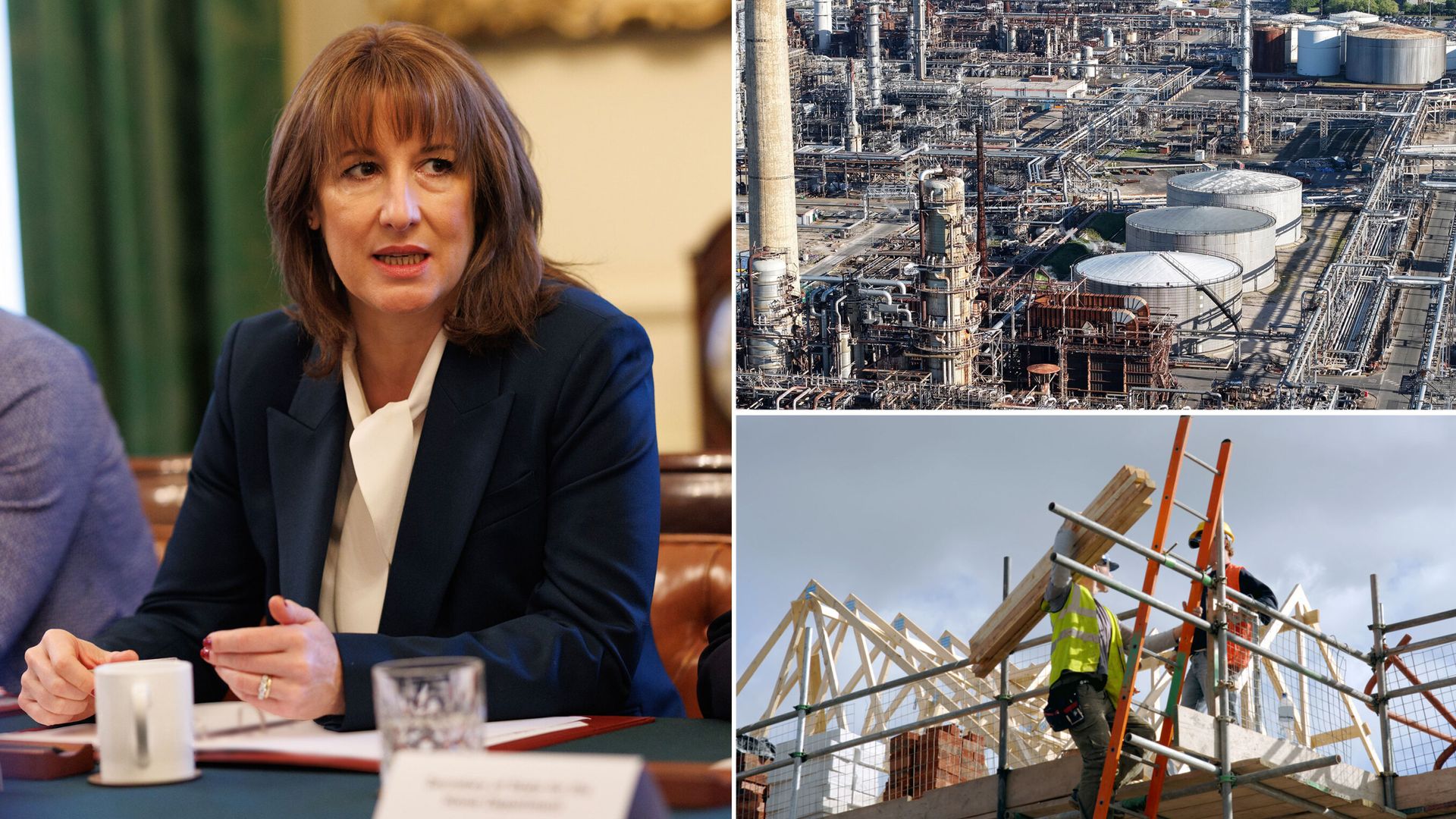
Mainstream headlines are currently obsessed with a 0.2% uptick in GDP. They treat it like a victory lap. Chancellor Rachel Reeves is already using these crumbs of "growth" to justify a narrative of stability, warning us not to "put the economy at risk."
It is a lie.
Calling 0.2% growth a success is like cheering because a sinking ship slowed its intake of water by a gallon. We are witnessing the cult of the marginal gain. In reality, these figures mask a stagnant private sector and an economy that is being kept on life support by government spending and population increases rather than genuine productivity.
http://googleusercontent.com/image_content/203
When the Treasury warns against "risk," what they actually mean is they want to protect the status quo of managed decline. They are terrified of the creative destruction required to actually fix a broken system. If you aren't growing at 2% or 3%, you aren't growing at all; you are simply vibrating in place while the rest of the world moves past you.
The Productivity Trap Nobody Mentions
The "lazy consensus" suggests that any growth is good growth. This ignores the quality of that growth. If GDP rises because the government hired 10,000 more administrators to shuffle paperwork, the "number" goes up, but the nation gets poorer.
GDP is a blunt instrument. It measures activity, not value.
- Public Sector Bloat: A huge chunk of recent UK "growth" is driven by non-market output.
- Population Padding: If your economy grows by 0.2% but your population grows by 0.8%, every single person in the country is actually poorer on average. This is a GDP per capita recession, hidden behind a curtain of aggregate data.
- The Debt Engine: We are borrowing money to stimulate "growth" that doesn't even cover the interest on the debt we took out to create it.
I have sat in boardrooms where executives celebrated a 1% increase in revenue while their margins were being incinerated by overheads. They were fired six months later. The UK government is currently that executive, and the taxpayer is the disgruntled shareholder being told everything is fine.
Why "Stability" is a Death Sentence
Reeves talks about stability as if it’s a virtue. In a stagnant economy, stability is just another word for rigor mortis.
The UK economy doesn't need "not putting at risk." It needs to be shocked. We have a planning system that prevents anything from being built, an energy policy that guarantees the highest prices in Europe, and a tax burden at a seventy-year high.
Maintaining "stability" in this environment means:
- Protecting zombie companies that should have folded a decade ago.
- Ensuring that capital stays trapped in unproductive real estate rather than flowing into tech or manufacturing.
- Keeping the tax "cliff edges" that discourage small businesses from expanding.
The risk isn't change. The risk is the continuation of the last fifteen years of flatlining productivity.
The Math of Managed Decline
Let’s look at the mechanics. Economists often use the Solow-Swan Growth Model to explain how capital, labor, and knowledge create output.
$$Y = A \cdot K^\alpha \cdot L^{1-\alpha}$$
In this equation, $Y$ is total production, $K$ is capital, $L$ is labor, and $A$ represents Total Factor Productivity (TFP).
The UK's problem is $A$. We have added more labor ($L$) through record migration. We have tried to sustain capital ($K$) through cheap credit. But $A$—the "magic" of doing more with less—has been dead since 2008.
When Reeves says we shouldn't "risk" the economy, she is saying we shouldn't touch the variables. But if $A$ is zero, the only way to grow $Y$ is to endlessly pump $L$ and $K$. That is a pyramid scheme, not a national strategy.
Stop Asking if We Are Growing
The question "Is the economy growing?" is the wrong question. It’s a distraction used by politicians to avoid talking about the standard of living.
The question you should be asking is: "Is the cost of living falling?"
In a healthy, technologically advancing society, things should get cheaper. Computers get faster and cheaper. Energy should get cheaper. Food should get cheaper. Instead, we have "growth" while every essential service becomes more expensive and lower quality. This is the hallmark of a rent-seeker economy, where the few extract value from the many through regulation and monopoly rather than innovation.
The Brutal Reality of "Unexpected" Growth
Whenever you see the word "unexpected" in a financial headline, read it as "the models are broken."
Forecasters missed the mark because they overestimate the impact of consumer spending and underestimate the drag of a high-tax, high-regulation environment. The 0.2% wasn't a sign of resilience; it was a statistical wobble.
If you want to see what actual growth looks like, look at the US. While the UK bickers over fractions of a percent, US productivity is surging because they allow for failure. They allow for risk. They don't have Chancellors standing at podiums telling people that "now is not the time" for disruption.
The Actionable Truth
If you are waiting for the government to "grow the economy" so your life gets better, you will be waiting forever.
- Ignore the Aggregate: GDP doesn't pay your mortgage. Your personal productivity and the niche you occupy in the global market do.
- Move Capital Out of the UK "Safety": If the national strategy is "stability" (stagnation), then keeping your assets tied strictly to domestic growth is a losing bet.
- Bet on Efficiency: The only companies that will survive this "stability" are those that can bypass the UK's structural failures—firms that use AI to slash headcount or those that export to high-growth markets.
The Chancellor is right about one thing: the economy is at risk. But the risk isn't a change in direction. The risk is the person behind the wheel refusing to hit the accelerator because they’re afraid of a bump in the road.
Stop celebrating crumbs. Demand a bakery.