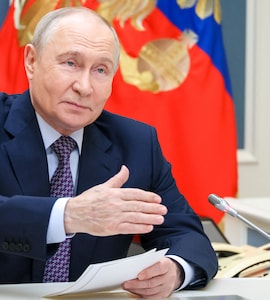
When a reporter in Brussels asked Volodymyr Zelenskyy whether Donald Trump was treating him as a scapegoat ahead of the November midterm elections, Ukraine's president didn't launch into a defense. He paused. He smiled. Then he said, "This is my answer," sending a wave of laughter through the press room.
That single grin captured a moment of high-stakes diplomatic tension that a 500-word speech never could. On October 16, 2026, following a European Union summit in Brussels, Sky News correspondent Alistair Bunkall pointed to Trump's difficult midterm outlook and asked Zelenskyy directly if he felt he was being cast as a scapegoat for domestic headaches in Washington. Saying "yes" would have blown up fragile diplomatic channels. Saying "no" would have sounded hollow to anyone watching the headlines. So Zelenskyy let silence and a wry smile do the heavy lifting.
Why Zelenskyy Smiled Instead of Answering Trump Scapegoat Question
Anyone who follows high-pressure press conferences knows how rare it is for a wartime leader to answer a loaded geopolitical question with a punchline. Usually, diplomats reach for carefully vetted talking points—phrases like constructive dialogue, shared security, or no comment on domestic politics. Zelenskyy skipped the script entirely.
A few things made that moment land the way it did. First, the timing was brutal. Just days earlier, Trump had publicly criticized Ukraine's renewed strikes on Russian oil refineries as a "disgrace," arguing they pushed global oil prices higher. Around the same stretch, Trump told Newsmax that he found Zelenskyy more difficult to deal with than Russian President Vladimir Putin. Asking Zelenskyy whether he was becoming a convenient foil for American voters' frustrations—amid jittery energy markets, a conflict involving Iran, and midterm campaigning—put a spotlight on a raw nerve.
Second, Zelenskyy's background shows up in moments like this. Before entering politics, he built his career in comedy and television production, where timing, deadpan pauses, and reading a room are survival skills. In Brussels, letting the silence stretch before smiling turned a trap question into shared gallows humor with the press corps.
A smile doesn't bind a leader to a quote on the wire, yet it still signals that everyone in the room gets the subtext.
Let's be honest, though: a viral smile doesn't erase real leverage problems. When a small or mid-sized nation depends heavily on outside intelligence, air defenses, and military technology, public humor is a pressure valve, not a policy fix. Even as reporters laughed, the underlying friction between Washington's desire to calm energy markets and Kyiv's pressure on Russian infrastructure remained unresolved.
What Triggered the Clash Over Oil Refineries and Ceasefires
To understand why that "scapegoat" question carried so much weight, you have to look at what happened in the days right before October 16. For months, Kyiv had worked to maintain working rapport with the Trump administration, even as global energy markets grew more volatile. That balancing act started fraying once oil prices and fuel anxieties became central talking points in the United States.
Kyiv had previously floated a conditional pause on hitting Russian oil refineries if Russia stopped striking Ukrainian energy infrastructure. Ukrainian officials argued they held up their end while Russian attacks on Ukrainian power facilities continued—including strikes such as the one in Lutsk that knocked out power—which Moscow disputed. On October 15, Zelenskyy told the Financial Times that the block on refinery strikes was over.
That put Washington and Kyiv on a collision course. Here's how the two sides were looking at the exact same problem:
- Washington's angle: Higher global oil and fuel prices hurt consumers and complicate domestic politics ahead of the November midterms. From Trump's vantage point, hitting Russian refineries risked driving energy costs higher at a sensitive moment.
- Kyiv's angle: Russian oil revenues and fuel supply help bankroll and sustain the war effort, while Russian drones and missiles keep hammering Ukrainian grids heading into winter. Giving up long-range pressure on refineries without verified reciprocity felt like tying one hand behind Kyiv's back.
Add disputes over Starlink access and satellite communications during Russian attacks, and the tension wasn't abstract. Reports and statements around that week showed Zelenskyy voicing frustration over disruptions to connectivity used in defense operations, underscoring how quickly technical and diplomatic friction can collide on the battlefield.
Why Scapegoat Framing Resonates in Wartime Politics
When a reporter asks a foreign leader if they're being used as a scapegoat, they're tapping into a classic pattern in international politics. When voters feel squeezed at the pump or worn down by prolonged foreign crises, leaders at home often face pressure to point to simple villains or quick fixes.
In practice, foreign leaders rarely fit neatly into a single box:
- Sometimes they are convenient political foils. Criticizing an ally's tactics can let a domestic leader sound tough on costs or skeptical of open-ended entanglements without owning the broader complexity of the conflict.
- Sometimes they are genuine policy roadblocks. A foreign president isn't elected by American voters and answers to domestic survival and national security. When Washington wants a deal or calm markets and Kyiv sees an existential threat, friction isn't just spin—it's real disagreement.
- Sometimes it's both at once. Politics rarely picks just one motive. A leader can genuinely want lower oil prices and see political upside in blaming a partner who refuses to play along.
That's why Zelenskyy's grin hit a nerve. Confirming the scapegoat label would have looked like whining or picking a fight with a crucial backer. Denying it flatly would have made him look naive. A wry smile acknowledged the irony without surrendering the podium.
How to Read Viral Diplomacy Without Getting Fooled
Viral clips from press conferences are fun to watch, and honestly, they're easy to overread. A ten-second clip can make a leader look dominant, flustered, or untouchable, depending on how it's edited and framed.
If you want to make sense of moments like this without falling for hot-take theater, try a few practical habits:
- Watch the full sequence, not just the punchline. Look at what was said in the 24 to 48 hours before the press conference—interviews, policy shifts, and strikes on the ground—so you know what prompted the question.
- Separate theater from leverage. Laughter in a Brussels press room is a mood indicator, not a balance-of-power shift. Track concrete moves on aid, weapons, sanctions, diplomatic talks, and European backing.
- Check multiple outlets across regions. Compare coverage from European, U.S., and Ukrainian sources—such as The Guardian and Mediaite—to see what context gets trimmed in short clips.
- Notice what goes unanswered. A clever non-answer tells you a politician sees danger in every available word. Paying attention to why a direct answer would hurt usually reveals more than the joke itself.