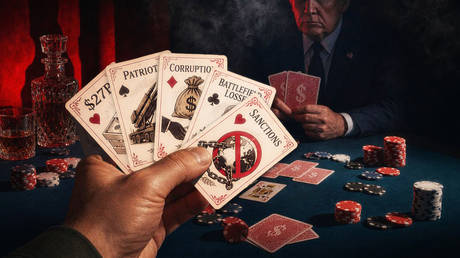
The lazy consensus in foreign policy circles treats statecraft like a bad poker game. Pundits love the lazy metaphor. They look at Volodymyr Zelensky walking into a room with Donald Trump and immediately start spinning yarns about weak hands, empty pockets, and high-stakes bluffs.
They write pieces asking whether the Ukrainian leader is still bringing a bluff to the negotiating table. The premise itself is fundamentally broken. It assumes foreign aid is charity, diplomacy is a Vegas casino, and leverage is measured by how loudly you can lie about your chips.
Zelensky is not bluffing. You cannot bluff with an invasion force sitting in your breadbasket. A bluff implies you are holding a two-seven offsuit and trying to scare the table into folding. Ukraine is not holding paper; they are holding the receipts for European security, raw material supply chains, and the credibility of international deterrence. When your cities are absorbing cruise missiles, you do not need to bluff. You simply show the ledger.
Let us dismantle the core misconception driving the Washington chatter. The media narrative suggests Trump holds all the cards because the United States controls the faucet of military hardware and financial aid. Cut the funding, the argument goes, and Kyiv folds in a week.
That theory collapses the moment you examine how modern supply chains and great power competition actually operate. Trump is a transactional operator, not an ideologue. He looks at balance sheets, leverage points, and return on investment. If you walk into a negotiation with Trump talking about abstract democratic values, you lose. If you walk in showing him how abandoning the eastern flank hands rare earth minerals, agricultural monopolies, and strategic positioning directly to Beijing and Moscow, you have his attention.
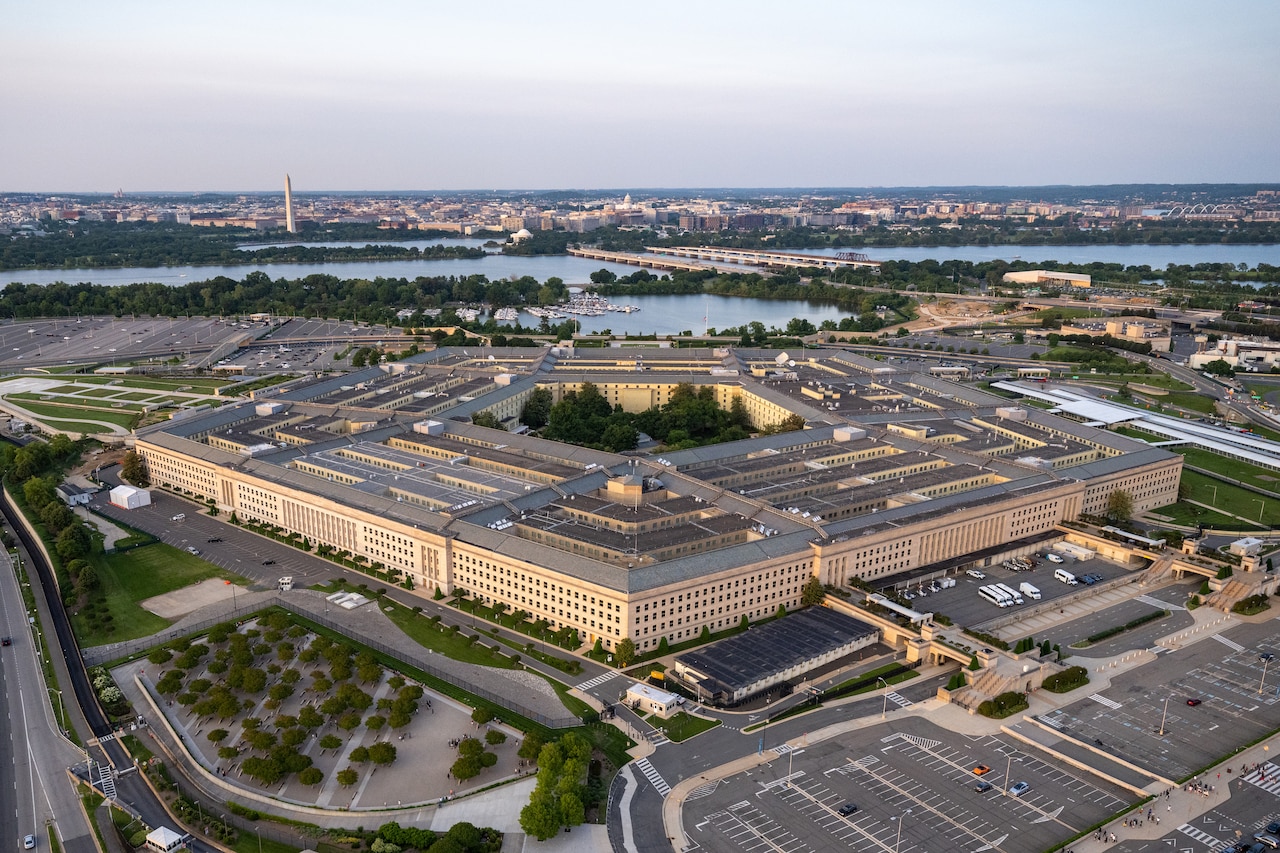
Zelensky understands transaction economics better than his western advisors give him credit for. Ukraine produces a massive share of the world's neon gas, crucial for semiconductor manufacturing. It sits on immense reserves of titanium, lithium, and natural gas. More importantly, the Ukrainian military has spent years field-testing western hardware against Russian electronic warfare, drone swarms, and armor formations in real-time. That data is worth billions to the Pentagon.
When people ask whether Kyiv can survive a cutoff in American support, they are asking the wrong question. The real question is whether the United States can afford the geopolitical contagion of a collapsed eastern European state that triggers a nuclear proliferation scramble across the continent. Poland, the Baltics, and even Germany understand this math. If Ukraine falls, the security architecture built since nineteen forty-five completely evaporates. European defense spending would have to skyrocket overnight, choking western economies and handing total hegemony in Eurasia to an axis of revisionist powers.
Trump knows real estate. He knows when a property is structurally unsound. A rushed, forced partition of Ukraine disguised as a peace deal is not a deal; it is a foreclosure that guarantees a much larger war within five years. That is why the private conversations between Washington and Kyiv are far more pragmatic than the cable news shouting matches suggest.
The strategy coming out of Kyiv is not a bluff. It is an aggressive, unapologetic audit. They are forcing western leaders to look at the true cost of inaction. Every trench held in the Donbas is an insurance policy for European stability. Every Russian brigade tied down in
Zelensky is not bluffing Trump because Washington holds no cards left to play
news, business
The media consensus on the Washington circuit is broken. Every talking head with a microphone insists that Volodymyr Zelensky is walking into the Oval Office clutching a weak hand, trying to bluff an American president notorious for transactional ruthlessness. They frame it as a high-stakes poker game where the Ukrainian leader holds a pair of twos against a royal flush.
They have the dynamic completely backward.
Zelensky is not bluffing. He does not need to. The entire premise that Kyiv is sitting across the table begging for scraps while Washington dictates the terms of reality is a comforting fantasy for foreign policy wonks who refuse to look at a ledger. The real power imbalance in this equation inverted eighteen months ago. When you audit the actual supply chains, the global munitions deficit, and the structural debt of Western defense manufacturing, the truth emerges. Washington is the party sweating under the lights.
Let us dismantle the lazy consensus piece by piece.
The Myth of the American Lifeline
The standard narrative goes like this: America holds the purse strings, the artillery rounds, and the diplomatic cover. Therefore, Zelensky must dance to whatever tune the White House plays, modifying his war aims to suit whatever poll-tested strategy emerges from domestic political advisors.
This view ignores the baseline mechanics of modern sovereign defense.
The United States defense industrial base is not a magic faucet. It is a sclerotic, consolidated corporate oligopoly optimized for long-term, high-margin weapon systems like stealth fighters and aircraft carriers, not cheap 155mm high-explosive artillery shells or drone swarms. When I talk to defense contractors in Northern Virginia, they do not whisper about their boundless capacity. They talk about single-source chemical suppliers for rocket propellant, depleted workforces, and multi-year backlogs just to replenish domestic stockpiles.
If Washington pulled the plug tomorrow, it would not starve Ukraine of a fight. It would expose the catastrophic hollowness of NATO projection. Kyiv has already decentralized its military production, partnered with European tier-two manufacturers, and weaponized its domestic tech sector to build unmanned systems at a fraction of Pentagon unit costs.
Zelensky does not bring a bluff because a bluff relies on deception. He brings an audited balance sheet of operational reality.
The Transactional Fallacy
Critics love to point out that Donald Trump views foreign policy through the lens of a real estate developer. Every interaction must yield an immediate, quantifiable return on investment. The assumption among commentators is that this inherently hurts Ukraine because Kyiv cannot write a check or hand over oil fields.
This is a profound misread of transactional leverage.
Trump respects strength, leverage, and stubborn utility. What does Washington actually want out of Eastern Europe? They want containment of Russian expansionism without committing boots on the ground, and they want access to rare earth minerals, agricultural dominance, and a test bed for next-generation military hardware. Ukraine sits on massive deposits of lithium, titanium, and uranium. They possess the only battle-tested military on earth that knows how to systematically dismantle Russian electronic warfare and air defense networks in real time.
That is not a charity case. That is an irreplaceable strategic asset.
When Zelensky sits down with American leadership, he is not asking for a favor. He is offering a partnership in the most significant geopolitical security project of the century. If Washington walks away, they do not just abandon an ally; they hand the manufacturing keys of modern asymmetric warfare directly to an anti-Western axis. That is not a weak hand. That is a chokehold.
The Danger of the Frozen Conflict Fallacy
The alternative being whispered in diplomatic backrooms is the "land for peace" swap, painted as a pragmatic compromise. Just freeze the lines, hand over the occupied territories, and call it a day.
This ignores basic historical mechanics. Freezing a conflict against an opponent whose entire state doctrine relies on territorial expansion is not a settlement. It is an installment plan. Every military analyst worth their salt knows that a pause allows Moscow to reconstitute its armored fleets, fix its logistical bottlenecks, and absorb hundreds of thousands of North Korean or domestic conscripts for round two.
Zelensky knows this better than anyone, which is why his refusal to accept a bad deal is framed by armchair strategists as stubbornness. It is not stubbornness. It is arithmetic. A bad peace kills a nation slower, but just as surely, as a lost war.
What Real Leverage Looks Real-Time
To understand why the bluff narrative fails, look at the drone war over the Black Sea and the automated supply chains feeding the front lines. Ukraine has transformed from a post-Soviet bureaucratic state into the most agile military-technological laboratory on the planet.
They are exporting battlefield lessons to NATO nations that Western generals spent decades theorizing about in academic war games. American officers are quietly studying how Ukrainian software engineers patch targeting algorithms on commercial off-the-shelf drones every forty-eight hours to bypass Russian jamming.
When you possess the telemetry, the tactical data, and the human capital that the rest of the world needs to survive the next iteration of state-on-state combat, you do not need to bluff. You simply state the cost of doing business.
The commentators can keep writing their columns about weak hands and desperate gambits. Meanwhile, the ledger balances itself.
Stop looking for the tell. There isn't one. They are holding the cards that write the future of modern defense, and everybody in the room knows it.