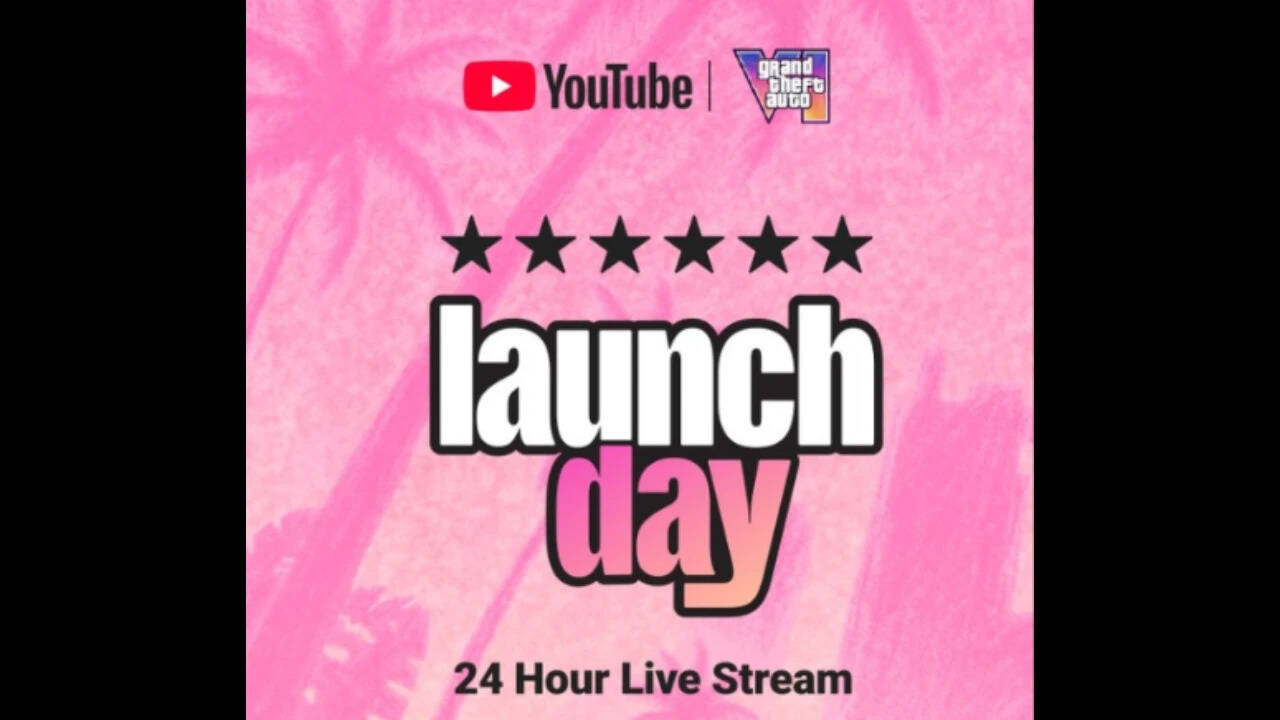
The gaming press is currently throwing a parade for a glorified telethon. Every major outlet is breathlessly reporting that YouTube is turning the launch of Grand Theft Auto 6 into a 24-hour global livestream festival featuring over thirty top creators. They are framing this as a historic triumph for gaming culture and a masterstroke of community building.
They are completely wrong. Recently making waves recently: Pre-Launch Streaming Arbitrage Around Grand Theft Auto VI.
What you are witnessing is not a celebration. It is a multi-million-dollar panic attack disguised as a party. YouTube is not throwing a festival to honor Rockstar Games; it is erecting a massive, artificial dam to stop millions of its most valuable viewers from migrating to Twitch, Kick, and TikTok the exact second the servers go live.
If you look past the flashy press releases and the roster of millionaire streamers, the mechanics of this event reveal a deep structural vulnerability in how Google handles live gaming. The lazy consensus assumes that more creators plus bigger games equals automatic victory. In reality, forcing thirty disparate personalities into a corporate-sponsored marathon is the fastest way to kill the organic magic that made GTA roleplay and live launches massive in the first place. More insights into this topic are detailed by Bloomberg.
The Lie of the Manufactured Event
Let us define what a true cultural moment looks like in gaming. It is messy. It is unscripted. It happens when a single streamer stumbles into an unexpected glitch, or when an organic server war breaks out at three in the morning without a single brand manager in the room.
YouTube’s 24-hour festival is the exact opposite of that energy. It is a sanitized, tightly scheduled broadcast designed to satisfy Madison Avenue advertisers who want "brand-safe" access to the biggest entertainment launch in history.
I have sat in the war rooms for major AAA publisher launches over the last decade. I have watched marketing executives burn seven-figure budgets on synchronized influencer activations, convinced that buying thirty megaphones at once creates a symphony. It never does. It creates white noise. When everyone is paid to play the exact same game during the exact same window under strict embargo guidelines, the audience instantly smells the corporate perfume. Viewers do not tune into livestreams to watch a commercial; they tune in to watch an authentic human reaction. By turning the launch into an official "festival," YouTube has effectively stripped the event of its rebellion, which is the entire selling point of the Grand Theft Auto franchise.
Why YouTube Is Actually Terrified of Launch Day
To understand why this festival exists, you have to stop looking at view counts and start looking at concurrent live retention and chat velocity.
For years, YouTube has dominated Video on Demand (VOD). When a player wants a walkthrough, a lore breakdown, or an edited highlight reel, they go to YouTube. Nobody touches their search engine for gaming content. However, when it comes to live, synchronous viewing—the digital equivalent of watching the Super Bowl together—YouTube still struggles against Twitch’s deeply ingrained chat culture.
Think about the numbers behind the original GTA 6 reveal trailer in late 2023. It shattered records on YouTube, pulling in over 90 million views in twenty-four hours. That was a VOD triumph. Now, imagine a scenario where Rockstar finally drops the playable game, and fifty million fans immediately open a browser tab to watch someone play it live. If YouTube does nothing, a massive percentage of those eyeballs naturally drift over to Twitch, where emotes, channel points, and decades of muscle memory dictate live viewing habits.
This 24-hour festival is a defensive moat. By locking thirty of the biggest creators into an official, platform-backed relay race, YouTube is attempting to brute-force a behavioral shift. They are trying to train the general public to associate "live gaming event" with YouTube rather than Twitch. It is a customer acquisition play masquerading as fan service.
The Myth of the Creator Relay
The core pitch of this festival relies on a flawed assumption: that audiences follow creators seamlessly from one channel to the next like runners passing a baton.
Anyone who actually analyzes livestreaming data knows this is a fantasy. Livestream audiences are fiercely tribal and notoriously territorial. A viewer who watches an edgy, fast-talking variety streamer for four hours does not want to be raided into the channel of a family-friendly speedrunner just because the corporate schedule dictates a shift change.
When platforms orchestrate these massive "pass the torch" marathons, two things inevitably happen:
- The Drop-Off Cliff: Every time the broadcast switches hosts or hubs, total concurrent viewership bleeds out by twenty to thirty percent. Viewers use the transition as an excuse to close the tab, go to sleep, or switch to a solo streamer who isn't bound by a schedule.
- The Lowest Common Denominator Effect: When thirty creators share a single event umbrella, everyone self-censors. Nobody wants to be the person who gets the sponsor pulled or ruins the corporate vibe. As a result, the commentary becomes painfully safe. You get a lot of forced laughter, endless thanking of the platform, and zero genuine critique of the game itself.
If GTA 6 launches with massive server queues, game-breaking bugs, or disappointing frame rates—which happens to almost every major release—these thirty creators will be contractually or socially pressured to smile through the pain. The audience is not stupid. Watching a millionaire pretend a broken loading screen is "exciting" destroys trust faster than anything else in the creator economy.
Answering the Questions Nobody Wants to Ask
When major tech companies roll out spectacles like this, the public starts asking predictable questions. Most of those questions miss the point entirely. Let us dismantle the flawed premises behind the hype.
Will this festival break the all-time concurrent viewer record on YouTube?
Probably, yes—and that metric will be completely meaningless. Platforms love to boast about "peak concurrents" because it looks incredible on an investor slide deck. What they never publish is the average watch duration or the cost per retained viewer. If YouTube spends millions on production, promotion, and creator guarantees to hit a three-million-viewer peak for four minutes, only to watch two million of them leave ten minutes later, that is not a victory. That is an expensive firework.
Is this the new blueprint for how all major video games will launch?
Only if publishers enjoy lighting money on fire. Grand Theft Auto is an anomaly. It is a once-in-a-generation cultural monolith that transcends traditional gaming demographics. Trying to apply a 24-hour, thirty-creator festival model to a standard AAA shooter or RPG would be catastrophic. Without the organic nuclear gravity of Rockstar’s brand, a forced creator marathon just looks like an infomercial. Smaller publishers who copy this playbook will end up paying massive upfront fees for negligible conversion rates.
Does this prove YouTube has finally beaten Twitch in live gaming?
Not even close. You do not win a war by staging a single massive parade; you win it by controlling the daily supply lines. Twitch still owns the mid-tier creator ecosystem—the thousands of streamers pulling 500 to 5,000 viewers every single night who build rabid, tight-knit communities. YouTube’s festival focuses entirely on the one percent of mega-celebrities. Once the 24 hours are over and the confetti is swept up, those thirty creators will go back to uploading edited videos, and the everyday live gaming audience will quietly drift back to Twitch.
The Uncomfortable Downside of Going Rogue
To be completely fair, there is a reason YouTube executives default to safe, bloated spectacles like this. Let us look at the alternative.
If YouTube did nothing—if they simply let the GTA 6 launch happen organically without an official hub, curated schedules, or brand-safe oversight—the result would be pure chaos. Within three hours of launch, the top trending livestreams would inevitably feature copyright strikes from in-game radio stations, unfiltered profanity, racial slurs in open multiplayer lobbies, and streamers exploiting bizarre physics glitches to make inappropriate jokes.
For a publicly traded company like Alphabet, that level of unpredictability is terrifying. Blue-chip advertisers like Coca-Cola, Samsung, and major automotive brands will not put their logos next to an unmoderated Rockstar Games lobby. By building this velvet-roped festival, YouTube creates a sterile, predictable environment where corporate sponsors can safely park their money.
From a pure quarterly revenue standpoint, the festival makes total sense. It protects the ad inventory. It pleases the board of directors. It generates easy headlines.
The mistake is confusing ad-inventory protection with cultural innovation. YouTube has solved a problem for its sales team, not for its gamers.
How Smart Brands and Creators Should Actually Play Launch Week
If you are a gaming brand, a mid-sized creator, or an industry strategist watching this unfold, do not fall into the trap of trying to mimic YouTube’s top-down approach. You cannot out-spend Google, and trying to out-hype Rockstar is a fool's errand.
Instead, exploit the exact blind spots that this 24-hour festival creates.
- Pivot to Counter-Programming: While thirty massive creators are fighting over the exact same opening missions and repeating the same talking points, smart creators should ignore the main storyline entirely. Go map the edges of the world. Test the physics engine. Document the weirdest NPC behaviors. Give the audience the anti-corporate, unscripted discovery that the official festival is too scared to show.
- Win the 48-Hour Aftermath: The festival ends at hour twenty-four. That is when the corporate promotion stops, and that is when the real search intent begins. Viewers will suddenly stop watching passive livestreams and start actively searching for solutions: optimization guides, hidden weapon locations, money-making mechanics, and honest reviews. Shift your entire production budget from launch-day noise to post-launch utility.
- Bet on Depth Over Reach: Stop obsessing over raw view counts during launch week. A creator with ten thousand deeply engaged viewers who trust their unfiltered opinion will drive more actual game sales and hardware upgrades than a corporate festival watched passively by a million distracted people on mute.
YouTube’s 24-hour GTA 6 festival will look spectacular on paper. The thumbnails will be bright, the production value will be pristine, and the press releases will declare it an unprecedented triumph for the future of digital entertainment.
Enjoy the show for what it is. Just do not mistake a billion-dollar safety net for a revolution.