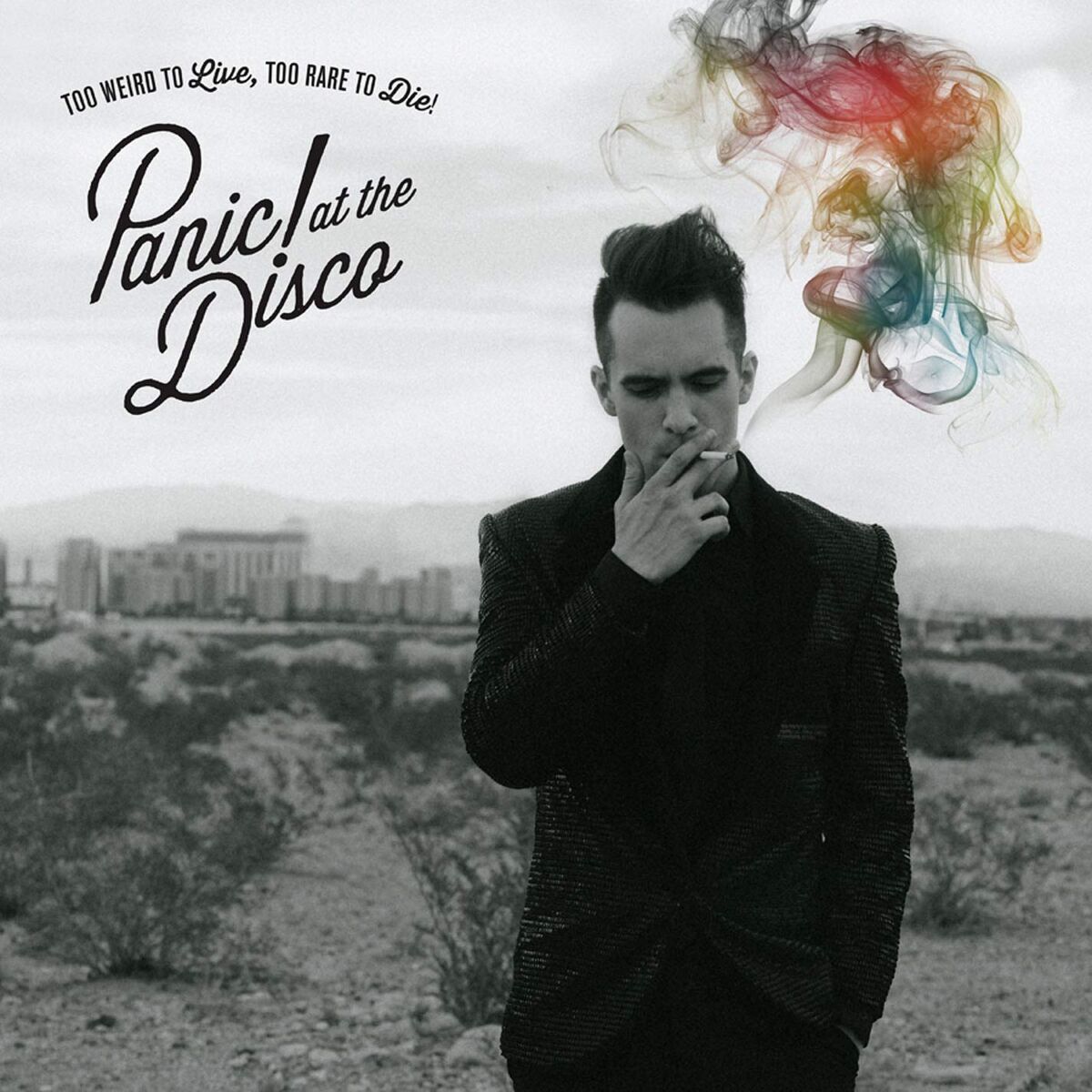
They were literally just kids. When we talk about young Panic At The Disco, we aren’t talking about a polished stadium act with a decade of experience and a massive touring budget. We’re talking about four teenagers from suburban Las Vegas who hadn't even played a live show before they signed a record deal. It sounds fake. It sounds like a movie script written by someone who doesn't understand how the music industry works, but in 2004, it was the reality for Ryan Ross, Brendon Urie, Spencer Smith, and Brent Wilson.
They were bored. Las Vegas isn't just neon lights and casinos; it’s miles of scorching pavement and dead-end cul-de-sacs. To pass the time, they covered Blink-182 songs. Ryan and Spencer had been playing together since they were about twelve, eventually recruiting Brent and then Brendon. At the time, Brendon wasn't even the singer. He was the guitar player who happened to have a voice that sounded like it belonged on Broadway rather than in a garage.
The MySpace Message That Scaled a Mountain
You have to remember what the internet looked like in 2004. There was no TikTok. No Spotify. If you wanted to get discovered, you either played every dive bar in the tri-state area or you got lucky on MySpace. Ryan Ross was a fan of Fall Out Boy. He sent a link to their early demos to Pete Wentz, who was arguably the biggest tastemaker in the scene at the time. Wentz drove from Los Angeles to Las Vegas just to hear them practice in a small, cramped rehearsal space.
He signed them to his imprint, Decaydance Records, on the spot.
This created a massive amount of "industry plant" accusations later on. How could a band that had never toured get a deal? The truth is simpler: they had songs that were incredibly catchy, weirdly literate, and perfectly timed for the emo explosion. These kids were still in high school while they were writing A Fever You Can't Sweat Out. Imagine trying to finish your senior year while knowing you’re about to record an album for a major label affiliate. The pressure was immense, but the naivety of being young Panic At The Disco members actually worked in their favor. They didn't know the "rules" of the genre, so they just ignored them.
Vaudeville, Emo, and Chuck Palahniuk
The first half of their debut album is high-energy pop-punk. The second half? It’s basically a fever dream of accordion, cello, and circus aesthetics. Ryan Ross was obsessed with the prose of Chuck Palahniuk, specifically books like Invisible Monsters and Diary. You can hear it in the lyrics—the long, winding titles and the cynical, biting social commentary.
Songs like "Lying Is the Most Fun a Girl Can Have Without Taking Her Clothes Off" weren't just catchy radio hits. They were dense. They were pretentious in the way only a nineteen-year-old who just discovered postmodern literature can be. But it worked. Brendon Urie's vocal range was the secret weapon. He could hit notes that his contemporaries simply couldn't touch. While other emo singers were leaning into a raw, untrained rasp, Urie was delivering theatrical, operatic performances that felt more like Queen than The Used.
The visual identity was just as important. They didn't dress like the other bands. While everyone else was wearing black hoodies and skinny jeans, young Panic At The Disco were showing up in top hats, waistcoats, and heavy eyeliner. They embraced the "theatrical" label before it was cool. It was polarizing. People either loved the spectacle or absolutely hated it, calling them gimmicky. But you couldn't ignore them. The music video for "I Write Sins Not Tragedies" became a cultural phenomenon, winning Video of the Year at the 2006 MTV VMAs, beating out heavyweights like Madonna and Christina Aguilera.
The Reality of Overnight Success
It wasn't all glitter and top hats. Success hit them like a freight train. Brent Wilson was famously fired from the band shortly before things truly exploded, leading to a fair amount of legal drama and public "he-said, she-said" in the press. He was replaced by Jon Walker, who brought a more mature, classic-rock sensibility to the group that would later define their second album, Pretty. Odd.
When they toured Fever, they were often overwhelmed. There are videos from those early shows where they look terrified. They were playing to thousands of screaming fans before they had even figured out their own stage presence. They spent thousands of dollars on a traveling circus stage set, which nearly bankrupted them early on because the overhead was so high. They were learning how to be professional musicians in front of the entire world.
The dynamic between Ryan and Brendon was the engine. Ryan was the primary songwriter and the visionary behind the aesthetics, while Brendon was the charismatic frontman who could sell those ideas to an audience. It was a fragile balance. You have two very different creative forces trying to navigate the transition from teenagers to adults while living on a tour bus.
Why The "Young" Era Still Resonates
If you look at the landscape of alternative music today, the fingerprints of early Panic! are everywhere. The genre-blending, the focus on visual storytelling, and the unapologetic weirdness paved the way for artists like Twenty One Pilots or even Halsey. They proved that you didn't have to choose between being a "serious" band and being "pop."
Most bands from that era eventually faded away or became nostalgia acts. Panic! At The Disco survived by constantly evolving, but the young Panic At The Disco years remain the gold standard for many fans. There was a lightning-in-a-bottle energy to that first record. It was chaotic. It was over-produced. It was full of samples and electronic glitches that shouldn't have worked alongside a vaudeville piano.
Navigating the Legacy
People often argue about which version of the band is "real." Is it the four-piece that wrote Fever? Is it the duo of Brendon and Spencer? Or is it the solo project it eventually became? Honestly, it doesn't really matter. Each iteration was a reflection of where the members were at that specific moment in their lives.
But there's something special about those 2005-2007 years. It was the last gasp of the "old" music industry meeting the "new" internet age. They were the first true MySpace superstars. They didn't have the benefit of social media training or PR handlers watching their every move on Instagram. They were just kids in makeup trying to make sense of the fact that they were suddenly the biggest band in the world.
If you want to understand the impact, go back and listen to the transition between "Intermission" and "But It’s Better If You Do." It’s a jarring, weird, and brilliant piece of production that defined a generation of kids who felt like they didn't quite fit into the standard "emo" box. They were theater nerds with loud guitars.
How to Explore the Early Panic Era Today
To truly appreciate the foundation of this band, you have to look beyond the hits. Here is how to actually dive into that specific history without getting lost in the "greatest hits" shuffle:
- Listen to the Demos: Search for the original MySpace demos of "Time to Dance." The production is rough, but you can hear the raw energy and the specific synth patches that Ryan Ross was messing with in his bedroom. It’s the purest look at their original vision.
- Watch the 2006 VMA Performance: This was the moment the world realized they weren't going away. It’s chaotic and theatrical, and you can see the sheer adrenaline on their faces.
- Read the Liner Notes: If you can find a physical copy of A Fever You Can't Sweat Out, read the lyrics. Notice the lack of choruses in some songs and the bizarre, long-winded titles. It highlights how much they were trying to subvert the standard radio formula.
- Track the Evolution: Listen to "Build God, Then We'll Talk" immediately followed by "Nine in the Afternoon." The jump from the dark, cynical storytelling of their teens to the Beatles-esque psychedelia of their early twenties is one of the most drastic shifts in modern music history.
The story of the band's youth is a reminder that you don't need a perfect plan to start something massive. You just need a laptop, a decent hook, and the guts to be a little bit too much for the people around you. They were loud, they were dramatic, and they were exactly what the mid-2000s needed.



