Before the red swimsuit, the heavy eyeliner, and the tabloid frenzy that defined a decade, there was just a girl from Ladysmith. Most people think they know the story of young Pamela Anderson. They picture the blonde bombshell who materialized out of thin air on a beach in Malibu. But honestly? The reality is way more interesting—and a lot more Canadian—than the Hollywood myth suggests.
Pamela Denise Anderson didn't spend her teenage years dreaming of the Playboy Mansion. She was a small-town kid born on July 1, 1967. That date is actually a big deal in Canada because it was the country’s 100th birthday. She was the "Centennial Baby," literally the first child born in Ladysmith, British Columbia, on that landmark day. It’s the kind of detail that feels like foreshadowing in a movie, but for Pam, it just meant a local newspaper clipping and a quiet life in a town of about 3,000 people.
The Stadium Moment That Actually Happened
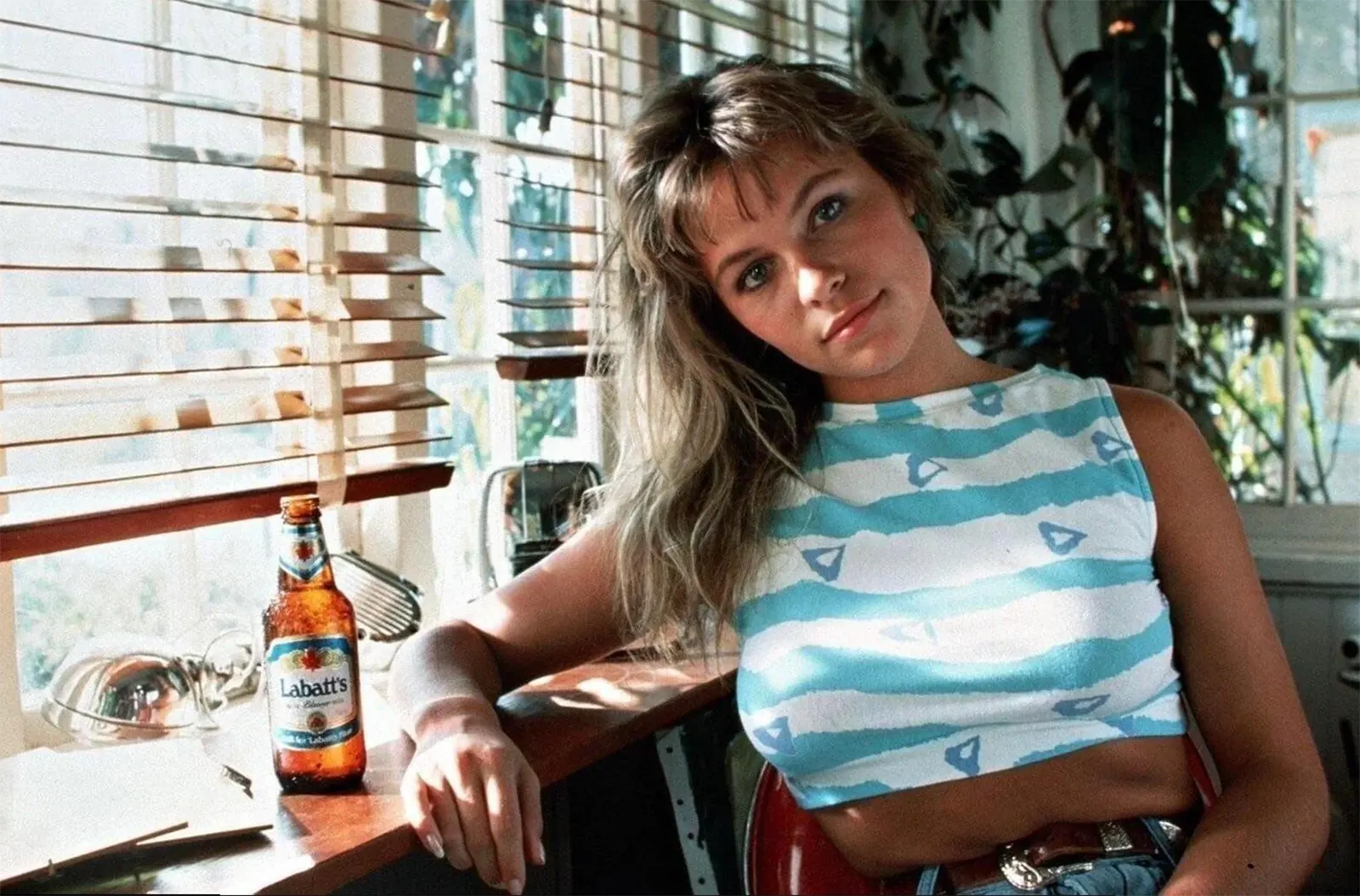
You've probably heard the "discovered at a football game" story and assumed it was some publicist’s invention. It wasn't. In 1989, a 22-year-old young Pamela Anderson was working as a fitness instructor in Vancouver. She went to a BC Lions game at BC Place Stadium with some friends, just a regular person in the stands. During a break in the action, a cameraman scanned the crowd and paused on her.
She was wearing a tight Labatt’s Blue beer T-shirt.
When her face hit the Jumbotron, the stadium erupted. It wasn’t just a polite cheer; it was a roar. The beer company noticed. Within weeks, she wasn’t teaching aerobics anymore—she was the "Blue Zone Girl," plastered on billboards and posters across Western Canada. It was serendipity at its most aggressive.
From Beer Posters to the Mansion
Most stars spend years pounding the pavement in Los Angeles. Pam didn’t. After the Labatt’s campaign took off, Playboy came calling. She’s gone on record saying she was "painfully shy" back then, which sounds weird for someone who would eventually hold the record for the most Playboy covers (14, if you're counting). But she took the leap. In October 1989, she appeared on her first cover.
She wasn’t the "blonde" we remember yet. In those early shoots, young Pamela Anderson had darker hair and a look that was more "neighborly" than "intergalactic superstar."
The transition to Hollywood was almost immediate. She landed a guest spot on Charles in Charge in 1990, followed by a small role in Married... with Children. But the real shift happened when she became the original "Tool Time Girl," Lisa, on Home Improvement. She was the one who handed Tim Allen his hammers for the first two seasons. It was a solid gig, but she walked away from it in 1992. People thought she was crazy to leave a hit sitcom, but she had a feeling about a show called Baywatch.
Why Young Pamela Anderson Still Matters Today
It’s easy to dismiss this era as just another "star is born" trope, but Pam’s early years represent something deeper in the cultural zeitgeist. She was the last of the "accidental" celebrities. Today, everyone has a brand and an Instagram strategy. In 1989, you just had to be in the right stadium at the right time with the right T-shirt.
Honestly, the way she handled that sudden, violent transition from small-town BC to being the most-watched woman on the planet is pretty wild. She was often underestimated because of her look. Critics treated her like a caricature, but if you look at those early interviews, there’s a grit there. She was a working-class kid who realized she’d been handed a golden ticket and decided to see exactly how far it would take her.
The Nuance of the Bombshell Image
There's a lot of conversation now about how the 90s treated women, and young Pamela Anderson is usually the Exhibit A of that discussion. We saw the aesthetic, but we didn't see the person who was still obsessed with the library and poetry—habits she picked up as a kid in Ladysmith. She has since talked about how she used her image as a kind of armor.
- The Labatt's Discovery (1989): The "Blue Zone" girl moment that started it all.
- Playboy Debut (October 1989): The first of her record-breaking 14 covers.
- Home Improvement (1991): Her first major TV role as Lisa the Tool Time Girl.
- The Baywatch Pivot (1992): Joining the show as C.J. Parker and becoming a global icon.
She wasn't just a face; she was a strategist who knew her time was a currency. Even in those early days, she was leaning into animal rights activism, a passion that would eventually define her later life more than any acting role ever could.
Moving Beyond the Iconography
If you want to understand the real story, you have to look past the red swimsuit. The "young" version of Pam wasn't just a collection of magazine clippings. She was a survivor of a tumultuous childhood who found freedom in a camera lens. She once said that the first time she posed, it was the first time she felt she had control over her own body. That’s a heavy realization for someone who the world just saw as a "sex symbol."
She basically invented the modern idea of being "famous for being famous" before the internet made it easy. But unlike the influencers of today, she had to navigate a world that didn't have a blueprint for her. She was a pioneer of the "it girl" era who managed to outlast the decade that tried to define her.
Real Actions for Fans and Historians
If you're looking to dive deeper into the history of young Pamela Anderson without the tabloid filter, here is how to actually find the truth:
- Watch "Pamela, A Love Story": The 2023 documentary on Netflix is the first time she actually had control over her narrative. It features home movies from her early days in Canada that debunk a lot of the myths.
- Read "Love, Pamela": Her memoir is surprisingly poetic. She writes in a prose-poetry style that reflects that "library kid" background nobody knew about.
- Look for the Labatt's Commercials: You can find her original Canadian beer ads on YouTube. They show a version of her that is much more natural and "girl next door" than the Malibu version.
- Study the 1992-1994 Era: This was the sweet spot where she was a rising star but hadn't yet been swallowed by the "Pam and Tommy" madness. It shows her as a capable comedic actress on Home Improvement.
Understanding the early career of Pamela Anderson isn't just about nostalgia. It’s about seeing how a person can be "discovered" by the world and still manage to keep a piece of themselves hidden away until they're ready to show it. She started as a Centennial Baby in a small town, and in many ways, she’s spent her recent years returning to exactly that—living back on Vancouver Island, gardening, and finally letting the "bombshell" rest.