Wait, she wasn't even supposed to be famous. Seriously. Most people think Pamela Anderson was a calculated product of the Hollywood machine, but the earliest young Pamela Anderson photos aren't from a high-end studio in Los Angeles. They’re from a football stadium in Vancouver. It’s 1989. The BC Lions are playing. A 22-year-old fitness instructor from Ladysmith is just sitting in the stands, wearing a tight Labatt Blue t-shirt, probably just hoping for a win.
Then the camera hits her.
The stadium jumbotron lights up with her face, and the crowd goes absolutely nuts. It wasn’t a "scouted" moment in the traditional sense. It was a roar of 50,000 people that basically demanded she become a star. Within days, she was the "Blue Zone Girl." That one grainy, accidental image on a stadium screen changed everything. If you look at those first professional shots for the Labatt campaign, she looks different. She’s got her natural brunette hair—or at least a much darker blonde than the platinum we’d see later. She looks like the girl next door, if the girl next door happened to have the kind of charisma that could stop a heart.
Why Young Pamela Anderson Photos Still Dominate Pop Culture
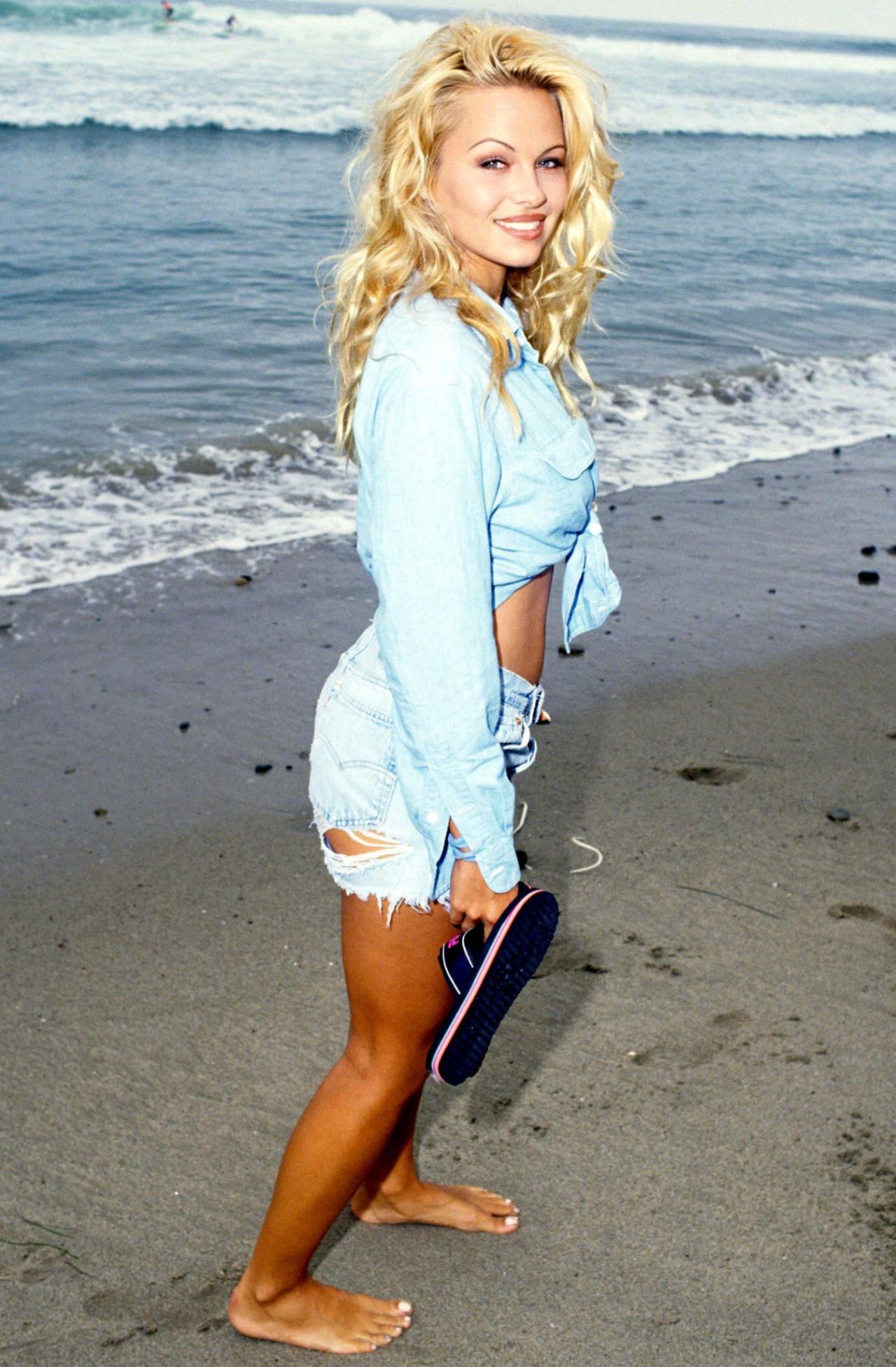
Honestly, it’s about the shift from "Canadian fitness girl" to "Global Icon." There is a specific aesthetic in those early 90s shots that fashion designers are still trying to replicate today. You've probably seen the "Pamcore" trend on TikTok or Instagram. It’s all about the messy updos, the thin eyebrows, and that specific "I just woke up on a beach" glow.
But those young Pamela Anderson photos represent something more than just a trend. They represent the last era of the "accidental" celebrity. Before everyone had an iPhone and a ring light, you had to be seen. Really seen.
The Playboy Leap and the First Cover
After the Labatt fame, things moved fast. Like, light-speed fast. Hugh Hefner’s people saw the beer posters and the stadium footage. They flew her to LA. That first plane ride to Los Angeles was actually the first time she’d ever been on a plane. Imagine that. One minute you’re teaching aerobics on Vancouver Island, the next you’re at the Playboy Mansion.
Her first cover dropped in October 1989. She looks incredibly young, almost vulnerable. In her memoir Love, Pamela, she talks about how that first flash of the camera felt like falling off a cliff. It was freedom, but it was also the start of a narrative she wouldn't fully control for another thirty years.
The Evolution of a Look: From Home Improvement to Baywatch
By 1991, the transformation was underway. If you look at photos of her as Lisa the "Tool Time Girl" on Home Improvement, the hair is getting bigger. The blonde is getting brighter. This was the prototype for the C.J. Parker look that would eventually make her the most-watched woman on the planet.
- The Labatt Era (1989): Natural, athletic, darker hair, minimal makeup.
- The Early Playboy Phase (1990): The transition to "Bombshell." This is where the 34D implants happened, a choice she’s been very open about.
- The Baywatch Peak (1992-1997): The red swimsuit. High-cut hips. The barbed wire tattoo (which was real, by the way—she got it so the makeup artists wouldn't have to paint it on every day for Barb Wire).
It’s funny, basically every photographer in the 90s wanted a piece of that "young Pam" magic. Sante D'Orazio, Stephen Wayda, and even later collaborators like Emma Dunlavy captured her in ways that felt both intimate and completely performative. She knew what the camera wanted. She gave it to them. But if you look closely at the eyes in some of those mid-90s paparazzi shots, you can see the toll of the "tabloid era" starting to set in.
What Most People Get Wrong About Her Early Shoots
People assume she was just a "pin-up." But Pamela was actually a huge fan of art and literature from the jump. She wasn't just standing there; she was often referencing Old Hollywood icons like Brigitte Bardot. Those heavy kohl-rimmed eyes and the bouffant hair? That was a deliberate nod to 60s French cinema. She was a student of the image long before she became the image itself.
There's also this myth that she was "discovered" as a baby. For years, people said she was the "Centennial Baby" (the first baby born on Canada's 100th birthday). While she was born on July 1, 1967, the "first baby" thing was actually debunked. It’s just one of those legends that grew around her because her life felt so much like a movie.
How to View This History Today
If you're looking at young Pamela Anderson photos now, do it through the lens of her 2023 documentary or her book. She’s finally reclaimed those images. For a long time, those photos belonged to the public, to the tabloids, or to the men who took them. Now, she’s the one telling the story of what was happening behind the lens—the shyness she had to overcome, the domestic struggles at home, and the sheer audacity it took to move to LA with nothing but a beer poster in her portfolio.
Actionable Insights for Fans and Collectors
If you’re a fan of this era of pop culture, there are a few ways to engage with it that actually respect the artist:
- Read "Love, Pamela": It changes the way you see every single photo. It adds the "prose and poetry" to the visual.
- Focus on the Photographers: Look up the work of Sante D'Orazio. His shoots with her are considered some of the best fashion photography of the decade because they captured her spirit, not just her stats.
- The Makeup Revival: If you're trying to recreate the look, the key isn't "perfection." It’s the "smudged" look. The 90s aesthetic was about being a bit undone.
- Support the Activism: Much of her early "fame" is now used to fuel her work with PETA and her own foundation. That’s the real legacy of those early photos.
The story didn't end with a red swimsuit. Those early photos were just the prologue to a woman who eventually learned to walk away from the makeup chair and show the world who she actually was—barefaced and finally in control.