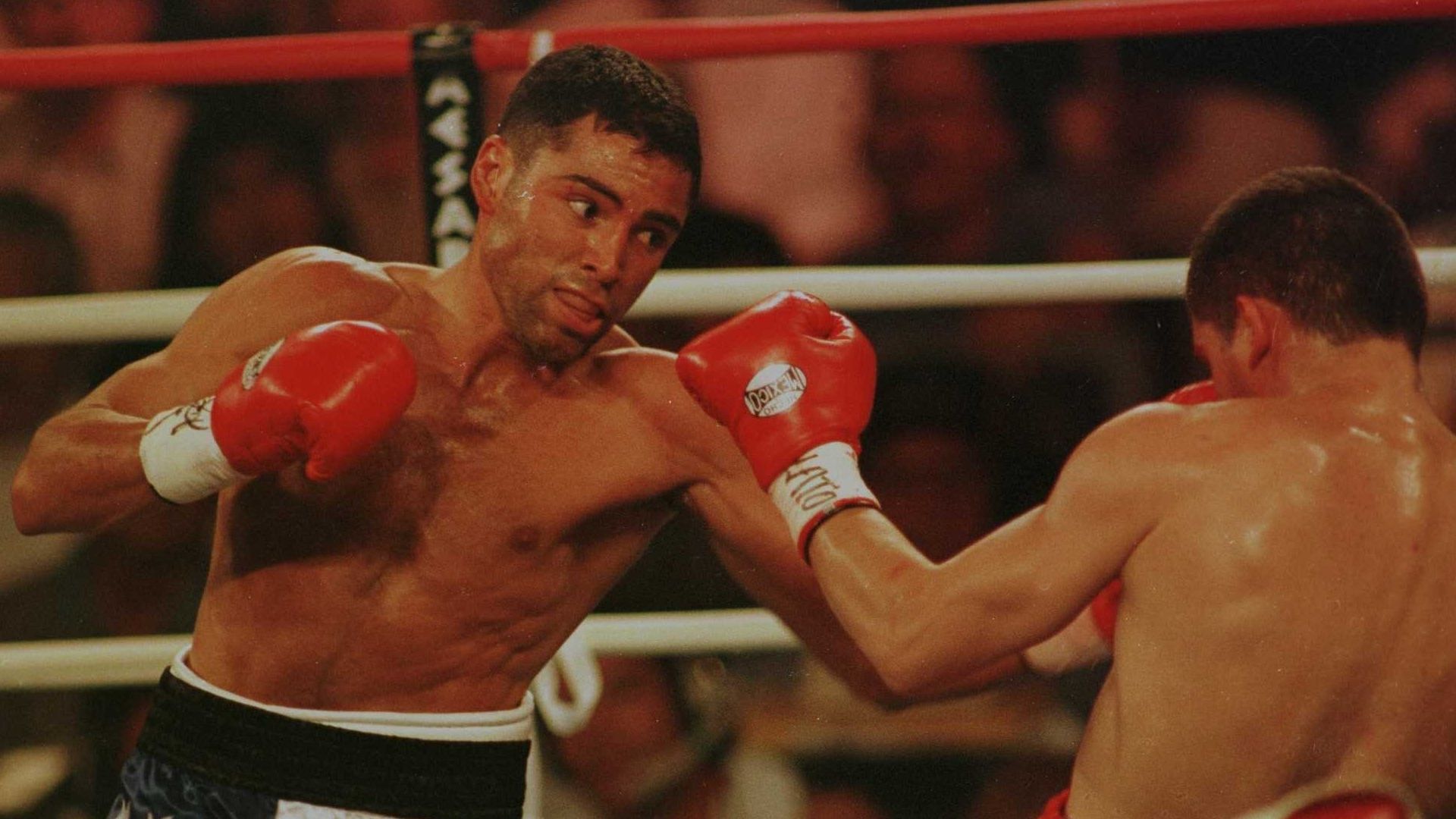
Before the multi-million dollar purses, the Vegas residencies, and the sharp suits of a high-powered promoter, there was just a skinny kid from East L.A. with a left hook that felt like a lightning strike. People see the "Golden Boy" now and think of the brand. But if you really want to understand boxing history, you have to look at young Oscar De La Hoya—the teenager who carried the weight of a dying mother’s wish and a neighborhood's expectations on his back all the way to Barcelona.
Honestly, his rise wasn't just about talent. It was about a specific kind of pressure that would have broken most people. Discover more on a related subject: this related article.
The Amateur Machine: 223 Wins and One Massive Loss
Oscar started boxing at six. Most kids are playing tag; he was at the Resurrection Boy's Club Gym. His dad, Joel Sr., and his grandfather had both boxed, so it was basically the family business. By the time he was a teenager, he wasn't just winning; he was destroying the amateur circuit.
His amateur record is actually insane: 223 wins and only 5 losses. Further reporting by Bleacher Report delves into similar perspectives on the subject.
But it’s those five losses that defined him. One of them came against Marco Rudolph at the 1991 World Championships. That loss haunted him, but it also set the stage for the biggest moment of his young life.
The Promise to Cecilia
The story everyone knows—the one the media played up for years—was about his mother, Cecilia. She was diagnosed with breast cancer while Oscar was rising through the ranks. In 1990, she missed a chemotherapy session just to watch him win gold at the Goodwill Games in Seattle. It was the last time she saw him fight.
She died in October 1990. She was only 38.
Her dying wish? For Oscar to win Olympic gold. That’s a heavy burden for a 17-year-old. You’ve got to wonder how much of that "Golden Boy" smile was real and how much was a mask for the grief he was processing in the ring. In his recent HBO documentary, Oscar actually got pretty real about how complicated that relationship was, admitting there was childhood abuse involved. It adds a whole different layer to the "clean-cut hero" image the world fell in love with.
Barcelona 1992: The Birth of a Superstar
When young Oscar De La Hoya arrived in Spain for the 1992 Olympics, he wasn't just another boxer. He was the story.
He moved through the lightweight bracket like a man possessed. Then came the final: a rematch against Marco Rudolph, the guy who’d beaten him a year earlier. Oscar didn't just win; he dominated. When the referee raised his hand, Oscar celebrated with both the American and Mexican flags.
The image of him kneeling in the ring, eyes to the sky, became iconic. He was 19 years old. He was the only American boxer to bring home gold from those games.
Suddenly, he wasn't just a kid from the barrio. He was a national treasure.
Turning Pro and the Arum Era
Pro debut: November 23, 1992. Opponent: Lamar Williams. Result: First-round knockout.
That was the pace of his early career. He was fighting almost every month. Bob Arum, the legendary promoter, saw the dollar signs immediately. Oscar had the "it" factor—the looks of a movie star and the power of a heavyweight.
The First Belt: Jimmy Bredahl
Most fighters wait years for a title shot. Young Oscar De La Hoya got his in his 12th fight. On March 5, 1994, he stepped into the ring at the Olympic Auditorium in L.A. against Jimmy Bredahl for the WBO junior lightweight title.
He knocked Bredahl down in the first and second rounds. By the tenth, the doctor had seen enough. Oscar was a world champion at 21.
He didn't stop there. He jumped up to lightweight and dismantled Jorge Paez in two rounds just four months later. It was a blitzkrieg. He was collecting belts like they were trading cards.
Why the "Mexican-American" Identity Was Complicated
You’d think the Mexican boxing community would have embraced him instantly. Sorta, but not really.
A lot of die-hard fans thought Oscar was "too pretty" or "too American." They preferred the blood-and-guts style of Julio César Chávez. Oscar was a finesse fighter. He used his reach. He was technical. To the old school, that looked like he was afraid to get hit.
This tension peaked in 1996 when he fought Chávez. Oscar was 23; Chávez was the legend. Oscar won by TKO in the fourth round, but for many, it felt like he was "beating up the father figure." It’s a nuance that many people forget when they talk about his early popularity—he was a superstar to the general public, but he had to fight for respect in his own community for a long time.
Training with "The Professor"
One of the most interesting pivots in his young career was hiring Jesus "The Professor" Rivero.
Rivero was a philosopher-trainer from Mexico who made Oscar read classic literature and listen to classical music. He wanted to develop Oscar’s mind, not just his muscles. This was the era where Oscar’s footwork and defensive head movement really leveled up. It’s a reminder that even at the top of his game, he was still a student of the craft.
Actionable Insights from the Golden Boy Era
Looking back at the rise of young Oscar De La Hoya offers some pretty stark lessons for anyone following the sport today:
- The Power of Narrative: Oscar’s Olympic story wasn't just PR; it was a connection point for millions of people who didn't even watch boxing.
- Aggressive Matchmaking: He didn't pad his record for ten years. He was fighting for world titles within 18 months of turning pro.
- Brand Ownership: Even as a kid, Oscar understood he was the product. He eventually broke away from his early managers to take control, which paved the way for Golden Boy Promotions.
- Emotional Fuel: Whether it was his mother's memory or the chip on his shoulder from his upbringing, Oscar used his personal turmoil as high-octane fuel in the ring.
If you’re looking to dive deeper into this era, go back and watch the 1994 fight against Jorge Paez. It’s arguably the peak of his raw, youthful speed before he became more of a calculated "chess player" in the later 90s. You can clearly see the transition from a kid with potential to a man who realized he was the biggest draw in the sport.
To truly understand the "Golden Boy," you have to respect the 19-year-old kid who stood in a ring in Barcelona, holding a flag and a dream, before the world tried to turn him into a commodity.
Next Steps for Boxing Fans:
- Watch the 1992 Olympic Final: Look for the Marco Rudolph rematch to see the raw amateur style that birthed the legend.
- Compare Styles: Watch the Bredahl fight (1994) and then the Whitaker fight (1997) to see how Jesus Rivero changed Oscar’s defensive posture.
- Research the "Resurrection" Gym: This East L.A. landmark is still a piece of living history for those interested in the roots of West Coast boxing.