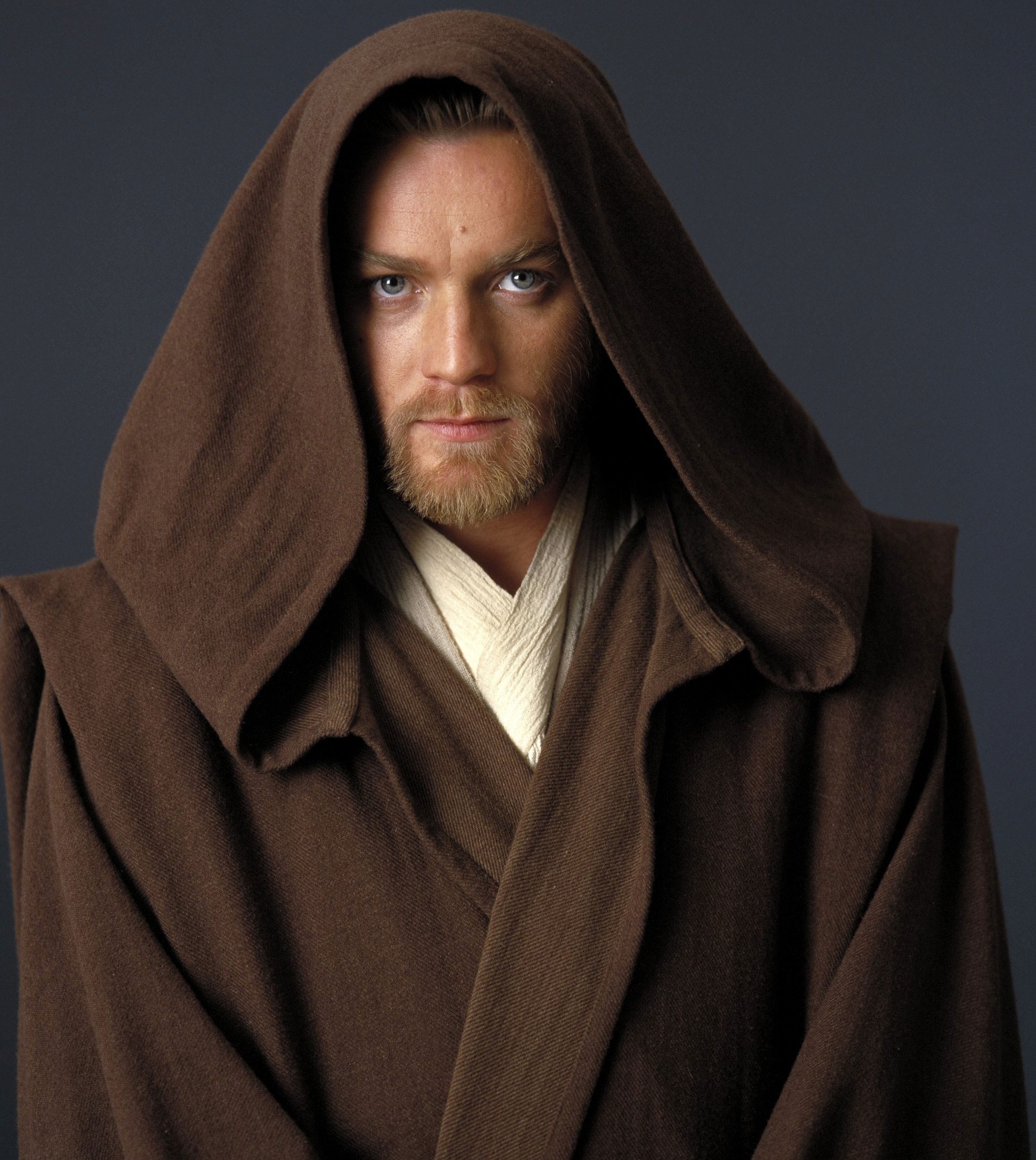
He wasn't always the "Negotiator." Honestly, if you look back at the earliest days of young Obi-Wan Kenobi, you aren't looking at the calm, bearded diplomat who famously told Anakin he had the high ground. You’re looking at a kid who was almost kicked out of the Jedi Order because he was too aggressive.
Think about that. The poster boy for Jedi stoicism was nearly sent to the AgriCorps to pull weeds because he couldn't control his temper.
The Padawan Who Almost Wasn't
Most fans assume Obi-Wan’s path was a straight line to greatness. It wasn't. Born in 57 BBY on the planet Stewjon (yes, George Lucas literally named it after Jon Stewart), he was taken to the Temple as an infant. By age twelve, though, he was in a crisis.
In Jedi tradition, if a Youngling isn't chosen by a Master by their thirteenth birthday, they’re out. They get reassigned to the Service Corps—basically the Jedi's manual labor and medical wing. Obi-Wan was at that deadline. He was talented, sure, but he was also headstrong and prone to flashes of anger that scared off potential mentors.
Jedi Master Qui-Gon Jinn initially rejected him. He saw too much of his previous apprentice, Xanatos, in the boy's volatility. It took a literal life-or-death mission to the planet Bandomeer for Qui-Gon to see that Obi-Wan’s "edge" was actually a deep-seated commitment to justice. Even then, their partnership was rocky. They weren't the "well-oiled machine" we see at the start of The Phantom Menace. They bickered. A lot.
Why Young Obi-Wan Kenobi Was Actually a Rebel
There’s this weird misconception that Obi-Wan was always a "stickler for the rules." While he definitely preferred the Code more than Qui-Gon did, his youth was defined by defiance.
Take the Melida/Daan crisis. This is a deep cut from the Jedi Apprentice lore that still shapes his character. While on a mission, a teenage Obi-Wan actually quit the Jedi Order. He felt the Jedi were ignoring a civil war that was killing children, so he stayed behind to fight with a group called "The Young." He chose his heart over his duty.
That choice nearly cost him everything. When he eventually realized he’d made a mistake and returned to Coruscant, the Council didn't just welcome him back with open arms. He had to work his way back from the bottom, proving his loyalty all over again.
This is why his later relationship with Anakin is so complex. When Obi-Wan tells Anakin, "I was once the same as you," he isn't just using a mentor-y platitude. He actually lived it. He knew what it felt like to want to leave the Order for a cause—or a person.
The Love We Don't Talk About Enough
Speaking of people, we have to talk about Satine Kryze. Before the Clone Wars, a young Obi-Wan Kenobi and Qui-Gon were assigned to protect the Duchess of Mandalore. They spent a year on the run, living in trenches and dodging assassins.
By the end of it, Obi-Wan was ready to walk away from being a Jedi for her. He told her years later, "Had you said the word, I would have left the Jedi Order." He didn't stay because he didn't love her; he stayed because she didn't ask him to leave. That kind of heartbreak defines the man he became—a man who sacrificed personal happiness for the greater good of the galaxy.
Misconceptions About the "Perfect" Apprentice
People tend to think of Obi-Wan as the "perfect student," but he was actually a bit of a nightmare for the Council early on. He was sarcastic. He was biting. He had a dry wit that often crossed the line into disrespect.
- The Fighting Style: He didn't start as a master of Soresu (the ultimate defensive form). He started with Ataru, the aggressive, acrobatic style Qui-Gon used. He only switched after seeing Qui-Gon die, realizing that an aggressive defense wasn't enough to stop a Sith Lord like Darth Maul.
- The Pilot Paradox: He always said he "hated flying," but as a youngling, he was actually one of the most gifted pilots in his class. The "hate" came later, likely from the trauma of too many crashes during the war.
- The Brother Factor: In the Obi-Wan Kenobi series, he mentions a vague memory of a brother. This is a nod to the old idea that Owen Lars was his brother, but in the current story, it represents the life he lost—the family he never knew because he was a "child of the Force."
The Master and Apprentice Dynamic
The relationship between Qui-Gon and Obi-Wan is arguably the most important one in the prequel era. Claudia Gray’s novel Master & Apprentice does a brilliant job of showing just how much they clashed. Qui-Gon was obsessed with ancient prophecies and the "Living Force," while Obi-Wan just wanted to follow the Council’s instructions.
It’s ironic. By the time Obi-Wan is an old man on Tatooine, he has become exactly like Qui-Gon—unconventional, living in the moment, and trusting the Force over any political institution.
What You Should Do Next
If you want to truly understand the evolution of young Obi-Wan Kenobi, stop just watching the movies. The films give you the finished product. To see the "human" version of the character, check out these specific stories:
- Read "Master & Apprentice" by Claudia Gray: This is the best look at his teenage years and his friction with Qui-Gon.
- Watch "The Clone Wars" (Season 2, Duchess Satine Arc): It recontextualizes everything he says to Anakin in Revenge of the Sith.
- Look into the "Jedi Apprentice" series: Even though it's "Legends," it provides the essential emotional blueprint for his childhood.
Understanding Obi-Wan isn't about memorizing his lightsaber forms. It's about recognizing that his wisdom wasn't a gift—it was something he paid for with decades of mistakes, lost loves, and the constant struggle to control his own impulsive nature.



