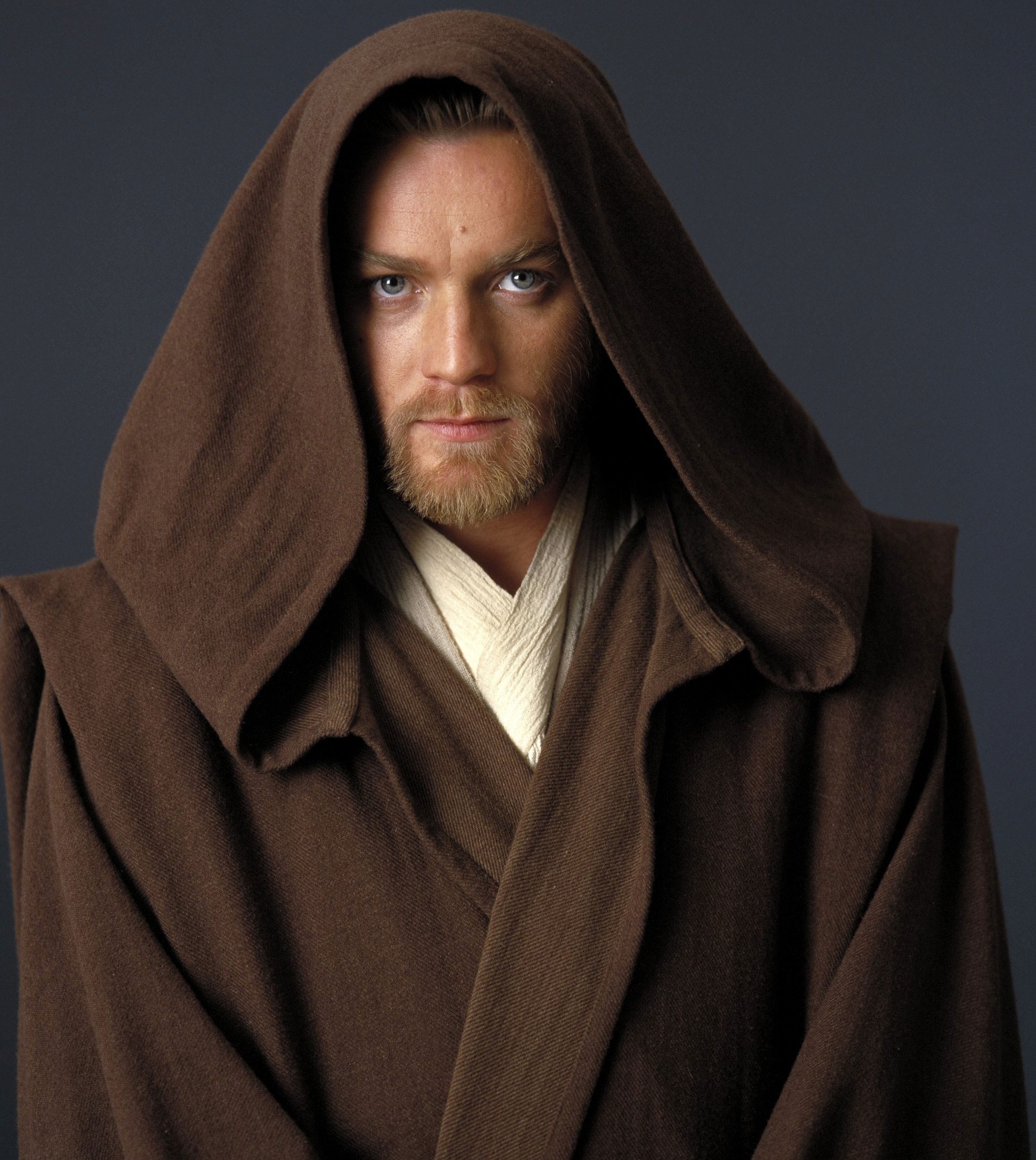
Honestly, when most people think of Obi-Wan Kenobi, they see the bearded hermit on Tatooine or the polished General from the Clone Wars. But looking back at obi wan kenobi young and reckless is where the real story lives. He wasn't always this paragon of Jedi virtue. Far from it. In his early years, Obi-Wan was kind of a mess, struggling with a massive temper and a stubborn streak that almost got him kicked out of the Jedi Order before he even became a Padawan.
It’s wild to think about now.
We see him in The Phantom Menace as this dutiful apprentice, but the expanded lore—specifically the Jedi Apprentice series by Jude Watson and Claudia Gray’s Master & Apprentice—paints a much more complicated picture of a boy who felt like a failure.
The Padawan Nobody Wanted
Before he was "The Negotiator," Obi-Wan was a thirteen-year-old initiate at the Jedi Temple who was about to be sent to the Agri-Corps. Basically, if you weren't picked by a Master by your thirteenth birthday, you were shipped off to be a farmer. Obi-Wan was desperate. He was also a bit of a hothead. In his final tournament matches, he fought with a level of aggression that actually scared off potential masters. He wanted to win so badly that he forgot what being a Jedi was actually about.
Qui-Gon Jinn didn't even want him.
That’s the part that kills me. Qui-Gon was reeling from the betrayal of his previous apprentice, Xanatos, and he flat-out refused to take on another student. It took a literal life-or-death mission on the planet Bandomeer for Qui-Gon to realize that this kid’s "weakness"—his deep emotional attachment and drive—was actually his greatest strength.
Why Young Obi-Wan Kenobi Had to Break the Rules
You’ve probably noticed that Obi-Wan is usually the guy following the Jedi Code to a tee while Anakin is the one jumping off speeders. But obi wan kenobi young and unrefined was much more like Anakin than he’d ever care to admit.
During a mission to the planet Melida/Daan, things went sideways. Obi-Wan got so caught up in a civil war involving a group of children called "The Young" that he actually quit the Jedi Order. He stayed behind to fight their war, choosing his heart over his duty. This caused a massive rift with Qui-Gon that took years to heal. It’s a nuance that makes his later lectures to Anakin feel so much more hypocritical—and human. He wasn't just being a "stuck-up teacher"; he was a guy who had already made those mistakes and survived the consequences.
The Satine Kryze Factor
We can't talk about his youth without mentioning the Duchess Satine of Mandalore. This is the big "what if" of the Star Wars universe. Long before the events of Naboo, Obi-Wan and Qui-Gon spent a year on the run protecting Satine from assassins.
They lived in the rough, slept in hedgerows, and constantly faced death.
During that year, Obi-Wan fell in love. He admitted later in the Clone Wars series that if she had asked, he would have left the Jedi Order for her. Think about that. The man who is the ultimate symbol of Jedi loyalty was one "yes" away from walking away from it all for a girl. This adds such a layer of tragedy to his character. It shows that his discipline wasn't something he was born with; it was something he chose, painfully, every single day.
Training the "Chosen One" Too Early
When Qui-Gon died at the hands of Darth Maul, Obi-Wan was still basically a kid himself. He was 25. He had just passed his trials by defeating a Sith Lord—the first Jedi to do so in a millennium—and suddenly he was tasked with raising a nine-year-old who was supposedly a living god.
He wasn't ready.
Most experts on the lore, like Dave Filoni, have pointed out that Obi-Wan initially treated Anakin more like a younger brother than a son. He lacked the fatherly patience that Qui-Gon possessed. This tension defined their early years. In the novel Obi-Wan & Anakin by Charles Soule, we see them traveling to the planet Carnelion IV. Anakin is frustrated, considering leaving the Order, and Obi-Wan is struggling to bridge the gap between being a mentor and being a friend. He was trying to figure out how to be a Master while he was still mourning his own.
The Evolution of the Lightsaber Form
If you watch the fights closely, you can see the technical shift in how he handles himself. As a young man, Obi-Wan used Form IV (Ataru). It’s the high-energy, acrobatic style used by Yoda and Qui-Gon. It’s flashy. It’s aggressive. It involves a lot of spinning and jumping.
But after watching Darth Maul kill his Master because Ataru lacked defensive stamina in tight spaces, Obi-Wan pivoted.
He spent the next decade mastering Form III (Soresu). This is the "ultimate defense." He became a wall. He stopped trying to win fights with athleticism and started winning them by being impossible to hit. This shift represents his internal journey from a reckless youth to a centered, patient adult. He realized he didn't need to be the fastest; he just needed to be the last one standing.
What Most People Get Wrong About His Exile
There’s this idea that Obi-Wan just sat in a cave and waited for twenty years. But the "young" version of the Old Ben we see in the Obi-Wan Kenobi series shows a man suffering from profound PTSD. He had lost everything: his brother, his Order, his purpose.
The transition from the hero of the Republic to the "crazy old wizard" wasn't a smooth decline. It was a brutal, daily struggle to keep his connection to the Force while hiding from the Empire. He had to learn how to communicate with Qui-Gon’s spirit, a technique that required him to let go of all his remaining ego—the last remnants of that arrogant young Padawan who thought he could save the galaxy by swinging a sword.
Actionable Insights for Fans and Creators
If you're looking to dive deeper into this specific era of the character, don't just stick to the movies. The films give you the highlights, but the "soul" of the character is in the struggle of his younger years.
- Read "Master & Apprentice" by Claudia Gray: This is arguably the best look at the friction between Qui-Gon and a young Obi-Wan. It deconstructs why they didn't get along and how they eventually clicked.
- Watch the "Lawless" arc in Clone Wars: To understand his youth, you have to see the end of his relationship with Satine. It recontextualizes every interaction he has with Anakin later on.
- Study the Combat Shift: Next time you watch Episode I vs Episode III, pay attention to his feet. In the first, he's bouncing and moving. In the third, he's planted and efficient. It’s a masterclass in visual storytelling about aging and maturity.
- Analyze the "Age of Republic" Comics: There are specific issues dedicated to Obi-Wan’s early days as a Master that show just how much he doubted his ability to teach Anakin.
Obi-Wan Kenobi’s journey isn't a straight line of greatness. It’s a story about a kid who was "fine" but not "special," who had to work twice as hard as everyone else to overcome his own temper and heart. That’s what makes him the most relatable Jedi in the mythos. He wasn't born a saint; he was a stubborn boy who grew up.



