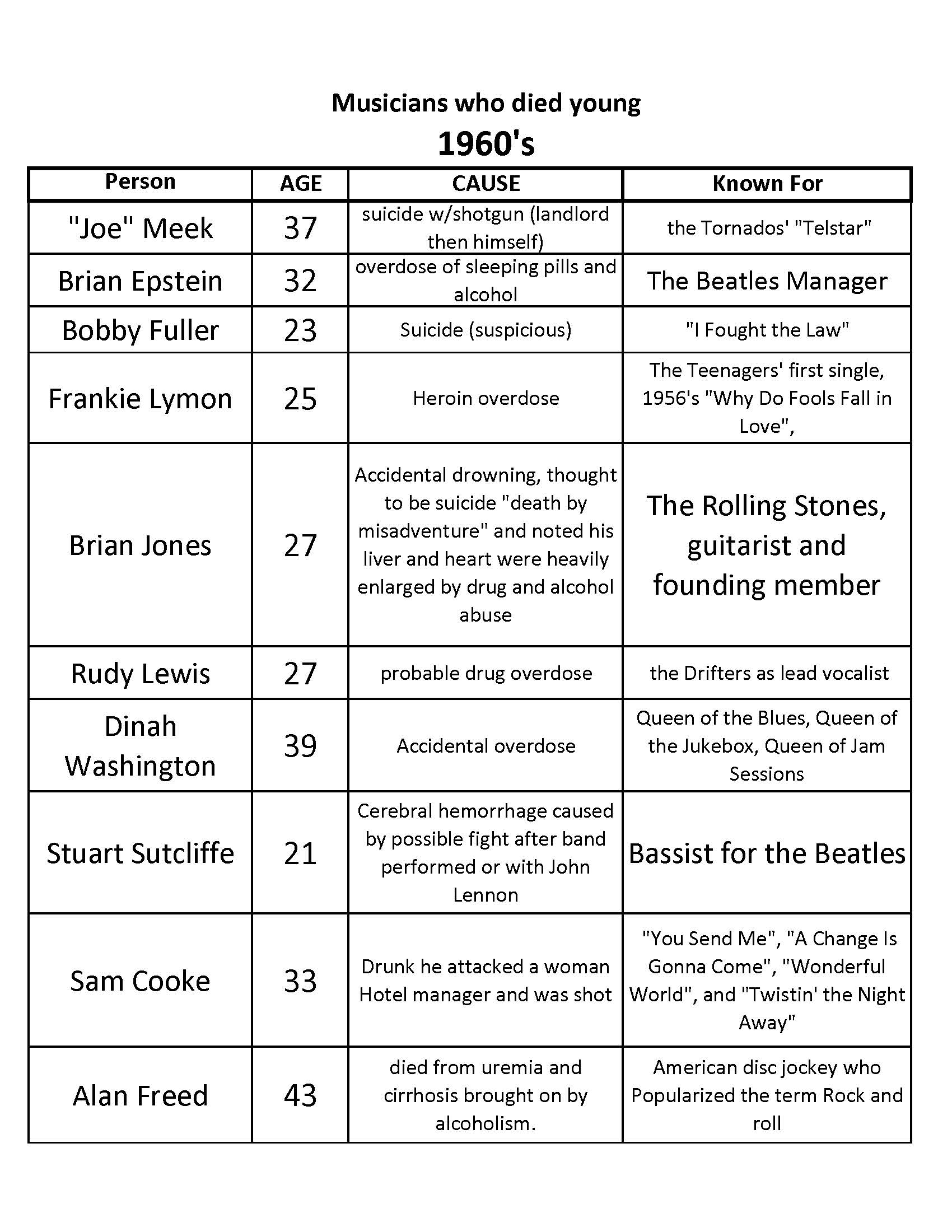
It hits different when the news breaks. You're scrolling through a feed, maybe drinking coffee, and then you see the headline. Another one gone. It’s a gut-punch that feels personal, even if you never met them. When we talk about young musicians who died, we aren't just talking about a list of names or a tragic Wikipedia category. We’re talking about the "what ifs." We’re talking about the jagged, unfinished edges of a discography that was supposed to last decades.
Gen Z and Millennials have been hit especially hard lately. It’s not just the classic rock legends anymore. It’s the SoundCloud rappers and the indie darlings.
Why does it happen so often? Honestly, the industry is a meat grinder. You’ve got fame, easy access to substances, and a grueling tour schedule that would break anyone. But there’s also something deeper—a weird, almost mythological status we give to artists who leave us early. It’s messy. It’s heartbreaking. And frankly, it’s a pattern that shows no signs of stopping.
The Haunting Legacy of the 27 Club
You’ve probably heard of the 27 Club. It’s the most famous, and perhaps the most morbid, "club" in music history. It isn't a real place, obviously. It’s a statistical anomaly—or a curse, depending on who you ask—where an alarming number of legendary young musicians who died happened to be exactly 27 years old.
Brian Jones. Jimi Hendrix. Janis Joplin. Jim Morrison.
They all died within a two-year span between 1969 and 1971. That concentration of talent vanishing at the same age solidified the myth. For a long time, people thought it was just a relic of the hippie era. Then came 1994. Kurt Cobain’s death didn't just shock the world; it reignited the 27 Club conversation for a whole new generation.
Cobain was the reluctant voice of a generation. His struggle with chronic stomach pain, heroin addiction, and the overwhelming pressure of being "the guy" in Nirvana is well-documented in Charles R. Cross’s biography, Heavier Than Heaven. When he died, the tragedy wasn't just the loss of his life, but the realization that the 27 Club wasn't some vintage coincidence. It was a recurring nightmare.
Then there’s Amy Winehouse. 2011. She had that raw, soulful voice that sounded like it belonged in a 1950s jazz club, but her struggles were very much in the modern paparazzi spotlight. Her death from alcohol poisoning at—you guessed it—27, was a grim reminder that talent doesn't protect you from the demons of addiction.
Is it actually a thing?
Actually, scientists have looked into this. A study published in the British Medical Journal analyzed the death rates of thousands of musicians. The verdict? There isn't actually a statistical "peak" at age 27. Musicians are generally at a higher risk of dying young throughout their 20s and 30s compared to the general population, but 27 isn't a magical number. It’s just the number that happens to have the most famous names attached to it. Human brains love patterns. We want there to be a reason, even if the reason is a spooky coincidence.
The New Wave of Tragedy: Rap’s Lean Era
If the 60s were defined by LSD and the 90s by heroin, the last decade of young musicians who died has been defined by Xanax, Fentanyl, and "lean." The hip-hop community has been devastated. It feels like every few months, a rising star is snuffed out just as they’re hitting the Billboard charts.
Take Lil Peep. He was 21. He was basically the face of "Emo Rap," blending guitar samples with trap beats. He died on a tour bus in Tucson, Arizona, from an accidental overdose of fentanyl and Xanax. His death sparked a massive conversation about how the music industry ignores mental health as long as the artist is making hits.
Then came Juice WRLD. This one was different. He was 21, incredibly prolific, and seemingly on top of the world. He suffered a seizure caused by an overdose at Midway International Airport. His lyrics often foreshadowed his own death, which makes listening to his music now feel eerie, like you’re eavesdropping on a premonition.
- Mac Miller (26): Died of an accidental overdose in 2018. His album Swimming had just been released, showing a massive evolution in his sound.
- Pop Smoke (20): Murdered during a home invasion in 2020. He was the king of the Brooklyn Drill scene, and his influence is still everywhere.
- XXXTentacion (20): Shot and killed in 2018. A controversial figure, but his impact on the SoundCloud era was undeniable.
The speed at which these artists rose to fame is part of the problem. They go from recording in their bedrooms to having millions of dollars and "yes men" surrounding them in six months. There’s no support system. No one to say "hey, maybe slow down."
The Psychological Toll of the "Live Fast, Die Young" Trope
We sort of romanticize this, don't we? The whole "burn out rather than fade away" thing. It’s a toxic narrative. We treat these artists like they’re characters in a movie rather than real people with families and laundry and bad days.
When young musicians who died are turned into martyrs, it sends a dangerous message to the kids looking up to them. It suggests that suffering is a prerequisite for great art. It’s the "tortured artist" trope on steroids.
But talk to anyone who actually knew these people. Talk to the producers or the parents. They’ll tell you there’s nothing romantic about a 21-year-old dying in a bathroom. It’s just waste. Total, absolute waste.
There's also the "Grief Industry." As soon as a young artist dies, their streams skyrocket. Record labels often release "posthumous albums" that are basically unfinished scraps and voice memos stitched together. Sometimes it feels like a tribute; other times, it feels like a cash grab. It keeps the artist in the public eye, but it also prevents them from ever truly resting.
Can the Industry Actually Change?
People are finally starting to wake up. After Mac Miller and Lil Peep passed, there was a shift. You started seeing more artists talking openly about sobriety.
Vince Staples and Tyler, The Creator have been vocal about staying away from drugs. Labels are starting to hire "wellness coaches" for tours. It’s a slow process, but it’s happening. The goal is to stop the list of young musicians who died from growing every single year.
But it’s not just about drugs. It’s about violence, too. The number of rappers lost to gun violence in the last five years is staggering. PnB Rock, Takeoff, Nipsey Hussle—the list is too long. This involves deeper systemic issues, poverty, and the complex realities of where these artists come from. You can't just fix that with a wellness coach.
Misconceptions About Fame
- Myth: Fame makes you happy.
- Reality: Fame often isolates you from the very people who kept you grounded.
- Myth: Drugs make the music better.
- Reality: Most artists who got sober, like Jason Isbell or Eminem, say their best and most focused work came after they cleaned up.
What This Means for the Fans
It sucks to lose an idol. It really does. You grow up with their music, and it becomes the soundtrack to your first breakup or your first job. When they die, a part of your own history feels like it’s been edited.
But there’s a way to honor them without obsessing over the tragedy. Listen to the music. Support the charities they cared about. Most importantly, don't buy into the idea that their death was "inevitable." It wasn't. Most of these deaths were preventable.
If you're a fan of someone who seems to be struggling, the best thing you can do is hold the industry accountable. Stop rewarding the "crash and burn" behavior. Support the artists who are trying to get healthy.
Practical Steps for Supporting Artist Mental Health and Safety:
- Advocate for Transparency: Support organizations like MusiCares, which provides a safety net of critical assistance for music people in times of need, including addiction recovery and mental health services.
- Shift the Conversation: Avoid sharing or engaging with "death-obsessed" content that romanticizes the 27 Club or substance abuse. Treat these events as the tragedies they are, not as "cool" rock-and-roll lore.
- Support Living Legends: Instead of waiting for a posthumous release, buy the merch and attend the shows of the artists who are here now. Let them know their value isn't tied to their struggles.
- Demand Label Accountability: Pressure major record labels to provide robust mental health support and mandatory "down-time" for their touring artists, especially those under the age of 25.
- Educate on Harm Reduction: Understand that fentanyl contamination is a reality in the modern world. Supporting harm reduction efforts can save lives within the music community and beyond.



