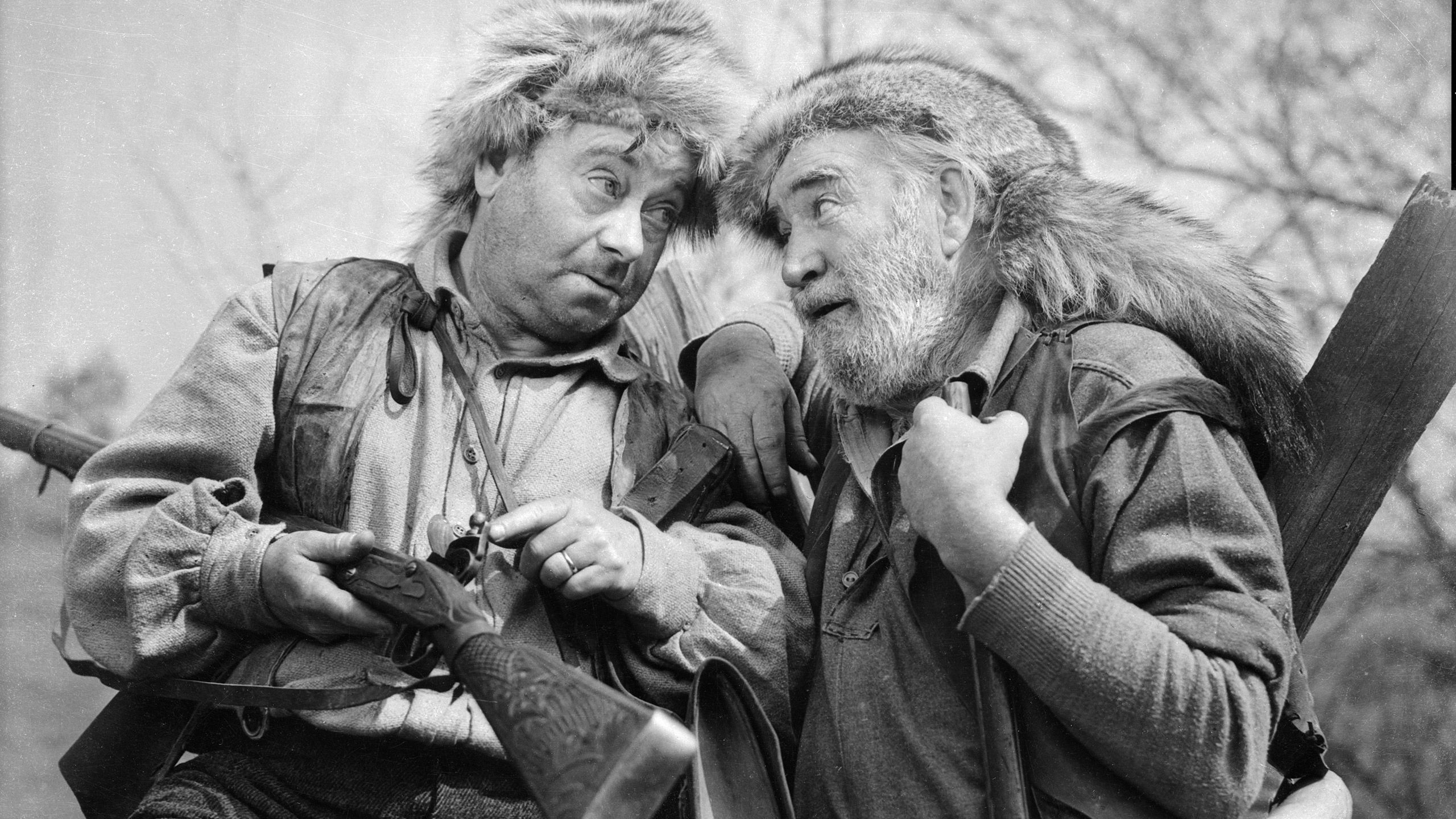
When you think of Abraham Lincoln in the movies, you probably picture Daniel Day-Lewis. You know the one—the 2012 Spielberg epic where he’s got the high-pitched, reedy voice and the weight of the entire Civil War resting on his stooped shoulders. It’s a great performance. Masterful, really. But honestly? If you want to understand the myth of the man, you’ve gotta go back to 1939 and watch Young Mr. Lincoln.
Directed by John Ford and starring a remarkably young (and heavily prosthetic-nosed) Henry Fonda, this movie doesn't care about the Emancipation Proclamation. It isn't interested in Gettysburg. Instead, it focuses on a semi-fictionalized version of Lincoln’s early years as a backwoods lawyer in Springfield, Illinois. It’s weird, it’s beautiful, and it’s arguably the most "American" film ever made.
Most people today overlook it because it’s in black and white or because they think it's just some dry history lesson. It isn't. It’s basically a courtroom thriller mixed with a folk legend.
The Birth of a Legend (And a Very Big Nose)
John Ford was a guy who loved icons. He spent his career building the mythology of the American West, and in Young Mr. Lincoln, he took on the biggest icon of them all. But here's the kicker: Henry Fonda didn't want the part.
Fonda was terrified. He felt that playing Lincoln was like playing God. He actually turned Ford down several times until the director basically shamed him into it, asking if he thought he was too good to play the Great Emancipator. Once he signed on, the transformation was intense. They gave Fonda a prosthetic nose and lifts in his boots to match Lincoln’s 6'4" frame.
The result? Something uncanny.
Fonda plays Lincoln not as a politician, but as a wanderer. He’s awkward. He’s funny. He’s kinda scary when he gets angry. There’s a scene early on where he’s judging a pie-eating contest, and he takes it so seriously that it’s hilarious. But then, minutes later, he’s standing by a river, mourning his lost love Ann Rutledge, and the mood shifts into something deeply melancholic. That’s the Ford touch. He mixes the silly with the sacred.
What Young Mr. Lincoln Gets Right About the Law
The meat of the story involves a murder trial. Two brothers are accused of killing a man during a brawl at a Fourth of July celebration. Lincoln steps in to defend them, mostly because he knows their mother and she’s a good person.
Is it historically accurate? Well, sort of.
The movie is loosely based on the real-life 1858 "Almanac Trial," where the real Abraham Lincoln defended William "Duff" Armstrong. In the real world, the trial happened much later in Lincoln’s career, but the movie moves it to his youth to make him feel like an underdog.
- The famous "Almanac" twist actually happened.
- The scene where Lincoln stops a lynch mob at the jailhouse door? That’s pure Hollywood drama, but it perfectly captures the idea of Lincoln as a man of order and law.
- The portrayal of the frontier legal system—messy, informal, and based more on character than technicalities—is surprisingly spot-on for the 1830s.
The Cinematography of Bert Glennon
We have to talk about how this movie looks. Bert Glennon was the cinematographer, and he and Ford decided to frame Lincoln in ways that make him look like a statue before he’s actually a statue.
There are these long, lingering shots of Lincoln leaning against a doorway or sitting on a porch. He’s often in silhouette. It’s deliberate. Ford is telling you, "Look, this guy is becoming the face on the penny right before your eyes."
But it never feels stiff.
Fonda moves with a gangly, spider-like grace. He’s always carving a piece of wood or playing a juice harp. These little "human" touches prevent the movie from becoming a boring hagiography. It’s a film about a man who is both a commoner and a king.
Why the French Obsessed Over This Movie
Here’s a fun bit of trivia: Young Mr. Lincoln is a massive deal in film theory circles. In 1970, the editors of the famous French film journal Cahiers du Cinéma wrote a massive, incredibly dense essay about this specific movie.
They weren't interested in the history. They were interested in the politics of the 1930s. They argued that the film was a piece of "ideological" filmmaking meant to reassure Americans during the Great Depression. They dissected every frame, looking for hidden meanings about capitalism and justice.
You don't need to read a 50-page French essay to enjoy the movie, but it shows you the depth of what Ford was doing. He wasn't just making a biopic; he was crafting a national identity. He was saying that American justice isn't about books; it’s about the "right" man standing up at the "right" time.
The Climax: A Courtroom Masterclass
The final third of the film is pure courtroom drama. It’s tense. Lincoln is up against a slick prosecutor who thinks he can outtalk the country lawyer.
The way Lincoln handles the witness—using humor to disarm them and then striking with a logical hammer—is vintage Lincoln. It reflects the real Lincoln’s reputation as a "storyteller" who could win over a jury by making them laugh.
The film ends with Lincoln walking off into a literal storm. The music swells into "Battle Hymn of the Republic." It’s a bit on the nose, sure. But by that point, Ford has earned it. You feel like you’ve seen the spark that eventually saved the Union.
Common Misconceptions About the Film
- It’s a Documentary: Nope. It’s a "legend." It blends the Almanac trial with other myths. Don't use it for your history mid-term without double-checking the dates.
- It’s "Boring" Old Cinema: To the contrary, it’s only 100 minutes long. It moves faster than most modern Marvel movies.
- Fonda is "Too Pretty": While Fonda was a leading man, the makeup team did a legit job of making him look rugged.
Actionable Steps for Film Buffs
If you’re ready to dive into this era of filmmaking, don't just stop at the credits. Young Mr. Lincoln is part of a larger conversation about American history.
First, watch the Criterion Collection version. The restoration is gorgeous and the black levels are deep, which is crucial for Glennon’s cinematography.
Second, watch it as a double feature with The Grapes of Wrath (1940). Also directed by Ford and starring Fonda, it shows the same "type" of American hero but in a completely different, grittier setting.
Third, pay attention to the silence. Modern movies are afraid of quiet. In this film, Ford lets the camera sit on Fonda’s face for long stretches. Watch what he does with his eyes.
Finally, if you’re a history nerd, go read the transcript of the actual William "Duff" Armstrong trial. It’s fascinating to see which parts John Ford kept and which parts he threw out to make the story "better."
The film isn't just about the 16th President. It’s about the power of storytelling. It’s about how we choose to remember our heroes—not as they were, but as we need them to be. It’s a foundational text of American cinema that still carries a surprising amount of emotional weight today.
Go watch it. Look for the scene where he plays "Dixie" on the juice harp. It’s a small, weird moment that says more about the coming Civil War than a two-hour battle scene ever could.



