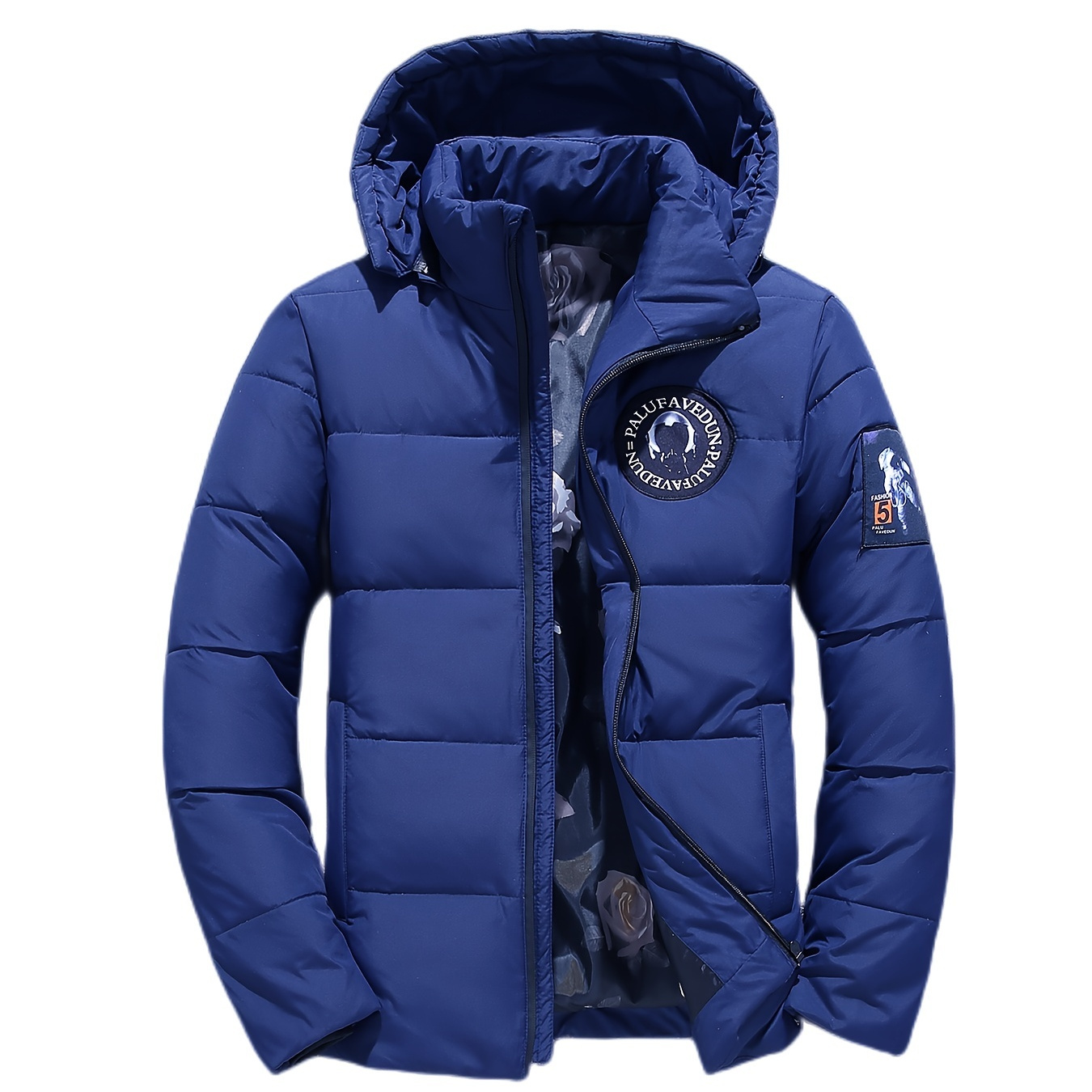
Buying a coat shouldn't feel like a chore. Yet, every November, thousands of guys end up shivering in a "puffer" that’s basically a glorified trash bag stuffed with polyester. It’s frustrating. You want to look sharp, but you also don't want your extremities to go numb while waiting for the train or walking to campus. Finding the right young men's winter jackets is actually about understanding the math of heat retention, not just following a TikTok trend.
Most guys focus on the brand. They see the red patch of Canada Goose or the mountain logo of The North Face and assume they’re set for a blizzard. That’s a mistake. Sometimes you're just paying for the marketing department's holiday bonus.
The Insulation Lie and Why Fill Power Matters
Let's talk about down. Real down comes from ducks or geese. It’s incredibly lightweight. It’s also the gold standard for warmth. But here is the thing: not all down is created equal. You’ll see numbers like 500, 700, or 800 stamped on sleeves. That’s fill power. It measures how much space an ounce of down takes up. Higher numbers mean more air is trapped. More air means more warmth.
A jacket with 800-fill power is warmer than a bulky 500-fill coat, even if it feels thinner. It’s physics.
Then there is synthetic. Primaloft and Thinsulate are the big names here. Honestly, if you live somewhere wet—think Seattle or London—synthetic might actually be better. Down is useless when it’s wet. It clumps. It loses its loft. You basically end up wearing a cold, soggy blanket. Synthetic insulation stays warm even when you’re caught in a sleet storm. Brands like Patagonia have spent millions perfecting "PlumaFill" to mimic down's weight while keeping those water-resistant perks.
Technical Shells vs. The "Big Coat" Energy
There are two main schools of thought for young men's winter jackets right now. You’ve got the technical shells and the heavy-duty parkas.
The technical shell approach is for the guy who likes layers. Think Arc’teryx or Mammut. These jackets are thin. They’re "shells" made of Gore-Tex. They don't provide much heat on their own, but they are 100% windproof and waterproof. You wear a hoodie or a fleece underneath, and you’re a tank. It’s versatile. You can wear the shell in April when it rains, or in January over a down vest.
Then you have the "Big Coat." The parka. The Alpha Industries N-3B or a Carhartt WIP Anchorage. These are designed for when it’s 10 degrees out and you just want one thing to throw on over a t-shirt. They’re heavy. They’ve got massive pockets for your phone, keys, and maybe a sandwich. But they can be overkill. If you’re ducking in and out of the subway, you’re going to sweat. Profusely.
Does Gore-Tex Actually Matter?
Kinda. If you’re just walking from your car to an office, you don’t need a 3-layer Gore-Tex Pro shell. You’re overpaying for technology meant for climbing K2. However, "water-resistant" is a trap. It usually just means a DWR (Durable Water Repellent) coating was sprayed on the fabric. That coating wears off after a few washes. If you want true longevity, look for "waterproof-breathable" membranes. Brands like Columbia use "Omni-Tech," which is their proprietary version. It’s cheaper than Gore-Tex and honestly works just fine for most people.
Style Trends That Won't Make You Look Like an Astronaut
The "Gorpcore" trend is still massive. Basically, looking like you’re about to go on a 10-mile hike even if you’re just going to get a coffee. This is why you see so many guys wearing bright orange or "vintage" purple puffers.
But if you want something that lasts more than one season, stick to earth tones. Olive drab, navy, and slate grey are staples for a reason. They don't show dirt as easily. They go with everything.
One specific style gaining ground is the "Workwear" winter coat. Think the Carhartt Active Jacket but lined with 3M Thinsulate. It’s rugged. It doesn't scream "I spent $900 on this." It’s practical for guys who are hard on their gear. The outer fabric is usually a heavy cotton duck canvas. It’s stiff at first. You’ve got to break it in. But ten years from now, that jacket will still be in your closet, probably looking better with a few scuffs.
The "Aged" Look and Sustainability
Sustainability isn't just a buzzword anymore; it’s a construction method. Many young men's winter jackets now use recycled polyester or "re-down." Re-down is literally down salvaged from old pillows and comforters, cleaned, and stuffed into new jackets. It works exactly the same.
Buying secondhand is also a huge move. You can find vintage Eddie Bauer or LL Bean coats on eBay or Depop for a fraction of the cost. These older coats were often built with thicker fabrics because "fast fashion" wasn't really a thing yet. If you find a vintage 1990s Mountain Light jacket from The North Face, buy it. It likely has better construction than the stuff they’re pumping out today for the mass market.
Small Details That Reveal Cheap Construction
You can tell a lot about a jacket by its zippers. If the main zipper is plastic and feels like it might snag, it will. Look for YKK zippers. They’re the gold standard.
Check the "storm flap." That’s the piece of fabric that covers the zipper. Wind is the enemy of warmth. If your jacket doesn't have a flap over the zipper, the wind will cut right through the teeth. You'll feel a cold stripe down your chest all day.
Cuffs matter too. You want "rib-knit" storm cuffs inside the sleeves. They hug your wrists. They prevent the cold air from blowing up your arms. Without them, your sleeves act like wind tunnels. It’s a small detail that makes a massive difference when the wind chill hits.
How to Actually Clean These Things
Most guys never wash their winter coats. That’s gross, but also, it ruins the jacket. Dirt and body oils break down the insulation and the water-repellent coatings.
- Use a specific "Down Wash" like Nikwax. Regular detergent is too harsh and strips the natural oils from the feathers.
- Use a front-loading machine. Top-loaders with an agitator can literally rip a puffer jacket apart.
- The dryer is the secret. Put the jacket in on low heat with three clean tennis balls. The balls bounce around and "fluff" the down back up. If you don't do this, the down stays clumped and your jacket loses its warmth.
Final Verdict on the "Best" Choice
There is no single "best" jacket. A guy in Minneapolis needs a different kit than a guy in Nashville.
If you’re in a city with real winters, get a parka with a high fill power (650+) and a durable outer shell. If you’re in a place where it rains more than it snows, go synthetic.
Avoid the ultra-cheap fast-fashion options. They look good for three weeks, then the seams start leaking feathers and the zipper breaks. You’ll end up buying another one next year anyway. Spend the extra $100 for a brand that offers a lifetime warranty—Patagonia, Outdoor Research, and even JanSport (for some gear) stand by their stuff forever.
Essential Checklist for Your Purchase
- Check the Fill: Is it down or synthetic? What’s the fill power?
- Test the Zipper: Does it feel sturdy? Is there a storm flap?
- Look at the Cuffs: Are they adjustable or elasticized to keep out the wind?
- Check the Pockets: Are they fleece-lined? Your hands will thank you.
- Warranty: Does the company repair their gear?
Next, go to a physical store and try a jacket on with a hoodie underneath. Many young men's winter jackets are cut "slim" these days. If you buy your "regular" size, you might find you can't move your arms once you layer up. Size up if you plan on wearing sweaters. Check the length too—a jacket that hits below the hip will always be warmer than one that stops at the waist.
Invest in quality once. It's cheaper than buying garbage every year. Keep the wind out, keep the heat in, and stop worrying about the brand name more than the specs.