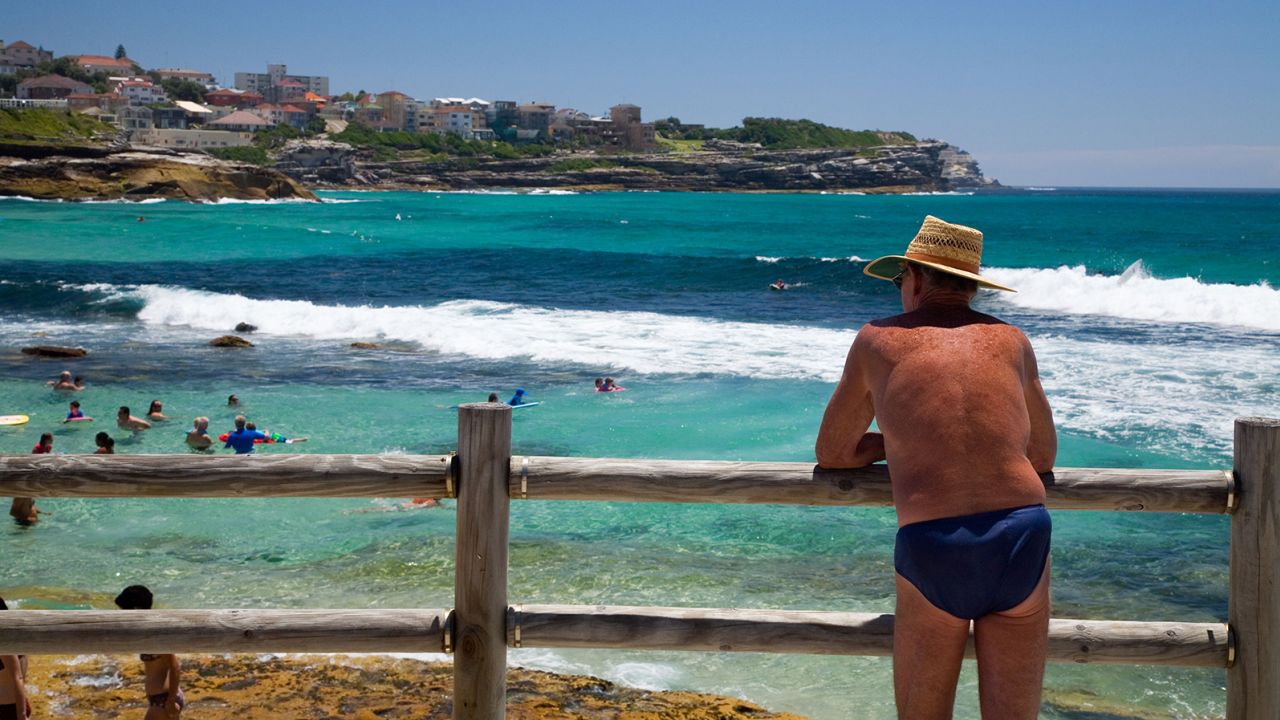
Walk onto any beach in Mediterranean Europe—think Ibiza, Hvar, or the Amalfi Coast—and you won't see many baggy board shorts. You'll see young men in speedos. It’s the standard. But back in the States or the UK, the "budgie smuggler" has spent decades as the punchline of a joke, relegated to Olympic swim meets or that one eccentric uncle at the community pool.
Things are shifting. Fast.
If you’ve scrolled through TikTok or Instagram lately, you might’ve noticed a change in the vibe. The five-inch inseam trend that took over men's fashion a few years ago was basically a gateway drug. Men started showing more thigh, realized the world didn't end, and now they're going all the way. It’s not just about being provocative anymore; it’s a mix of practical athleticism, a rejection of "modesty" culture, and a huge nod to 1980s retro aesthetics.
The Death of the Board Short
Board shorts are objectively kind of a hassle if you aren't actually surfing. They’re heavy. They hold onto three pounds of water the second you dive in. They take six hours to dry, leaving you with that damp, uncomfortable sensation all through lunch.
Younger generations—Gen Z and the younger Millennials—are famously more comfortable with body positivity than their parents were. They don't see the swim brief as a "European thing" or a "pro swimmer thing." They see it as a functional piece of kit. When you're wearing a speedo, there’s no drag. You can actually move. Plus, the tan lines are way better. Nobody wants those weird half-white, half-brown legs that make you look like you’re wearing Neapolitan ice cream.
Market data backs this up. Major retailers like ASOS and even mainstream brands like Abercrombie & Fitch have expanded their "swim brief" sections significantly over the last two years. While the term "Speedo" is a brand name—owned by Pentland Group—it has become the "Kleenex" of the industry. Whether it’s a high-end designer brief from Orlebar Brown or a $20 pair from a local sporting goods store, the silhouette is the same: confidence.
It’s Actually About Comfort (No, Really)
Let's be honest. Chafing is the worst.
Traditional swim trunks have that scratchy mesh lining that feels like it was designed by someone who hates men. It’s abrasive. It traps sand in places sand should never be. Young men in speedos are often choosing the garment because it stays put. There’s no fabric flapping around your knees, and there’s no mesh "cheese grater" effect.
From a purely biological perspective, the compression offered by a well-made swim brief is just more supportive for high-intensity beach activities. Whether it's a game of beach volleyball or a long-distance open water swim, you want everything held in place. Professional water polo players and divers have known this for a century, but the average guy is finally catching on to the ergonomics of it all.
The Retro Influence
Fashion is cyclical, and right now, we’re obsessed with the late 70s and early 80s. Think about the style in Stranger Things or the recent obsession with "Short King" summer. In the 1980s, the brief was the standard. Watch any old footage of a public pool from 1984 and you’ll see that the modest, knee-length board short was an outlier.
We’re seeing a return to that "vintage athletic" look. Brands are leaning into it with bold primary colors, side stripes, and higher cuts. It’s a rebellion against the baggy, oversized "dad style" of the early 2000s. It feels intentional. It feels like a choice rather than just throwing on whatever was on the clearance rack at a department store.
Overcoming the "Stigma"
There’s still a hurdle, though. In many Western cultures, there’s this weird, lingering homophobia or "body shame" associated with men wearing tight swimwear. It’s a strange double standard when you consider what’s acceptable for women's swimwear.
But the "macho" barrier is breaking down. You see guys like Tom Daley or even mainstream actors rocking briefs on vacation, and it normalizes the look. It’s becoming a symbol of "I take care of myself and I don't really care what you think," which is a pretty powerful flex in today’s social climate.
Interestingly, the fitness community has played a huge role here. If you’ve spent six months hitting leg day twice a week, you probably want to show off your quads. A speedo is the ultimate "I didn't skip leg day" badge of honor. It’s vanity, sure, but it’s a transparent kind of vanity that people seem to respect more than the "accidental" peacocking of years past.
How to Wear One Without Looking Like a Lost Olympian
If you’re thinking about making the switch, there are a few "unspoken rules" that help bridge the gap between "guy at the pool" and "guy who knows what he’s doing."
First, fit is everything. A speedo that’s too big will sag and look sloppy when wet. A speedo that’s too small is... well, you know. You want a snug fit that feels like a second skin. Most experts suggest looking for a "1-inch" or "3-inch" side seam. The 1-inch is the classic racing cut (very bold), while the 3-inch is a bit more "lifestyle" and offers a slightly more squared-off look.
Fabric matters too.
- PBT (Polybutylene Terephthalate): This is the gold standard for durability. It’s chlorine-resistant and won’t lose its shape after three swims.
- Lycra/Spandex: Super comfortable and stretchy, but it will eventually break down if you’re spending a lot of time in chlorinated pools.
- Nylon Blends: Great for the beach; they dry fast and feel soft.
Also, consider the "environment." If you’re at a conservative family resort, maybe stick to a dark navy or black brief. If you’re at a beach club in Mykonos, go for the neon orange or the crazy patterns. It’s all about reading the room, or in this case, the sand.
The Practical Upside of Travel
If you’re a minimalist traveler, the speedo is a godsend. You can pack five of them in the space it takes to pack one pair of cargo swim trunks. They weigh nothing. You can wash them in a hotel sink with a bit of shampoo, hang them over the shower rod, and they’ll be bone-dry by the time you wake up. For the "one-bag" travel crowd, this is a massive win.
Honestly, once you get over the initial "everyone is looking at me" anxiety—which usually lasts about ten minutes—you realize that nobody actually cares. Most people are too worried about how they look to spend much time judging you.
Actionable Steps for the First-Timer
Making the transition from trunks to briefs doesn't have to be a traumatic event. Start slow.
1. Try a "Square Leg" first. If the classic V-cut feels too exposed, look for square-leg trunks. They offer the same tight fit and support but look more like very short boxer briefs. It’s the perfect "training wheels" option.
2. Choose dark, matte colors. Black, navy, or forest green are your friends. They are slimming, they aren't transparent when wet (a common fear with cheaper white suits), and they look "classic" rather than "costume-y."
3. Grooming is a thing. Just being real here: if you’re wearing a speedo, you need to pay attention to the "edges." You don't need to go full body-builder, but a little bit of tidying up goes a long way in feeling confident and looking polished.
4. Own the posture. The quickest way to look awkward in a swim brief is to look like you're trying to hide. Stand up straight. It’s a high-confidence garment; if you wear it with slumped shoulders, it doesn't work.
5. Buy for your actual size. Don't buy a size down thinking it will make you look "snugger." It will just create a "muffin top" effect at the waist. Use a measuring tape for your actual waistline—not your pant size, which is often vanity-sized—and check the brand’s specific size chart.
The shift toward young men in speedos isn't just a flash-in-the-pan trend. It’s part of a broader movement toward functional fashion and body autonomy. Whether you’re doing it for the tan, the swim times, or just to stop dealing with soggy board shorts, the "little suit" is back, and it’s likely staying for a while.



