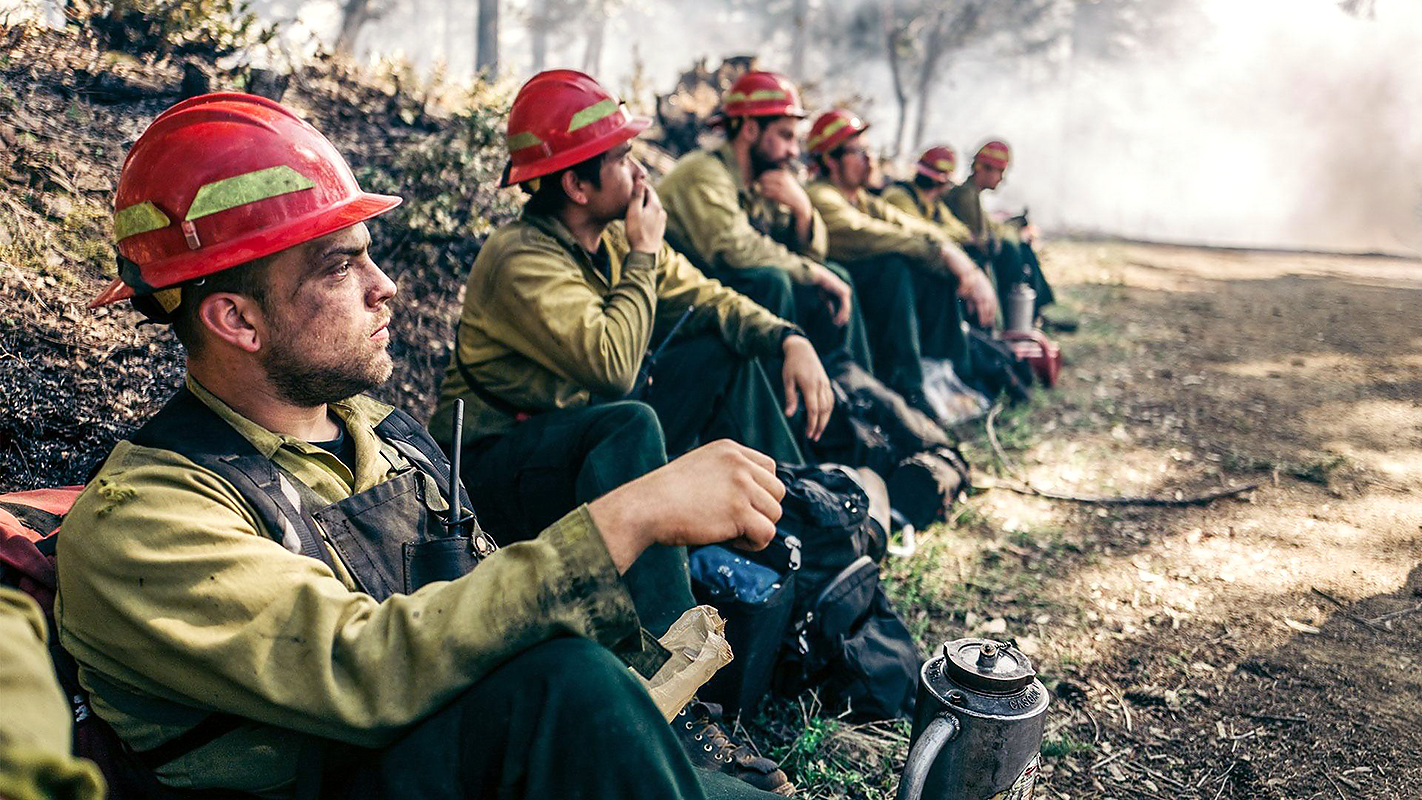
The smoke doesn’t just sit in your lungs; it sticks to your skin like a second layer of clothing that you can't ever quite scrub off in a single shower. Ask any 21-year-old coming off a 14-day roll in the Sierras or the high desert of Oregon. They’re exhausted. They’re covered in soot. Honestly, they’re probably starving for something that didn’t come out of a silver pouch. Yet, for a huge segment of the firefighting workforce, particularly the wildland crews, these young men in fire keep showing up, season after season, despite the pay being historically low and the risks being—well, literal fire.
It's a weird subculture. It’s a mix of adrenaline, a desperate need for a paycheck, and a sort of primal camaraderie that you just don't find sitting behind a desk in a cubicle.
The Reality of the Hotshot Life
When we talk about young men in fire, we aren't just talking about the guys on the big red trucks in the city, though they’re a massive part of the ecosystem. We’re often talking about the seasonal wildland crews—the Interagency Hotshot Crews (IHC) and the smokejumpers. These guys are mostly in their early 20s to early 30s. Why? Because the job is a physical meat grinder.
Hiking 10 miles uphill with a 45-pound pack and a chainsaw is a young man’s game. Your knees have to be made of springs. Your back has to be made of steel. According to the U.S. Forest Service, these crews are the "special forces" of firefighting. They go where engines can't. They cut line. They burn out fuel. They sleep in the dirt.
But there’s a crisis happening.
You’ve probably heard about the "firefighter brain drain." It’s real. For years, the base pay for a federal wildland firefighter started around $15 an hour. That’s less than what some fast-food joints pay in the same towns where these guys are based. The Infrastructure Investment and Jobs Act provided a temporary pay boost, but the "pay cliff" remains a constant source of anxiety. Imagine outrunning a crown fire for $15 an hour. It’s a tough sell, yet the draw of the "brotherhood" keeps the recruitment lines moving, at least for a while.
Why They Keep Doing It
It isn't the money. Not really.
A lot of young men in fire are looking for something that modern society has sort of... bleached out of everyday life. There’s a psychological concept often cited in studies of high-risk professions called "The Edge." It’s that space where your skills meet a legitimate, life-threatening challenge. For a 22-year-old from a small town in Idaho or a suburb in California, the fire line offers a clarity that TikTok or a retail job can’t provide.
- Purpose: You are protecting a town. You see the flames, you build the break, and the fire stops. That’s a tangible result.
- Structure: The military-style hierarchy of a fire crew provides a framework that many young men find stabilizing.
- The Bond: Spending 16 hours a day for two weeks straight with the same 19 people creates a connection that is hard to explain to outsiders. It’s "Type 2 Fun"—miserable while it’s happening, but legendary in retrospect.
But we have to look at the darker side, too. The "hero" narrative is a heavy burden.
Mental Health and the "Tough It Out" Culture
Historically, the fire service hasn't been great at talking about feelings. You’re supposed to be "rugged." You’re supposed to be "stoic." But the suicide rate among firefighters is significantly higher than the general population. Organizations like the Wildland Firefighter Foundation have been shouting this from the rooftops for years.
Young men in fire deal with a specific kind of trauma. It’s not just the fear of the fire itself. It’s the cumulative stress of being away from home, the lack of sleep, and the "off-season" depression that hits when the adrenaline stops pumping in October and you’re suddenly sitting in your parents' basement with nothing to do.
The Evolution of the Gear
If you look at photos from the 1970s, these guys were basically wearing jeans and cotton shirts. Today, the tech has changed, but the weight has stayed the same.
- Nomex: This is the flame-resistant fabric they all wear. It doesn't melt. It’s light, but it breathes like a plastic bag.
- The Fire Shelter: Often called the "shake and bake." It’s a last-resort foil tent. If you’re using this, things have gone horribly wrong.
- The Chainsaw: Usually a Stihl or Husqvarna. It’s the primary tool for a sawyer, and it’s heavy as hell.
What Most People Get Wrong About Wildland Fire
People see the planes dropping red slurry and think that’s how fires are put out. It’s not. Planes are just a delay tactic. Fires are put out by people on the ground with hand tools—Pulaskis, McLeods, and shovels. It’s manual labor in its purest, most exhausting form.
There’s also this idea that it’s all "bravery." Talk to a veteran sawyer and he’ll tell you it’s mostly about boredom and logistics. You spend 90% of your time digging a ditch in the woods and 10% of your time actually seeing flames. But that 10%? That’s what keeps them coming back.
The Changing Face of the Workforce
While we're focusing on young men in fire, the demographic is shifting—slowly. More women are entering the ranks, and there’s a push for more permanent, year-round positions rather than just seasonal "1039" contracts. The goal is to turn this from a "crazy summer job for college kids" into a "sustainable career for professionals."
The problem is that the fires are getting bigger. The "fire season" is now a "fire year." In 2021, the Dixie Fire burned nearly a million acres. In 2024 and 2025, we saw similar patterns of extreme fire behavior that traditional tactics just can't handle. This puts an immense amount of pressure on the boots on the ground. When the fire doesn't follow the rules, the risk to those young men increases exponentially.
Actionable Steps for Aspiring Firefighters or Supporters
If you are a young person looking to get into this world, or if you’re trying to support someone who is, here is the ground truth on how to handle it.
For the Aspiring Firefighter:
- Fitness is everything. Don't just run. Hike with weight. Do step-ups until you want to vomit. The "Pack Test" (3 miles with 45 lbs in under 45 minutes) is the bare minimum. If that's hard for you, you aren't ready for the line.
- Get your certs early. Look for S-130/S-190 courses (Firefighting Training and Introduction to Wildland Fire Behavior). Many community colleges offer these over a weekend.
- Learn to cook. Seriously. If you’re the guy on the crew who can make a decent meal out of random ingredients at the end of a shift, you will be a god among men.
- Mental prep. Read Young Men and Fire by Norman Maclean. It’s the definitive book on the Mann Gulch fire of 1949. It’s a sobering look at what happens when things go wrong. It’s essential reading.
For the Families and Supporters:
- Understand the "Re-entry" period. When they come home after a roll, they’re going to be weird. They’ve been in a high-stress, high-testosterone environment for weeks. Give them 48 hours to sleep and decompress before asking them to go to a loud birthday party or a grocery store.
- Advocate for better pay. Support legislation like the Tim Hart Wildland Firefighter Classification and Pay Parity Act. Tim Hart was a smokejumper who lost his life in 2021, and the bill named after him is a major push for better benefits and mental health support.
For the General Public:
- Respect the closures. If a forest is closed due to fire risk, stay out. The last thing a crew needs is to have to stop cutting a line to go rescue a hiker who "didn't think it was that bad."
- Donate wisely. If you want to help, give to the Wildland Firefighter Foundation. They provide immediate financial assistance to the families of firefighters killed or injured in the line of duty.
The world of young men in fire is one of contradictions. It’s beautiful and hideous. It’s rewarding and it’s a rip-off. It’s a brotherhood that can be broken by a single shift of bad wind. But as long as the forests burn, there will be a line of 20-somethings ready to lace up their boots, grab a tool, and walk toward the smoke. It’s just who they are.



