Go to any backyard party where there's a fire pit. Watch. Within five minutes, you’ll see a guy—usually in his twenties—leaning over the flames with a stick. He’s poking it. He’s moving a log two inches to the left. He’s "improving" it.
People laugh. They call it "caveman brain." But there is actually something deeply biological, psychological, and even historical happening when we look at young men and fire. It’s not just about pyromania or boredom. It’s a connection that stretches back to the Pleistocene, and honestly, we’re doing a pretty bad job of understanding it in the modern age. For a closer look into similar topics, we recommend: this related article.
Fire changed our species. It cooked our food, which let our brains grow. It kept the predators away. But for the young men of the tribe, fire was more than a stove; it was a responsibility. It was the first "technology" they had to master to keep the group alive. Today, that drive hasn't vanished. It just doesn't have a clear outlet anymore.
The Science of Why Young Men and Fire Are Linked
Why do guys do this? Researchers have actually looked into it. For additional details on this topic, comprehensive analysis is available at Cosmopolitan.
Daniel Fessler, an evolutionary anthropologist at UCLA, has spent years studying "fire learning." His research suggests that while most children have a natural curiosity about fire, this fascination usually peaks and then settles into a practical understanding. However, in many cultures, the "mastery" phase of fire remains a masculine-coded rite of passage.
Think about the physiological response. When you sit in front of a fire, your blood pressure actually drops. A study published in the journal Evolutionary Psychology found that the flickering light and the crackle of wood induce a state of relaxation and "prosocial" behavior. It makes us want to talk. It makes us want to share stories. For young men, who often struggle with face-to-face vulnerability, the fire provides "side-by-side" interaction. You aren't looking at each other; you're both looking at the flames. That makes it easier to talk about the hard stuff.
But there’s a flip side. Risk.
Adolescent and young adult males are statistically the most likely demographic to be involved in "fire-play" that goes wrong. The National Fire Protection Association (NFPA) notes that males are disproportionately represented in both intentional fire-setting and accidental injuries involving accelerants. It's that classic cocktail of high testosterone and a prefrontal cortex that is still under construction until age 25. They want to see what happens if they add gasoline. They want to see how big it can get.
The Mastery Gap
We live in a world where everything is "push-button." You want heat? Turn a dial. You want light? Flip a switch.
This creates a vacuum. Young men, historically, have defined themselves through the mastery of the physical world. When you take away the need to hunt, build, or protect, the primal urge to "control" an element remains. Young men and fire become a duo because fire is one of the few things left that feels dangerous but controllable.
In his landmark book Young Men and Fire, Norman Maclean—who also wrote A River Runs Through It—chronicled the 1949 Mann Gulch fire. He wasn't just writing about a forest fire; he was writing about the essence of young men facing a force they couldn't control. The smokejumpers in that tragedy were mostly in their early twenties. They were brave, fit, and perhaps a bit too confident in their ability to outrun a "blowup."
Maclean’s work highlights a critical truth: fire is a teacher of humility.
When a young man learns to build a fire from scratch—no lighter fluid, no blowtorch, just friction or a spark—something changes in his posture. It’s a shift from "consumer" to "producer." You can see the pride when that first wisp of smoke turns into a flame. It’s a small victory over the chaos of nature. Honestly, we need more of that. We've traded real-world competence for digital points, and the soul feels that trade-off.
Risk vs. Ritual
There is a massive difference between a guy lighting a trash can on fire because he's bored and a guy learning to manage a controlled burn or a campfire.
One is destructive. The other is a ritual.
Throughout history, fire was the center of the community. In the Spartan syssitia (communal meals) or the council fires of the Iroquois League, the fire was the witness to the transition from boy to man. Today, we’ve pathologized the interest. We see a kid interested in fire and we think "arsonist."
Maybe we should think "firefighter."
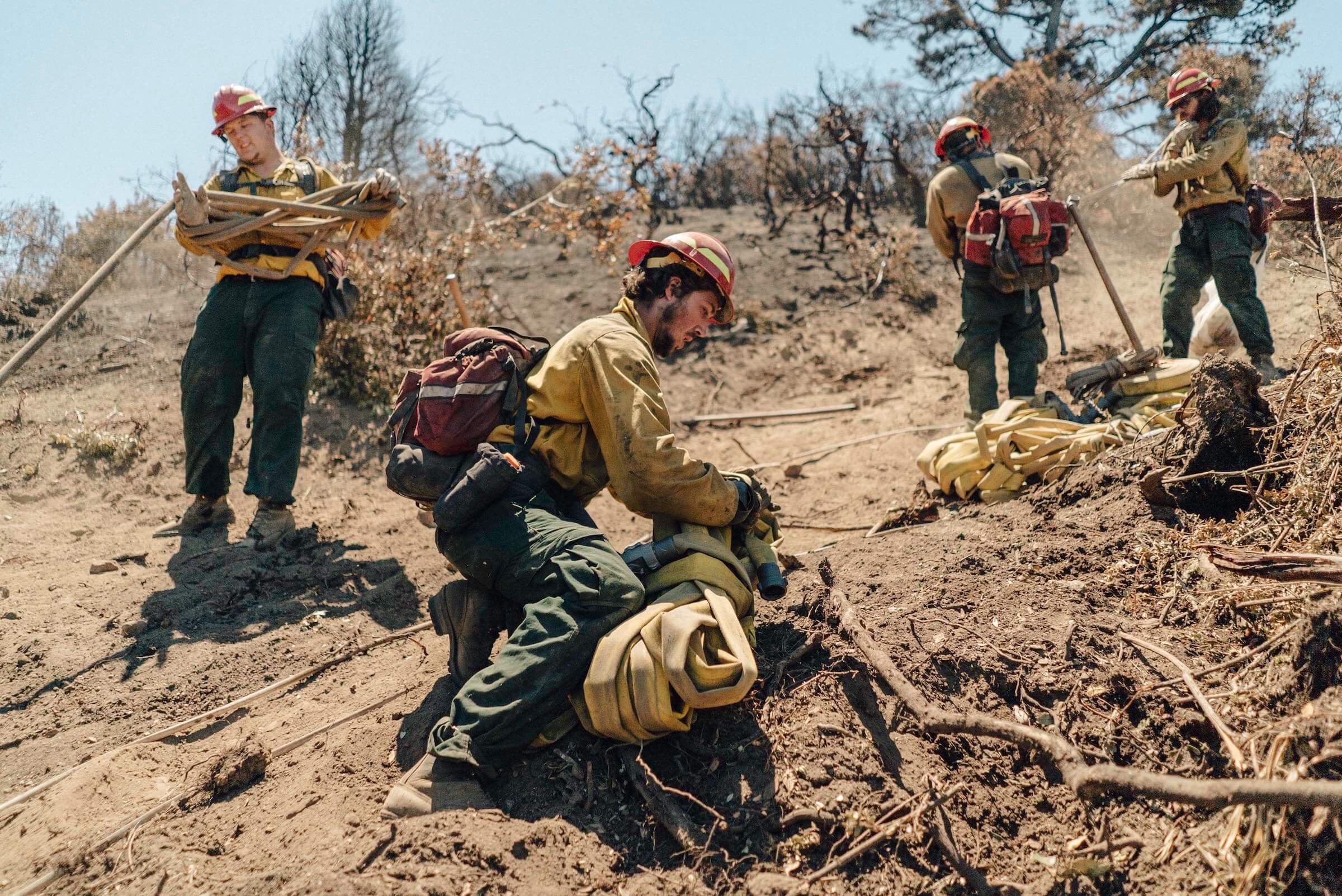
The wildland firefighting community is almost entirely fueled by the energy of young men. According to the U.S. Forest Service, the average age of a seasonal wildland firefighter is in the mid-twenties. These guys aren't just there for the paycheck—which, frankly, isn't great. They are there for the brotherhood and the chance to wrestle with a primal force. They are taking that "fire brain" and turning it into a service.
The Psychological "Hook" of the Flame
Ever heard of "soft fascination"?
It’s a term in Attention Restoration Theory (ART). It describes things that hold our attention without requiring effort. Clouds. Waves. Fire.
Modern life is full of "hard fascination"—emails, traffic lights, TikTok feeds. These drain our mental energy. Young men and fire find a synergy because the fire acts as a neurological reset. When you're staring at a fire, you aren't "scrolling." You're existing.
There's also the "competence" factor.
Psychologist Edward Deci’s Self-Determination Theory says humans need three things to be happy: Autonomy, Relatedness, and Competence. Building a fire hits all three. You do it yourself (Autonomy). You do it for the group (Relatedness). You do it well (Competence).
If a young man doesn't feel competent in his job or his schoolwork, he might go into the woods and build a fire. In that moment, he is the king of his domain. He has created warmth. He has created light. It sounds simple, but in a world that often makes young men feel redundant, simple is powerful.
What We Get Wrong About the Danger
People worry. They see a group of guys around a bonfire and expect a disaster.
And yeah, sometimes alcohol gets involved and things get stupid. That’s a real risk. But the "danger" of fire is also its greatest gift. You cannot "fake" a fire. You cannot "post-truth" a flame. If you don't respect the wind, the fuel moisture, and the oxygen, the fire will go out or it will burn you.
It is an honest medium.
For a generation raised in "simulations," fire is the ultimate reality check. It provides immediate feedback. If you use too much tinder, you smother it. If you don't leave enough space for air, it dies. This is a physics lesson that sticks.
We shouldn't be trying to extinguish this interest. We should be mentoring it.
From Pyromania to Stewardship
If you have a young man in your life who is obsessed with fire, don't just take away his matches. That usually makes the "forbidden" fruit even more tempting. Instead, give him a job.
- Buy him the gear. Get him a ferrocerium rod (a "fire steel"). It's hard to use. It requires technique. It turns fire-making into a skill rather than a prank.
- Teach the "Leaving No Trace" principles. Fire isn't just about the flame; it's about the responsibility of the aftermath. Teaching a young man how to properly douse, stir, and feel a fire pit until it is cold to the touch is a lesson in accountability.
- Go camping. Not the "RV with a microwave" camping. The "if we don't get this fire going, we're eating cold beans" camping. Necessity is the best teacher of respect.
Actionable Insights for Channeling the Urge
If you are a young man reading this, or if you're someone trying to understand one, here is how you move from "poking at coals" to actual mastery.
- Learn the Science of Combustion: Don't just throw wood on. Understand the "Fire Triangle" (Heat, Fuel, Oxygen). Learn why different woods (hardwoods vs. softwoods) burn differently. Oak is for heat; pine is for starting. Knowing the difference is the first step to being the guy people actually want running the pit.
- Practice Primitive Skills: Try the "bow drill" method once. You will realize very quickly that fire is a gift, not a right. It takes immense physical effort and patience. It builds a different kind of character than flicking a Bic.
- Volunteer for Controlled Burns: If you live in a rural area, local land trusts or forestry services often need volunteers for prescribed burns. This is where you see the power of fire used for ecological health. It turns the "destructive" urge into a "regenerative" act.
- Study the History: Read Norman Maclean. Read about the Great Fire of London. Understand that fire is a neighbor we must live with, but one that can burn the whole neighborhood down if we stop paying attention.
Fire isn't a toy. But it also isn't an enemy. For young men, it is a mirror. It reflects their ability to focus, their willingness to prepare, and their capacity to provide for others.
Next time you see a guy staring at the flames, don't roll your eyes. He's just reconnecting with a part of himself that the modern world hasn't found a replacement for yet. Let him move the log. Let him build the flame. Just make sure he knows how to put it out.



