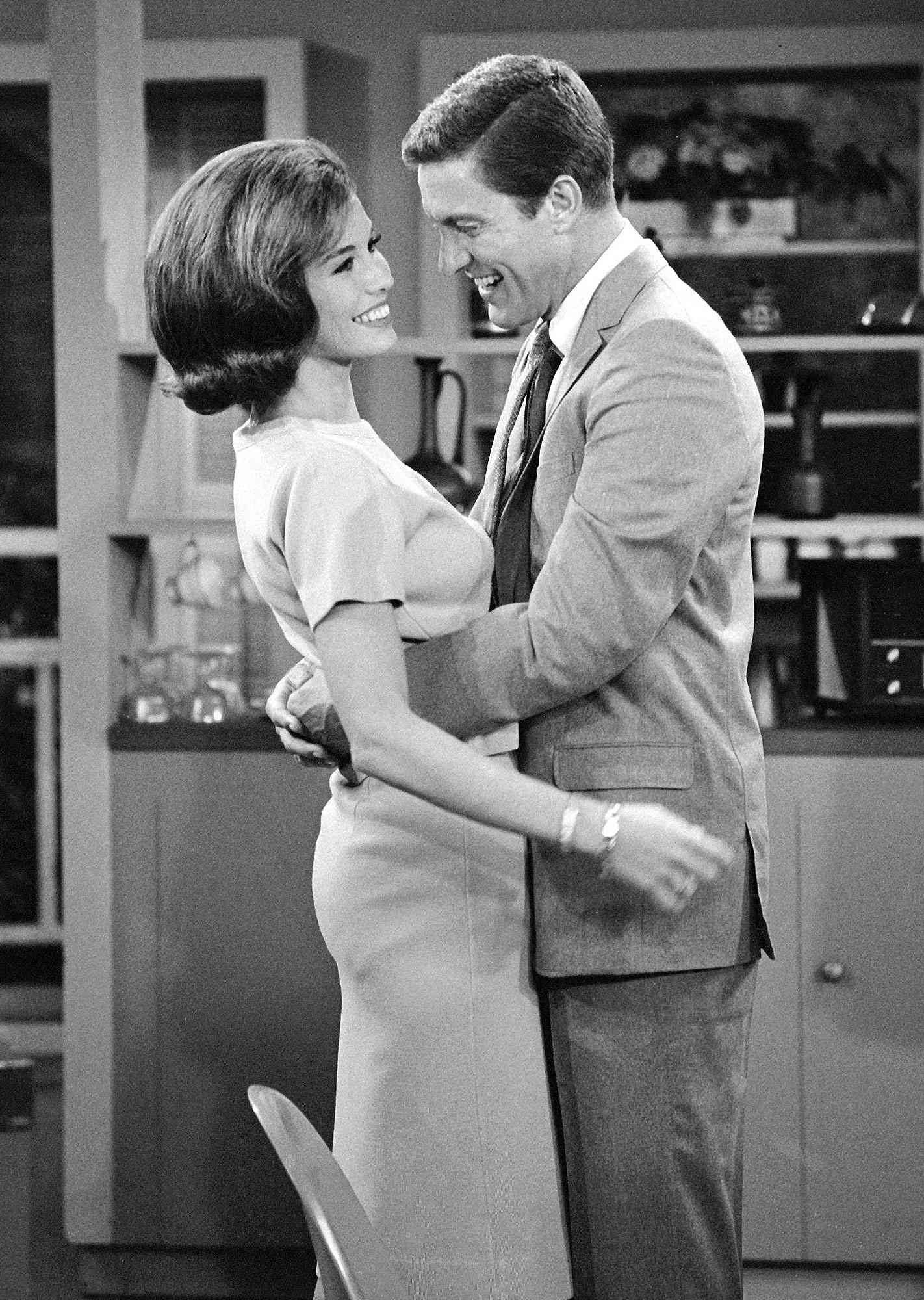
Before the world knew her as the woman who could turn the world on with her smile, young Mary Tyler Moore was just a teenager in Los Angeles with a massive secret and a pair of very famous legs. Honestly, if you only know her as the polished icon of the 1970s, you’re missing the wildest part of the story. It wasn’t all berets and "Oh, Rob!"
It was a grind. Also making news recently: The Anatomy of Manufactured Rage: Technical Substitution in High-Budget Performance Architecture.
Her start was gritty, weird, and surprisingly scandalous for 1955.
The Tiny Elf in the Kitchen
Most people think Mary’s career started with The Dick Van Dyke Show. Wrong. Additional insights into this topic are explored by Entertainment Weekly.
She actually got her break at 17 playing a dancing elf named Happy Hotpoint. This wasn't some prestigious theater gig. She was literally a pixie appearing in commercials for kitchen appliances during The Adventures of Ozzie and Harriet. She wore a tight suit and ears, prancing around stoves. Basically, she was the 1950s version of a viral mascot.
She made about $6,000 for those commercials, which was huge money then. But here’s the kicker: it ended because of a "scandal."
At 18, Mary had married her neighbor, a cranberry juice salesman named Richard Meeker. He was ten years older than her. Six weeks into the marriage, she was pregnant. You’ve probably guessed what happened next—the Hotpoint company decided a pregnant elf was bad for the brand. They fired her.
Young Mary Tyler Moore and the Mystery of the Legs
After her son, Richie, was born, Mary didn't just sit around. She was desperate to work. She landed a role in a detective show called Richard Diamond, Private Detective.
But there was a catch.
The producers didn't want the audience to see her face. They wanted a "mysterious" vibe. So, for an entire season, young Mary Tyler Moore was known only as "Sam." The camera only showed her legs and her hands as she answered the phone.
Imagine being that talented and being told your face isn't the selling point.
Eventually, she asked for a raise. They said no. She quit. It’s one of those "what were they thinking?" moments in TV history. They lost a future legend over a few bucks and a refusal to tilt the camera up.
The Audition That Almost Failed
You've probably heard the story about her nose. It sounds like a Hollywood myth, but it’s 100% real.
Mary auditioned for the role of Danny Thomas’s daughter on Make Room for Daddy. Danny Thomas—a massive star at the time—looked at her and famously said that no daughter of his could have a nose that small. He turned her down because she didn't look "related" enough to him.
But Danny didn't forget her.
Years later, when Carl Reiner was looking for a wife for Dick Van Dyke, Danny Thomas remembered the "girl with the three names and the small nose." He recommended her.
What Most People Get Wrong About Her Early Life
There’s this idea that Mary was a "wholesome" girl-next-door who had it easy.
Not even close.
Her childhood in Brooklyn and later LA was heavy. Both of her parents struggled with alcoholism. Mary herself once said she felt like she had to be the "perfect" one to keep the family together. That drive for perfection—that polished, "everything is fine" exterior—started way before she was on camera.
She wasn't just a naturally bubbly person; she was a disciplined dancer. She trained at Immaculate Heart High School and brought that rigid, dancer's work ethic to everything. When you see her doing those high-kicks in her early 20s, you’re seeing years of painful rehearsals.
Why Her Early Years Changed TV
If we look at young Mary Tyler Moore through a modern lens, she was a pioneer for "the hustle."
- She was a teen bride.
- She was a working mother when that was still looked down upon.
- She was a divorcee by age 24.
By the time she became Laura Petrie in 1961, she had already lived a whole lifetime of rejection and career pivots. She insisted on wearing capri pants on The Dick Van Dyke Show because she thought stay-at-home moms didn't actually vacuum in floral dresses and pearls.
The network fought her on it. They thought it was too "suggestive" because of how the pants fit. She won that fight.
Actionable Insights from Mary’s Early Career
If you’re looking to channel that MTM energy in your own life or career, here’s the blueprint she unintentionally left behind:
- Embrace the "Elf" phase. Everyone starts somewhere weird. Don't be too proud to take the "Happy Hotpoint" gig if it pays the bills and gets you on a set.
- Your "flaws" are your features. The very nose that lost her one job became the reason she got the job of a lifetime. Stop trying to fix the things that make you unique.
- Bet on yourself. When the detective show wouldn't pay her what she was worth, she walked. Knowing your value is the first step to getting others to see it.
- Discipline is the foundation of "effortless." Her "sunny" persona was backed by the intense discipline of a professional dancer. Hard work makes the result look easy.
Mary Tyler Moore didn't just show up in Minneapolis in 1970 as a fully formed feminist icon. She was forged in the weird, restrictive, and often sexist world of 1950s Hollywood. She survived being a "hidden" secretary and a "dancing elf" to become the most important woman in television history.
Next time you feel like you’re stuck in a dead-end gig, just remember: even Mary Tyler Moore started out as a kitchen appliance pixie.



