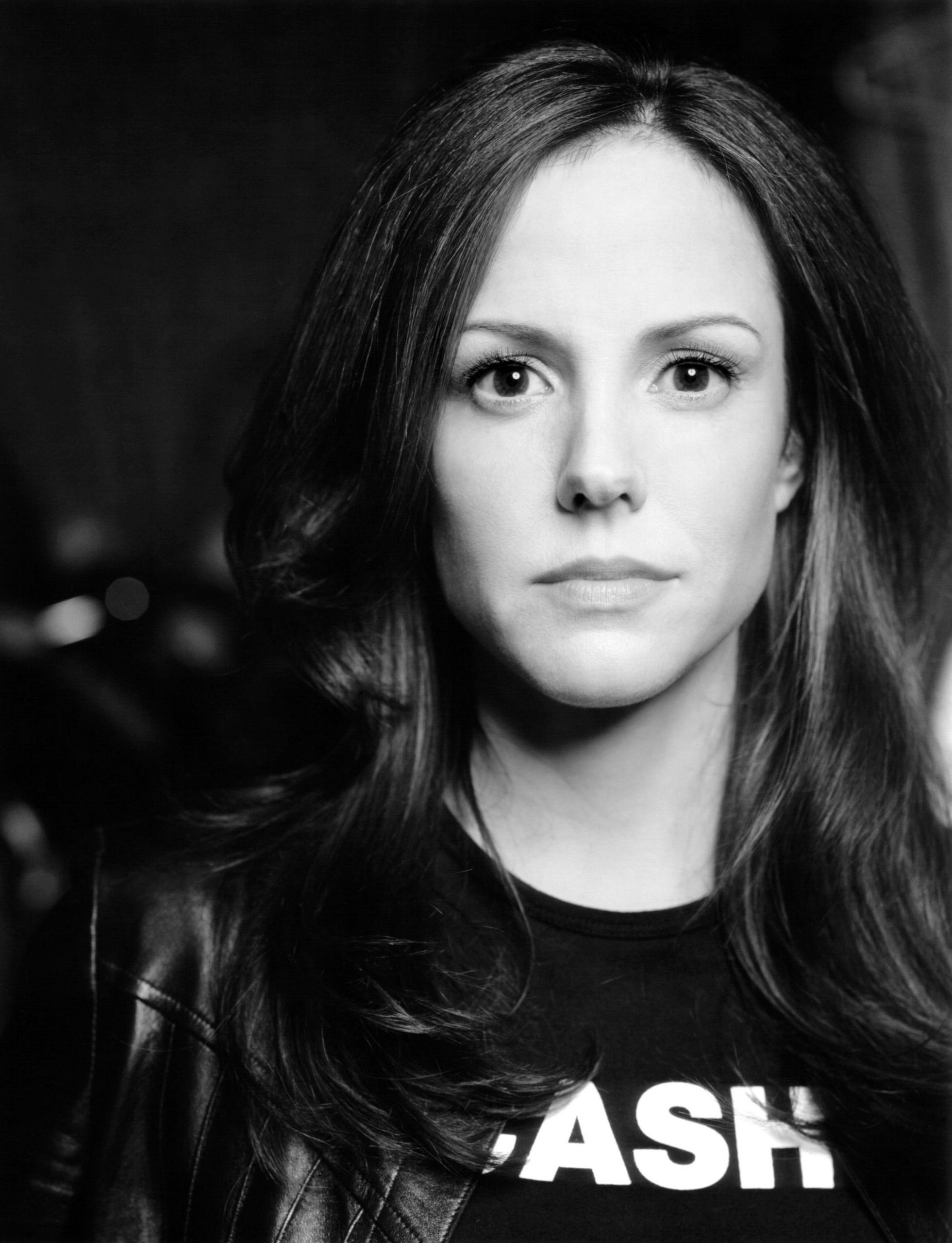
Before she was the "weed-dealing soccer mom" or the quick-witted lobbyist on The West Wing, Mary-Louise Parker was basically the patron saint of the "long-suffering girl next door." That’s how critics labeled her in the late '80s. But honestly? That label was a total oversimplification. Young Mary-Louise Parker didn't just play victims or quiet wallflowers; she brought a weird, vibrating intensity to the screen that most actors spend decades trying to find.
If you only know her from the Showtime era, you've missed the foundational years that made her a legend in the New York theater scene. She didn't just "arrive" in Hollywood. She fought through a nomadic military childhood and a "profoundly unhappy" adolescence to become the most interesting person in every room she entered.
The Army Brat Roots and the "Unhappy" Years
Most people see the poise and the cool exterior and assume she had a charmed start. Not exactly. Born in Fort Jackson, South Carolina, in 1964, she spent her early years bouncing between Tennessee, Texas, Thailand, Germany, and France. Her father, John Morgan Parker, was a judge and a high-ranking Army officer.
Moving constantly is tough on a kid. In her memoir, Dear Mr. You, she describes her childhood as "profoundly unhappy." It wasn't because her parents didn't care—she’s quick to say they gave her everything she needed—but she just never felt like she fit.
That sense of being an outsider is probably why she gravitated toward the "rejected neighborhood freaks" at the North Carolina School of the Arts. She graduated in 1986, and for the first time, she felt like she’d found her tribe. She wasn't the weird kid anymore; she was an actress.
The Broadway Breakthrough: Prelude to a Kiss
After graduation, she did what every aspiring actor does: moved to New York and ground it out. Her first "real" gig was in a production of The Night of the Iguana in Connecticut, but the big shift happened in 1990.
She landed the lead role of Rita in Craig Lucas’s Prelude to a Kiss.
It’s a bizarre, beautiful play where she plays a young woman who accidentally swaps souls with an old man on her wedding day. Think about that for a second. A 26-year-old actress had to convincingly play a dying old man trapped in a young woman’s body. She was so good that she earned a Tony nomination for her Broadway debut.
Kinda legendary, right? While Alec Baldwin played her husband on stage, he eventually did the movie version with Meg Ryan. Parker, meanwhile, was busy carving out a different path.
Fried Green Tomatoes and the 90s Film Surge
1991 was the year everything changed. If you grew up in the 90s, you definitely saw Fried Green Tomatoes. Parker played Ruth Jamison, the refined, somewhat fragile woman who finds her strength through her friendship with the wild Idgie Threadgoode (Mary Stuart Masterson).
There’s a common misconception that Parker was just "the quiet one" in that movie.
In reality, her performance is the emotional anchor. She had to play a woman escaping an abusive marriage in the 1920s South without making it feel like a caricature. She actually auditioned several times and was convinced she wouldn't get it. It was only after a screen test with Masterson that the producers saw the chemistry. They were inseparable.
A String of High-Stakes Roles
The early to mid-90s were a whirlwind for her. She wasn't just taking "girlfriend" roles; she was picking projects that had weight.
- Longtime Companion (1989/90): One of the first major films to actually deal with the AIDS crisis. She played Lisa, the supportive friend in a tight-knit circle of gay men.
- Grand Canyon (1991): She played a secretary named Dee who is infatuated with her boss (Kevin Kline). It’s a small, heartbreaking performance.
- The Client (1994): Most people forget she was in this! She played the mother of the young boy who witnesses a suicide.
- Bullets Over Broadway (1994): Woody Allen cast her as Ellen, and she held her own against comedic heavyweights.
- Boys on the Side (1995): This is the one you have to see. She played Robin, a woman living with HIV who goes on a cross-country road trip with Whoopi Goldberg and Drew Barrymore.
The "Blue-Collar" Approach to the Stage
Even as the movie offers poured in, Parker stayed obsessed with the theater. She famously called theater "blue-collar" work. You show up, you do the work, you go home.
In 1997, she starred in the Off-Broadway premiere of How I Learned to Drive. She played Li’l Bit, a girl groomed and abused by her uncle (played by David Morse). It’s a devastating play, and her performance was so raw it won her an Obie Award.
She has this specific quality—a mix of vulnerability and a "don't mess with me" sharpness—that made her the go-to for complex, difficult material. She wasn't interested in being the "it girl." She wanted to be the best actor in the building.
What Really Happened with the Early Fame?
Looking back, young Mary-Louise Parker managed to do something almost impossible: she became a "name" without ever losing her "actor's actor" status. She didn't get swallowed by the Hollywood machine.
By the time she hit her late 30s and landed the role of Amy Gardner on The West Wing (2001), she was already a veteran. She’d already won a Tony for Proof. She’d already been the heart of a Southern classic.
Most people think her career started with Weeds, but that was really just the third or fourth act of a career that had been burning bright since the late '80s.
Actionable Insights for Fans and Aspiring Actors
If you’re looking to truly understand the range of young Mary-Louise Parker, you shouldn't just watch her highlights. You need to look at the choices she made.
- Seek out "Longtime Companion" and "Boys on the Side": These films show her ability to handle massive social issues (like the AIDS epidemic) with personal, quiet grace.
- Read her memoir, "Dear Mr. You": It’s not a standard celebrity tell-all. It’s written as a series of letters to the men in her life, and it gives you a real window into the "unhappy" kid who became a star.
- Watch "Fried Green Tomatoes" again, but watch HER: Don't just follow the plot. Watch the way she uses her eyes. There's a level of internal acting there that is basically a masterclass.
- Understand the Theater-to-Screen Pipeline: Parker is proof that a solid foundation in stage work provides a longevity that "viral" fame never can. She’s still winning Tonys today (like her 2021 win for The Sound Inside) because she never stopped treating acting like a craft.



