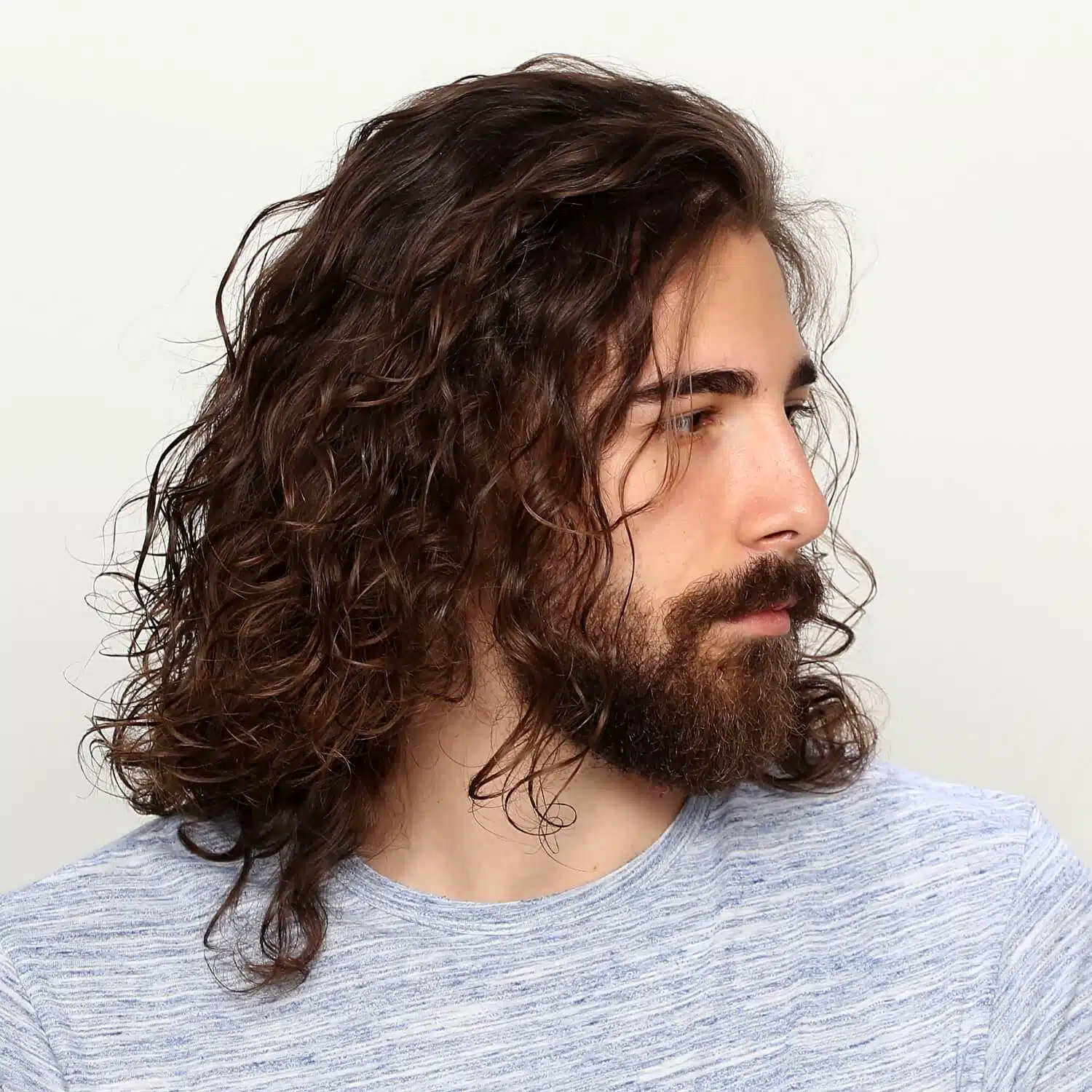
You've probably seen them everywhere. On TikTok, in indie films, and definitely at your local coffee shop. Young male long hairstyles aren't just a "phase" anymore; they're a legitimate stylistic shift that has moved from the fringes of skate culture into the mainstream. But here is the thing: most guys go about it the wrong way. They think they can just stop visiting the barber and—presto—they’ll look like Timothée Chalamet or a young Brad Pitt.
It doesn’t work like that.
Honestly, the "awkward phase" is a graveyard where most long-hair dreams go to die. If you don't have a plan for the months four through nine, you’re going to end up looking like a mushroom or a bedraggled spaniel. You need strategy. You need the right products. And most importantly, you need to understand your specific hair type.
The Science of the "Awkward Phase" and How to Kill It
Hair grows at an average rate of about half an inch per month. This isn't a guess; it's a biological standard cited by the American Academy of Dermatology. If you’re starting from a standard crew cut, you’re looking at a year of growth just to reach your chin.
The biggest mistake? Avoiding the barber entirely.
Counter-intuitive, right? But "clean-up" appointments are the secret weapon for maintaining young male long hairstyles while they are still in progress. You have to keep the neck hair—the "nape"—shorter than the hair on top. If the back grows faster than the front, you’ve accidentally grown a mullet. Unless you’re specifically going for that 80s Australian vibe, you probably want to avoid it. Ask your stylist for a "tapered transition" while the top catches up. It keeps you looking intentional rather than just lazy.
Texture is Everything
Straight hair falls. Wavy hair bounces. Curly hair shrinks.
If you have dead-straight hair, you’re going to deal with a lack of volume. It’s just physics. Without some kind of product like a sea salt spray or a light volumizing powder, long straight hair can look flat and greasy quite fast. On the flip side, curly-haired guys have the opposite problem: the "triangle head." This happens when the weight isn't distributed correctly, and the hair poofs out at the sides.
The Styles That Actually Work in 2026
We've moved past the ultra-tight man bun. That’s old news. Today, the focus is on "flow" and natural movement.
The Modern Shag This is arguably the most popular of all young male long hairstyles right now. Think Paul Mescal or even the revived "wolf cut." It’s heavy on layers and texture. The goal is to look like you just woke up, but in a way that took twenty minutes to perfect. It works incredibly well for guys with a bit of natural wave.
The Shoulder-Length Tuck Simple. Clean. Classic. This is the goal for most guys. It’s long enough to tuck behind the ears but short enough that it doesn't get caught in your backpack straps. It's a professional look—or as professional as long hair gets—and it suits guys with stronger jawlines because it frames the face without hiding it.
The Surfer Bro (Revisited) This isn't just for people who live in Malibu. It’s characterized by sun-bleached ends (often achieved with a subtle balayage) and plenty of grit. To get this look, you basically need to stop using traditional shampoo every day. Harsh sulfates strip the oils that give long hair its weight and shine.
Don't Let Your Scalp Suffer
Long hair is heavy. It pulls on the follicles. If you’re constantly wearing a tight ponytail, you’re cruising for "traction alopecia." This is real. Dermatologists see it all the time. Your hairline will start to recede purely from the mechanical tension of the hair tie.
Keep it loose.
And let’s talk about washing. If you’re still using a 3-in-1 body wash/shampoo/conditioner on your long hair, stop. Immediately. Long hair is "older" hair. The ends of your hair might be two years old, while the roots are new. Those ends have seen sun, wind, and friction. They need a dedicated conditioner. Professional stylists often recommend a "co-wash" (conditioner-only wash) for guys with curly or thick long hairstyles to keep the moisture locked in.
The Tools You Actually Need
You don't need a ten-step routine. You just need the right gear:
- A Wide-Tooth Comb: Never brush long hair when it's wet with a standard brush. You’ll snap the strands. A wide-tooth comb detangles without the breakage.
- Microfiber Towel: Rubbing your head with a rough cotton towel creates frizz. Pat it dry with microfiber or even an old T-shirt.
- Matte Paste: For those flyaways. Just a tiny bit.
Dealing With Social Perceptions
Let's be real for a second. Even in 2026, some older generations or conservative corporate environments might give you the side-eye. It’s a thing. However, the rise of tech-bro culture and the "creative class" has largely neutralized the stigma. The key is maintenance. There is a massive difference between "deliberately long" and "forgot to get a haircut." Keeping your facial hair groomed—whether that’s a clean shave or a well-maintained beard—is the "bridge" that makes long hair look stylish rather than unkempt.
Specific Maintenance for Different Ethnicities
Hair density and curl patterns vary wildly, and your maintenance should too. For Black men growing out their hair into long coils or braids, moisture is the absolute priority. Using oils like jojoba or argan is crucial because the natural sebum from the scalp has a harder time traveling down a tight curl than a straight strand. For Asian hair, which tends to be thicker and straighter, the challenge is often the "poking out" phase where the hair sticks straight out from the sides. Weight is your friend here. Heavy creams can help lay the hair down until gravity takes over.
Actionable Steps for Your Growth Journey
Growing out your hair is a marathon, not a sprint. If you're serious about rocking young male long hairstyles, follow this timeline:
Months 1-3: The Transition Keep the sides and back tight. Let the top grow as long as possible. This creates a "faux-hawk" shape eventually, but it prevents the mushroom look. Use a light pomade to slick the top back.
Months 4-7: The Danger Zone This is where most guys quit. Your hair is too long to style easily but too short to tie up. Start using hats, headbands, or salt sprays to embrace the messiness. Visit a barber every 8 weeks just to "clean the lines" around your ears and neck.
Months 8-12: The Payoff You can finally hit the "half-up, half-down" look. This is the sweet spot. Invest in high-quality hair ties—the ones without the metal bits that snag.
Month 12 and Beyond: Maintenance Mode Now you’re just maintaining health. Get a "dusting" (a very light trim) every 3 months to remove split ends. If you don't, the splits will travel up the hair shaft and make your hair look frizzy and thin.
Start using a leave-in conditioner once a week. It takes thirty seconds and makes your hair look like you actually care about your appearance. Long hair is a responsibility, but when done right, it’s the ultimate style statement for the modern man. Focus on the health of your scalp, be patient with the mid-length struggle, and don't be afraid to spend a little extra on a stylist who actually knows how to work with length rather than just buzzing it off.