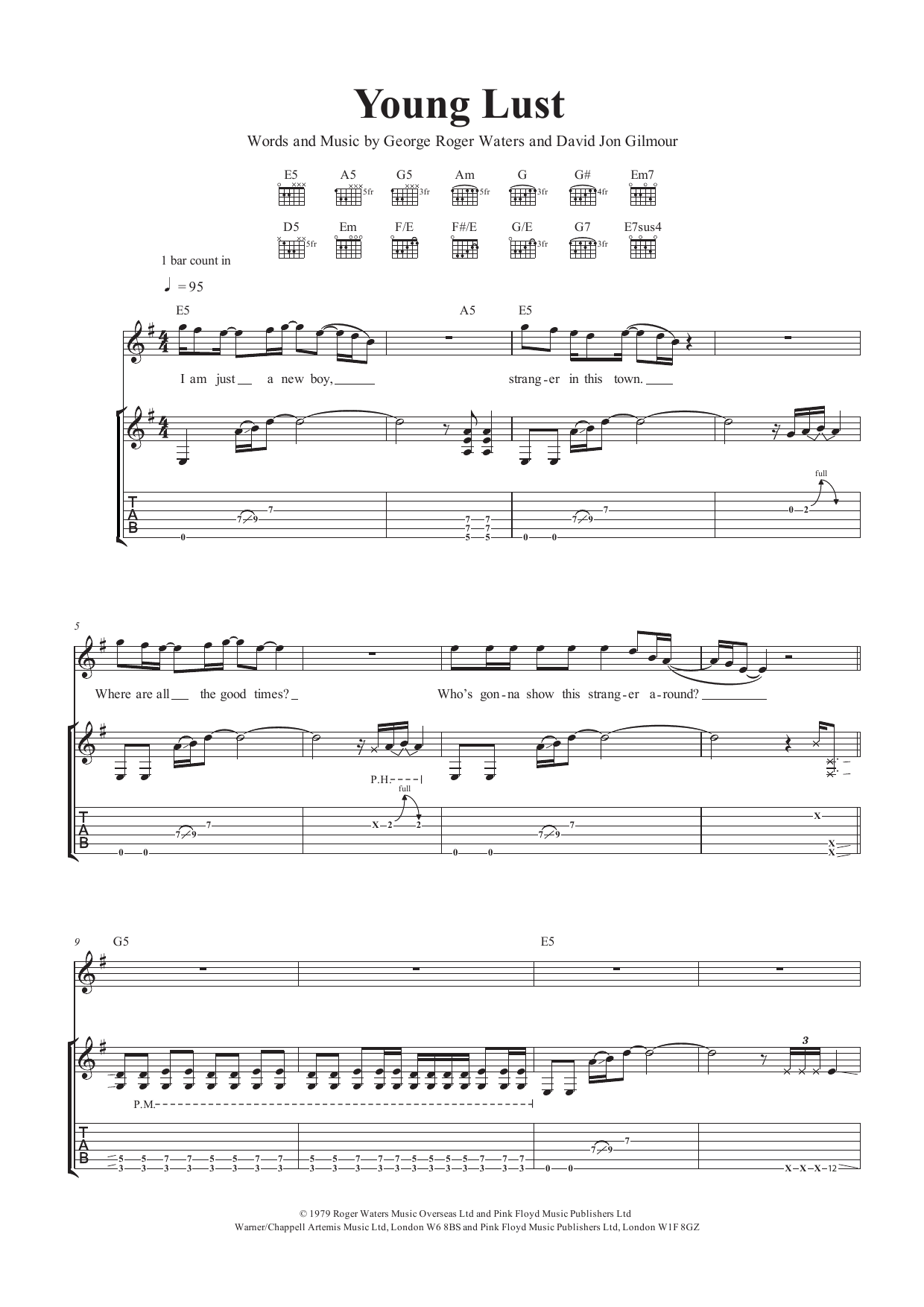
Pink is a mess. By the time we hit the middle of side two of The Wall, the protagonist of Roger Waters’ semi-autobiographical rock opera has transitioned from a lonely child to a detached, wealthy rock star. He’s numb. He’s isolated behind a metaphorical barrier of bricks. And then, the grit kicks in. David Gilmour’s guitar snarles, and we get Young Lust lyrics that sound, on the surface, like a standard 1970s hard rock cliché about groupies and road life. But if you think this is just Pink Floyd trying to write a Bad Company song, you’re missing the tragedy buried in the groove.
It’s about the void.
The Lyrics to Young Lust Aren't What They Seem
Most people hear the opening line—"I am just a new boy"—and assume it’s a celebration of rock and roll excess. It isn’t. Context is everything in a concept album, and in the timeline of The Wall, Pink has just spent the previous track, "Empty Spaces," asking how he should fill the gaps in his life. The answer he settles on is desperate, superficial physical connection. He’s looking for a "dirty girl." He’s looking for "a woman in this desert land." Honestly, it’s a pathetic cry for help disguised as a macho strut.
The contrast is the point. Roger Waters wrote the lyrics, but David Gilmour provided the music and the vocal, giving it that bluesy, swaggering feel that intentionally mimics the very stadium rock culture the band was beginning to loathe. When Gilmour sings about needing a "cold drink of water" or a "brief interlude," he’s portraying a character who has completely lost the ability to form a meaningful emotional bond. He’s replaced intimacy with "Young Lust."
That Phone Call at the End
You can't talk about the Young Lust lyrics without talking about the spoken word outro. It’s the emotional pivot of the entire first half of the album. After the song fades, we hear a real-life recording of a long-distance operator trying to connect a call from Pink (in Los Angeles) to his wife (back in England).
The story behind this recording is legendary among Floyd fans. To get a realistic reaction, producer Bob Ezrin and Waters didn’t tell the actual British telephone operator they were being recorded for a rock album. They just placed a real collect call. The operator’s confusion—and the sound of a man answering the phone who clearly isn't Pink—is genuine. "Is there supposed to be someone else there besides your wife?" she asks. It’s devastating. The "Young Lust" Pink was seeking was a reaction to the "Old Lust" his wife was finding elsewhere.
Why the Song Structure Matters
Musically, the track is a bit of an outlier for Pink Floyd. It’s a 4/4 hard rock shuffle. It’s got a heavy, driving bassline (played by Gilmour, actually, not Waters, which was a common occurrence during the tense Wall sessions). The simplicity of the song mirrors the simplicity of the desire. When you’re hurting, you don't want a 15-minute psychedelic odyssey; you want a distraction.
- The Verse: Short, punchy lines. "I need a dirty woman." "I need a dirty girl." No metaphors. No "Shine On You Crazy Diamond" poetry. Just raw, base-level want.
- The Chorus: It’s an anthem. It’s meant to be shouted in a stadium. This is Pink Floyd satirizing the audience that came to their shows just to get drunk and hear the hits.
- The Solo: Gilmour’s work here is legendary. It’s aggressive. It feels like a release of tension that has been building since "In The Flesh?" opened the album.
Misconceptions and the 1982 Film
The Alan Parker film starring Bob Geldof changed how a lot of people perceive these lyrics. In the movie, the song plays while Pink is being swarmed by fans and eventually brings a groupie back to his hotel room. It’s frantic and ugly. While the song on the record feels like a "cool" rock track, the visual representation makes it clear that this is a symptom of a mental breakdown.
There’s a nuance here that often gets lost: Pink isn't a predator in this song; he's a customer. He's looking for a transaction because he can't handle the reality of his failing marriage. When he asks, "Will some woman in this desert land / Make me feel like a real man?" he’s admitting that his masculinity is tied entirely to the validation of strangers. That’s a heavy realization for a song that gets played on classic rock radio between Van Halen tracks.
The Roger Waters vs. David Gilmour Dynamic
It’s no secret that the two pillars of Pink Floyd were at each other’s throats during the making of this album. "Young Lust" is one of the few tracks where their styles perfectly collided rather than clashed. Waters’ cynical, narrative-driven lyrics found the perfect vehicle in Gilmour’s soulful, gritty delivery. Without Gilmour’s voice, the song might have felt too bitter. Without Waters’ lyrics, it would have been a generic radio filler.
Deep Scrutiny of the "New Boy" Persona
"I am just a new boy / Stranger in this town."
Pink is a global superstar at this point in the story. He isn't a "new boy" in the literal sense. He’s a "new boy" to the world of total emotional isolation. He’s stepped through the looking glass. Everything familiar—his home, his mother, his wife—has been replaced by the sterile environment of the road.
If you look at the work of rock historians like Nicholas Schaffner, writer of Saucerful of Secrets, there’s a consistent theme of Pink Floyd grappling with the "stadium stars" identity. They hated it. They felt like they were becoming products. These lyrics are the sound of a product trying to feel human again through the only means available in a hotel suite at 3:00 AM.
How to Analyze the Lyrics Yourself
If you’re diving into the lyrics to Young Lust for a cover, a deep listen, or just to settle a bet, keep these themes in mind:
- Isolation: Look for words that imply distance or being a "stranger."
- Desperation: Notice the repetition of "I need." It’s not "I want." It’s a survival instinct.
- Irony: Remember that the band is mocking the very genre they are performing.
The song works because it’s a double agent. It functions as a great rock song while simultaneously critiquing why people need great rock songs to escape their lives. It’s clever, it’s loud, and it’s one of the most honest moments in the Pink Floyd discography because it admits to the ugliness of the rock star lifestyle without the romanticized "life on the road" tropes found in songs by the Eagles or Lynyrd Skynyrd.
Actionable Insights for the Floyd Fan
To truly appreciate the depth of this track, don't just stream it on a "70s Hits" playlist. Context is king with Pink Floyd.
- Listen in Sequence: Play "Empty Spaces" immediately before "Young Lust." The crossfade is one of the best in music history and explains exactly why the mood shifts so drastically.
- Watch the Pulse: Pay attention to the drum work by Nick Mason. It’s unusually straightforward for him, which adds to the "commercial" feel the song is parodying.
- Compare Live Versions: Check out the Is There Anybody Out There? The Wall Live 1980–81 version. The energy is much more frantic, highlighting the character's desperation.
- Read the Script: If you can find a transcript of The Wall film, read the dialogue surrounding the song. It clarifies the "phone call" ending and the betrayal that triggers Pink’s final retreat behind the wall.
Understanding these lyrics requires looking past the distorted guitar. It’s a song about a man realizing he’s lost his soul and trying to buy a temporary replacement. Once you hear the pain in the "Young Lust" lyrics, you can never go back to hearing it as just another party song.
Next Steps for Deep Context: To fully grasp the narrative arc, listen to "One of My Turns" immediately after the phone call at the end of "Young Lust." It shows the direct consequence of the "dirty girl" arriving at the hotel room and Pink's subsequent violent emotional collapse. This transition is the most critical sequence in the album for understanding the protagonist's descent into madness.