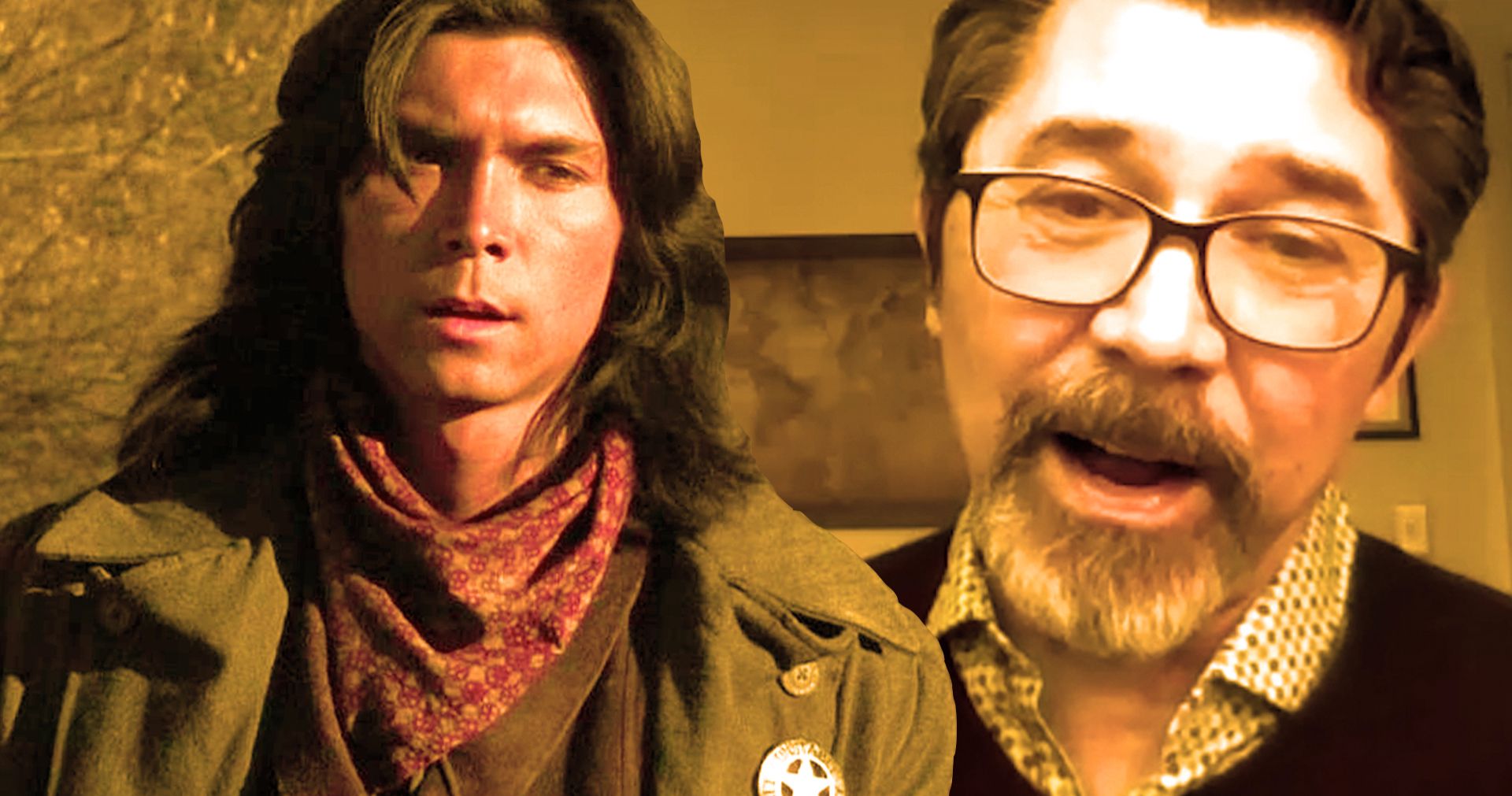
Everyone thinks they know the story. A kid from Texas shows up in Hollywood, grabs a guitar, and becomes Ritchie Valens overnight. It sounds like a movie script because, well, it kind of was. But the reality of young Lou Diamond Phillips is way more interesting than the "overnight success" label people love to slap on him.
He wasn't just some lucky find. He was a theater rat. A guy who turned down Yale because he wanted to stay in Texas and actually work.
The Subic Bay Kid and the Texas Hustle
Lou was born Lou Diamond Upchurch at the Subic Bay Naval Station in the Philippines. His dad, Gerald Upchurch, was a naval officer. If you're wondering about the name, he was named after a Marine legend, Leland "Lou" Diamond.
His background is a total map of the world. We’re talking Filipino, Hawaiian, Chinese, and Spanish on his mom's side, and Scots-Irish and Cherokee on his dad’s. People often mistake him for being solely Latino because of the roles that made him famous, but Lou is basically a one-man melting pot.
After his father passed away, his mom, Lucita, remarried. Lou took his stepfather’s name, Phillips. They eventually settled in Corpus Christi, Texas. This is where the acting bug really bit. He wasn't just doing school plays; he was obsessed. While other kids were worrying about prom, Lou was heading to the University of Texas at Arlington, getting a BFA in Drama, and joining comedy troupes.
He was hungry. There’s this great story about him literally hunting down Robert De Niro when the legend was passing through Dallas just to get a moment of his time. That’s the kind of energy he brought to the table before anyone knew his name.
The La Bamba Gamble
In 1986, Lou was a nobody. He’d done a low-budget film called Trespasses and a tiny Christian youth film titled Angel Alley. Then came the international talent search for La Bamba.
The director, Luis Valdez, wasn't looking for a star. He was looking for Ritchie Valens.
Phillips has said in recent interviews that he was "scared sh**less" during the process. He was 25 years old, playing a 17-year-old, and he didn’t even know how to play the guitar. He had to learn to mimic Valens’ fingering so perfectly that people would believe he was actually shredding.
When the movie dropped in 1987, it didn't just succeed. It exploded.
"It was my Cinderella moment," Lou said reflecting on it decades later. "Lightning in a bottle."
Suddenly, he was the face of the Chicano rock-and-roll movement. It was a weird position to be in for a guy who wasn't actually Mexican-American. But he played it with so much heart and soul that the Valens family basically adopted him. To this day, he’s still close with them.
Beyond the Guitar: Stand and Deliver
Most actors would have coasted on the La Bamba fame for a decade. Lou didn't.
Actually, he filmed Stand and Deliver before La Bamba even came out. He played Angel Guzman, the "cholo" gangster who turns out to be a math prodigy under the wing of Jaime Escalante (played by the legendary Edward James Olmos).
This role was arguably even more impressive than Ritchie Valens. He had to disappear into a tough, cynical character that was the polar opposite of the sweet, doomed singer in La Bamba.
It worked. He bagged an Independent Spirit Award and a Golden Globe nomination for Best Supporting Actor.
Think about that for a second. In the span of two years, he went from a Texas theater student to a guy holding awards and starring in two of the most culturally significant films of the late 80s.
The Young Guns Era
Then came the "Brat Pack" phase. Well, sort of.
In 1988, Lou joined the cast of Young Guns. He was Jose Chavez y Chavez, starring alongside the heavy hitters of the time: Emilio Estevez, Kiefer Sutherland, and Charlie Sheen.
It was a massive hit. It solidified him as a bankable action star. But it also started a trend that Lou has spent his whole career navigating—being the "go-to" guy for any role that required an ethnic or indigenous background.
He played Navajo characters, Mexican outlaws, and Inuit hunters. Because Hollywood didn't quite know what to do with a Filipino-Scots-Irish-Cherokee actor, they just put him in whatever "other" category they had.
What Most People Get Wrong
The biggest misconception about young Lou Diamond Phillips is that his career stayed at that 1988 peak.
The early 90s were actually kind of rough. He did a string of movies that didn't quite land—stuff like Harley, Shadow of the Wolf, and Sioux City. He was getting pigeonholed. People wanted him to be Ritchie Valens forever, or they wanted him to stay in the Western genre.
Instead of fading away, he did something nobody expected. He went to Broadway.
In 1996, he starred in the revival of The King and I. He didn’t just show up; he earned a Tony nomination. He proved he wasn't just a "movie star" or an "80s heartthrob." He was a craftsman.
Why the Early Years Still Resonate
Looking back at Lou's early career in 2026, it’s clear he was a pioneer. He was navigating the complexities of "passing" and representation long before those were buzzwords on social media.
He showed that a kid from a military base in the Philippines could become an American icon.
He didn't just play characters; he gave them a sense of dignity. Whether it was a kid struggling with calculus or a rock star afraid to fly, Lou brought a specific kind of grounded intensity that made those roles timeless.
Key Lessons from Lou's Early Career:
- Training Matters: He didn't skip the "theater" phase. That BFA from UT Arlington gave him the tools to survive when the movie offers slowed down.
- The Power of Immersion: He learned the guitar for La Bamba and shadowed real students for Stand and Deliver.
- Diversify Early: Moving into theater and eventually television (like Longmire and Stargate Universe) saved him from being a "where are they now" statistic.
If you want to dive deeper into his filmography, start with the "Big Three": La Bamba, Stand and Deliver, and the first Young Guns. They aren't just 80s relics; they’re masterclasses in how a young actor can take over the screen.
The next time you see him in a guest spot on a modern show or winning a celebrity poker tournament, remember: he's the guy who took a "Cinderella moment" and turned it into a forty-year legacy.



