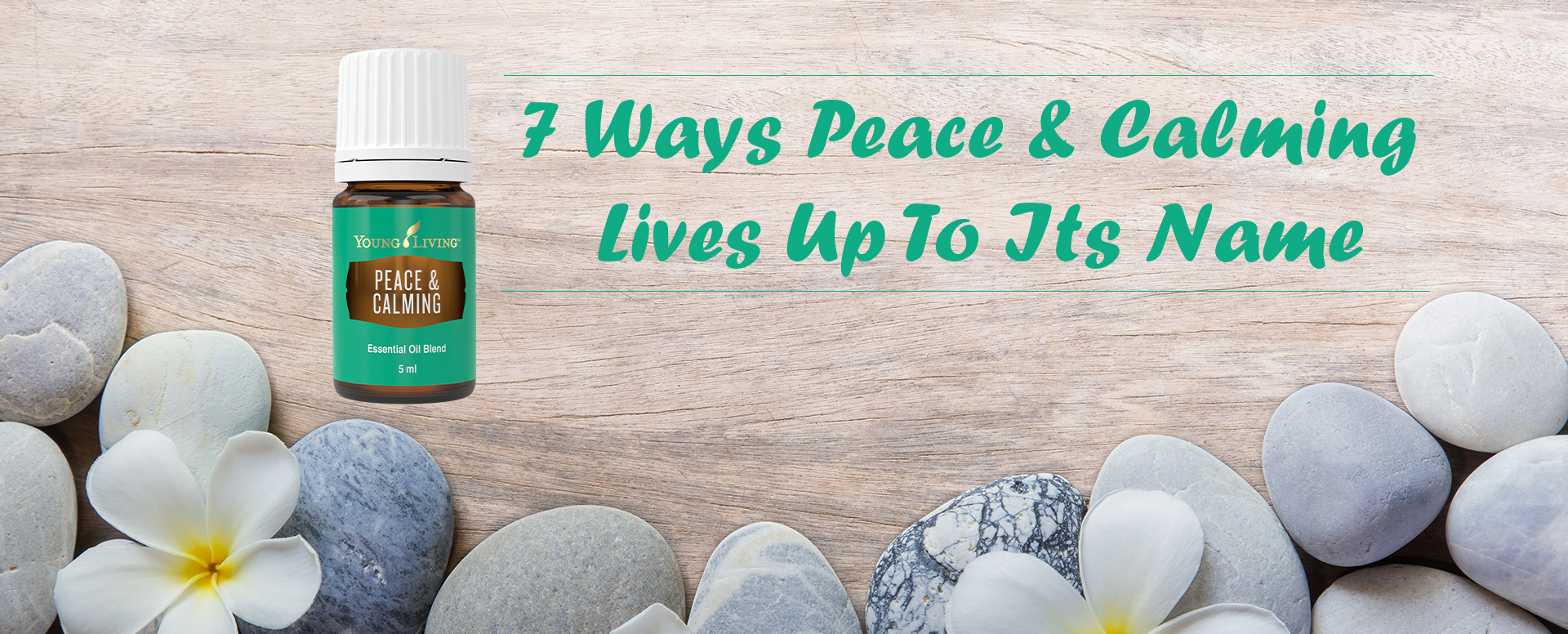
You know that feeling when the house is too loud, your brain has seventeen tabs open, and you just need the world to stop spinning for a second? That’s basically the "why" behind Young Living Peace and Calming. It isn't just a bottle of oil. For a lot of people, it’s a Pavlovian trigger for a deep breath.
Honestly, the essential oil world is crowded. New blends pop up every week with fancy names promising to fix your life, but this specific one has been a staple since the early days of Gary Young’s formulations. It’s a bit of an old-school heavy hitter. While some oils are one-hit wonders, Peace & Calming—and its younger sibling, Peace & Calming II—remain some of the most discussed bottles in the aromatherapy community.
But what is actually in it? Why do people swear by it for toddlers who refuse to nap? Is it just the placebo effect, or is there some chemistry doing the heavy lifting?
What’s Actually Inside a Bottle of Peace and Calming?
If you crack open a bottle, the first thing you’re going to smell is Tangerine and Orange. It’s bright. It’s citrusy. But then that heavy, earthy base hits you. That is the Blue Tansy and Patchouli working.
The ingredient list is surprisingly focused. You’ve got Tangerine (Citrus reticulata), Orange (Citrus aurantium dulcis), Ylang Ylang (Cananga odorata), Patchouli (Pogostemon cablin), and Blue Tansy (Tanacetum annuum).
Blue Tansy is the "secret sauce" here. It’s an expensive, deep blue oil that comes from a Mediterranean flower. It contains chamazulene. That’s the same stuff found in German Chamomile that gives it those soothing properties. It’s also why, if you drop this oil directly on a white t-shirt, you’re going to have a bad time. It stains.
Ylang Ylang adds that floral, slightly sweet middle note. Some people find Ylang Ylang a bit too aggressive on its own—it can be very "perfumey"—but when it’s balanced by the citrus and the grit of Patchouli, it works. It grounds the scent. Without the Patchouli, the whole thing would just float away into a sugary citrus cloud.
The Science of Smelling Calm
We have to talk about the limbic system. When you inhale these molecules, they aren't just passing through; they are hitting the olfactory bulb, which is directly hardwired to the amygdala and hippocampus. These are the parts of your brain that handle emotion and memory.
Research, such as studies published in the Journal of Ethnopharmacology, suggests that certain citrus oils like Orange and Tangerine can have an anxiolytic-like effect. This means they might help lower the "fight or flight" response. It isn't magic. It's biological signaling. When you use Young Living Peace and Calming consistently, you’re essentially training your brain to associate that specific chemical profile with a state of rest.
Using It Without Making It Weird
There’s a trope of the "oil lady" who covers everyone in a ten-foot radius with scent. Don't be that person. Using this blend effectively is usually about subtlety.
Most people start with a diffuser. Put about 5-8 drops in before bed. If you have a high-ceiling living room, you might need more, but start small. The citrus notes are volatile, meaning they evaporate fast. You'll smell the Orange first, and an hour later, the room will smell more like the Patchouli and Blue Tansy.
Topical Application for the Restless
If you're using it on your skin, use a carrier oil. Seriously. Even though many enthusiasts say you can use it "neat" (undiluted), Blue Tansy and Tangerine can be sensitizing for some skin types. Mix a drop with some coconut oil or jojoba.
- The Sole of the Foot: This is the classic recommendation. Is it because the pores are bigger? Maybe. But mostly, it’s because it’s far away from your nose so it’s not overwhelming, yet you still get the systemic benefit.
- The Wrist Pulse Points: Good for when you're out and about and need a quick sniff of something grounding.
- The Back of the Neck: This is great for tension.
One thing to watch out for is photosensitivity. Because of the Tangerine and Orange oils, you shouldn't put this on skin that's going to be exposed to direct sunlight within 12 hours. You can actually get a nasty burn or discoloration. Keep it under your shirt or save it for nighttime.
Peace and Calming vs. Peace and Calming II
There was a time when Blue Tansy was incredibly hard to source. Due to crop yields and weather, Young Living actually ran out of the original blend for a while. This led to the creation of Peace & Calming II.
People panicked.
The second version uses Tangerine, Orange, Ylang Ylang, Patchouli, Northern Lights Black Spruce, Chamomile, Vetiver, Cistus, Bergamot, Cassia, and Davana. It’s a much more complex list.
The "II" version is a bit more woody. The inclusion of Northern Lights Black Spruce gives it a forest-like undertone that the original lacks. Some people actually prefer it because it feels more "grounded" and less "sweet." If the original feels a bit too fruity for you, the second version is the way to go.
The Toddler Paradox
If you look up Young Living Peace and Calming on Pinterest or in Facebook groups, you’ll see a million posts from exhausted parents. It has a massive reputation as the "tantrum tamer."
Does it work?
Well, it’s not a tranquilizer. If a kid is having a meltdown because they want a cookie, oil isn't going to change their mind. However, sensory shifts can break a focal point. Sometimes, the act of a parent slowing down, rubbing some oil on a child’s feet, and taking a deep breath themselves does more than the oil ever could. It’s a co-regulation tool.
When the parent calms down, the child often follows. The oil acts as the ritualistic bridge to get there.
Realities and Misconceptions
Let’s get real for a second. There is a lot of hyperbole in the essential oil industry. You’ll hear people claim this blend can cure clinical insomnia or anxiety disorders.
It can’t.
If you have a medical condition, you need a doctor, not a bottle of Tangerine and Patchouli. Peace and Calming is a lifestyle tool. It’s a way to manage environmental stress and create a pleasant atmosphere. It’s an "adjunct" therapy. It works best when combined with good sleep hygiene, less screen time, and maybe a little bit of silence.
Also, quality matters. You can find "calming" blends at the grocery store for five dollars, but they are often cut with synthetic fragrances or cheap fillers like diethyl phthalate. These can actually cause headaches instead of relieving them. Young Living’s "Seed to Seal" promise is their big marketing flex, but at its core, it just means they control the distilling process to ensure you’re getting actual plant matter and not lab-created scents.
Practical Ways to Use It This Week
You’ve got a bottle. Now what? Don't just let it sit on the shelf.
1. The Epsom Salt Bath Mix 5 drops of Peace & Calming with a cup of Epsom salts before putting it in the water. If you drop the oil directly into the bathwater, it will just float on top and could irritate your skin. Mixing it with salt helps it disperse. This is arguably the best use of the blend.
2. The Pillow Spray Get a small glass spray bottle. Add an ounce of distilled water, a splash of witch hazel (to help the oil and water mix), and 10 drops of the oil. Spritz your linens about ten minutes before you climb into bed.
3. The Car Commute Traffic is objectively terrible. Use a clip-on car diffuser or just put a drop on a cotton ball and stick it in your vent. It helps lower the "road rage" vibes.
4. Beard Oil For the guys, this blend actually makes a great beard oil scent because of the Patchouli. Mix it with some argan oil. You’ll smell like a sophisticated forest rather than a fruit stand.
Why the Price Tag?
It’s not the cheapest oil in the kit. The cost reflects the Blue Tansy and Ylang Ylang. These aren't "easy" oils to produce. Blue Tansy, in particular, requires specific climate conditions and a precise distillation window to get that chamazulene content right.
If you’re looking at your budget, think of this as a "specialty" oil. You don't need to use it for cleaning your floors or making your trash can smell better. Use Lemon or Purification for that. Save the Peace and Calming for the moments where the nervous system is actually taxed.
What to Do Next
If you’re ready to actually use this stuff effectively, start with a "scent association" experiment. For the next seven nights, diffuse Young Living Peace and Calming only when you are doing something relaxing—reading, stretching, or lying in bed.
Don't use it while you're working or cleaning. You want to "program" your brain so that the moment you smell those citrus and Blue Tansy notes, your body knows it’s time to power down.
Check your bottle for the "Vitality" label if you plan on ingesting any oils, though Peace and Calming is generally used topically and aromatically. If you have the standard colorful label, keep it out of your water bottle and on your skin or in the air.
Consistency is usually where people fail with essential oils. They use it once, expect a miracle, and then toss it in a drawer. Give it a week of dedicated use at bedtime. Notice if your sleep quality shifts or if you find it easier to "turn off" your thoughts.
Grab a carrier oil like V-6 or simple fractionated coconut oil to keep on hand. This allows you to apply the oil over larger areas of the body—like your shoulders or chest—without wasting the precious essential oil itself. A little goes a long way when you spread it out.



