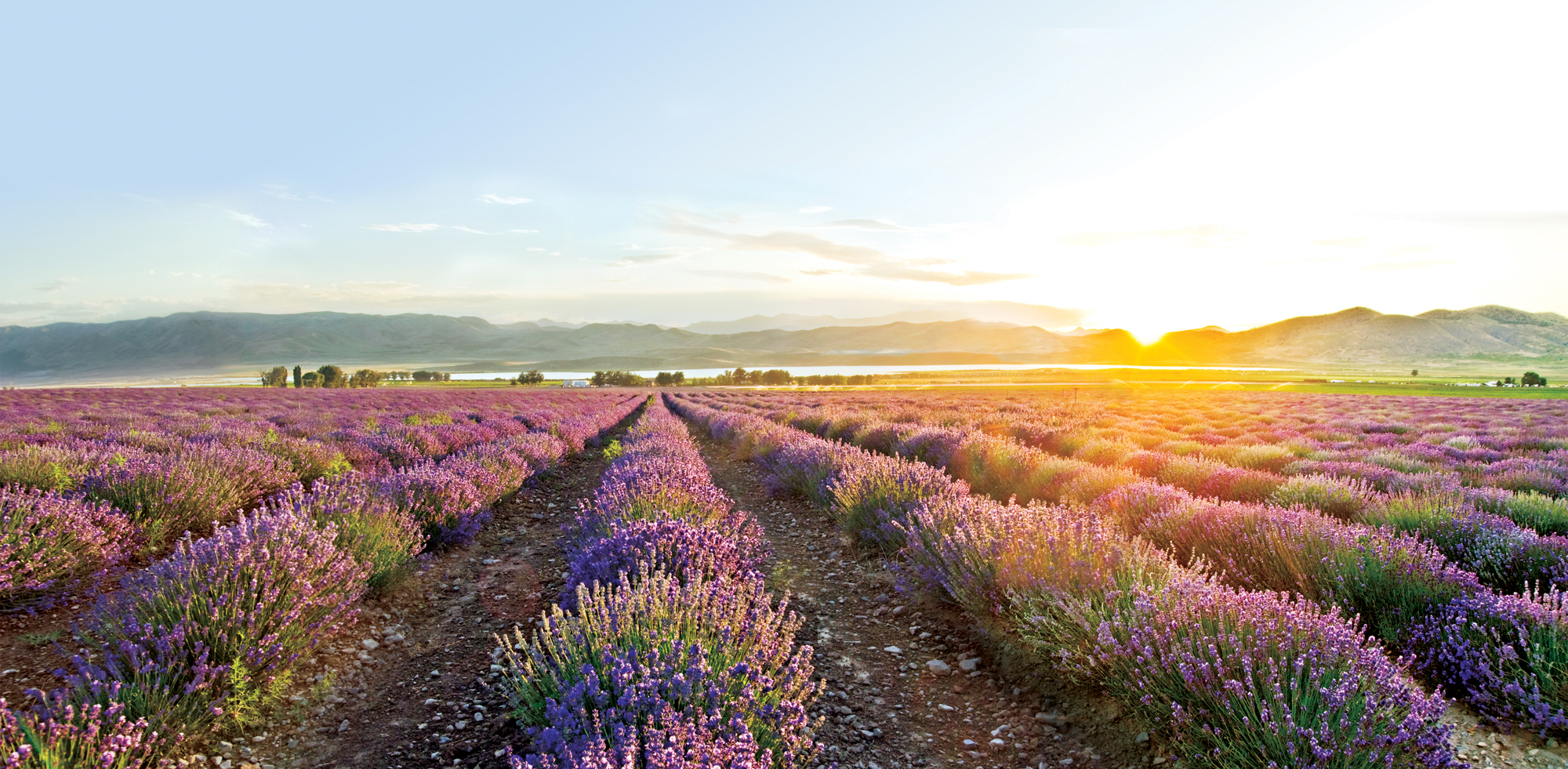
Walk onto the dirt at the Young Living farm in Mona, Utah, and the first thing that hits you isn't actually the smell of lavender. It’s the wind. It whips through the Juab Valley, carrying the scent of damp earth and crushed botanicals across 1,600 acres of high-altitude farmland. Most people see the glossy photos on Instagram—perfect rows of purple under a blue sky—and think it's just a backdrop for influencers. Honestly, it’s a lot grittier than that.
The Young Living Whispering Springs Farm is basically the flagship of the whole essential oil movement. It’s where Gary Young, the late founder, really doubled down on his "Seed to Seal" philosophy. You’ve probably heard that term if you’ve spent five minutes around an oil distributor, but seeing it in practice is different. It’s a massive, working agricultural operation that happens to welcome tourists.
Why the Young Living Farm Utah Location Actually Matters
Utah is a weird place for a tropical-leaning industry, but the Mona farm works because of the drainage. Lavender hates "wet feet." If the roots sit in soggy soil, the plant dies. The high mountain air and the specific mineral content of the Juab Valley soil create a stress profile for the plants that actually increases the potency of the aromatic compounds.
It’s not just about looking pretty.
The farm sits at the base of Mount Nebo. That’s the highest peak in the Wasatch Range. Because of the elevation, the plants have to be tough. Plants that struggle a bit often produce more concentrated secondary metabolites—which is a fancy way of saying their essential oils are "louder" and more complex.
The Distillation Science Nobody Talks About
While the lavender fields get the most attention, the real heart of the Young Living farm Utah site is the distillery. It’s one of the largest and most technologically advanced essential oil distilleries in North America. They don't just boil plants. They use low-pressure steam distillation.
If you crank the heat too high, you burn the delicate molecules. You end up with an oil that smells like "burnt toast" instead of a flower. At the Mona farm, the stainless steel chambers are massive. You can actually stand on a catwalk and watch the raw plant material—whether it's lavender, clary sage, or peppermint—get packed into these vats.
The water used in the process is recycled. It’s a closed-loop system in many ways. After the oil is separated from the "floral water" (hydrosol), the leftover plant mulch isn't thrown away. It’s composted and put right back onto the fields. It’s a cycle. A big, smelly, efficient cycle.
Realities of Visiting Mona
Let’s be real: most people go there for the Lavender Day festival or the Fall Harvest. If you go in mid-July, the heat is brutal. We're talking 95 degrees with almost zero shade because trees would block the sun the lavender needs.
If you're planning a trip, here's the deal:
- The blooming season is short. If you show up in late August, the lavender is likely already harvested or gray. You want late June to mid-July.
- It’s free to walk around parts of it, but the wagon rides and tours usually cost a few bucks.
- They have a "Western Town" vibe. It’s a bit kitschy. There are draft horses—Percherons, mostly—and they are huge. Gary Young loved these horses. They still use them for some of the work, which feels a bit like a time capsule.
The farm also grows Clary Sage, Goldenrod, and Melissa. Melissa (Lemon Balm) is a notoriously difficult plant to distill. You need a massive amount of plant material to get just a tiny bit of oil. That’s why that specific oil is so expensive. Seeing the piles of green Melissa leaves get hauled into the distillery gives you a bit of perspective on why a 5ml bottle costs what it does.
The Controversies and the "Seed to Seal" Promise
You can't talk about the Young Living farm Utah history without mentioning the skepticism. Critics often point to the "Seed to Seal" trademark as a marketing ploy. However, the Mona farm is the primary evidence Young Living uses to defend the claim. It’s an "open book" farm.
They have a lab on-site. They do Gas Chromatography and Mass Spectrometry (GC/MS) testing right there. Does that mean every bottle is perfect? That’s up for debate in the aromatherapy community. But having the lab fifty yards from the still is a level of vertical integration that most essential oil companies—who simply buy from brokers in Europe or Asia—can't claim.
More Than Just Lavender
While the purple fields are the "money shot," the farm serves as a research hub. They test different irrigation methods. They study how different harvest times—literally down to the hour of the day—affect the linalool and linalyl acetate levels in the lavender.
Linalyl acetate is the stuff that makes lavender relaxing. If you harvest when it’s too hot, or when the plant is too stressed, those levels dip. The scientists at the Mona farm are basically trying to hack the plant's natural chemistry by timing the harvest to the exact moment of peak potency.
The Impact on the Local Economy
Mona is a tiny town. Before the farm, it was mostly just a spot on the I-15 people drove past on their way to St. George or Vegas. Now, it’s a destination. The farm employs a significant chunk of the local population, especially during the peak summer months.
It’s also become a weirdly popular wedding venue.
Because of the "Western" aesthetic and the backdrop of Mount Nebo, people flock there. It’s created this interesting micro-economy of photographers and event planners in a part of Utah that used to be strictly cattle and hay.
Dealing With the "Cult" Perception
Let’s address the elephant in the room. Young Living is an MLM (Multi-Level Marketing) company. Because of that, the farm often gets lumped into the "corporate cult" category.
When you visit, you will see "True Believers." You’ll see people who treat the lavender fields like holy ground. It can be a bit much if you’re just there to see some flowers. But if you strip away the corporate hype, the agricultural work being done is legitimately impressive. You don't have to buy into the business model to appreciate the sheer scale of the botanical engineering happening in the middle of the desert.
Actionable Steps for Your Visit
If you're actually going to make the trek to the Young Living farm Utah location, don't just wing it.
- Check the Harvest Schedule: Follow their local social media pages. If they start harvesting, the purple disappears in 48 hours.
- Hydrate: It’s high desert. You will get a headache in twenty minutes if you aren't drinking water.
- Go to the Distillery First: Most people hit the fields and get tired. See the distillery while you still have energy; it’s the most educational part of the whole trip.
- Wear Closed-Toe Shoes: This is a real farm. There are bugs, there is mud, and there are horse "remnants." Your flip-flops will not survive the experience.
- Skip the Weekend if Possible: Saturdays are a zoo. If you can get there on a Tuesday morning, you might have the entire lavender field to yourself.
The farm is a weird mix of a laboratory, a theme park, and a heavy-duty agricultural site. It’s uniquely Utah—ambitious, slightly eccentric, and undeniably beautiful. Whether you’re an "oilie" or just someone who likes the smell of herbs, it’s a spot that demands a bit of respect for the sheer effort it takes to make anything grow in that stubborn Utah dirt.
To get the most out of the experience, focus on the botany rather than the brochures. Look at the irrigation lines. Watch the steam rising from the distillery vents. That's where the real story is. There is a lot of noise surrounding this company, but the soil doesn't lie. The plants are healthy, the tech is real, and the wind still smells like lavender long after you’ve left the gates.



