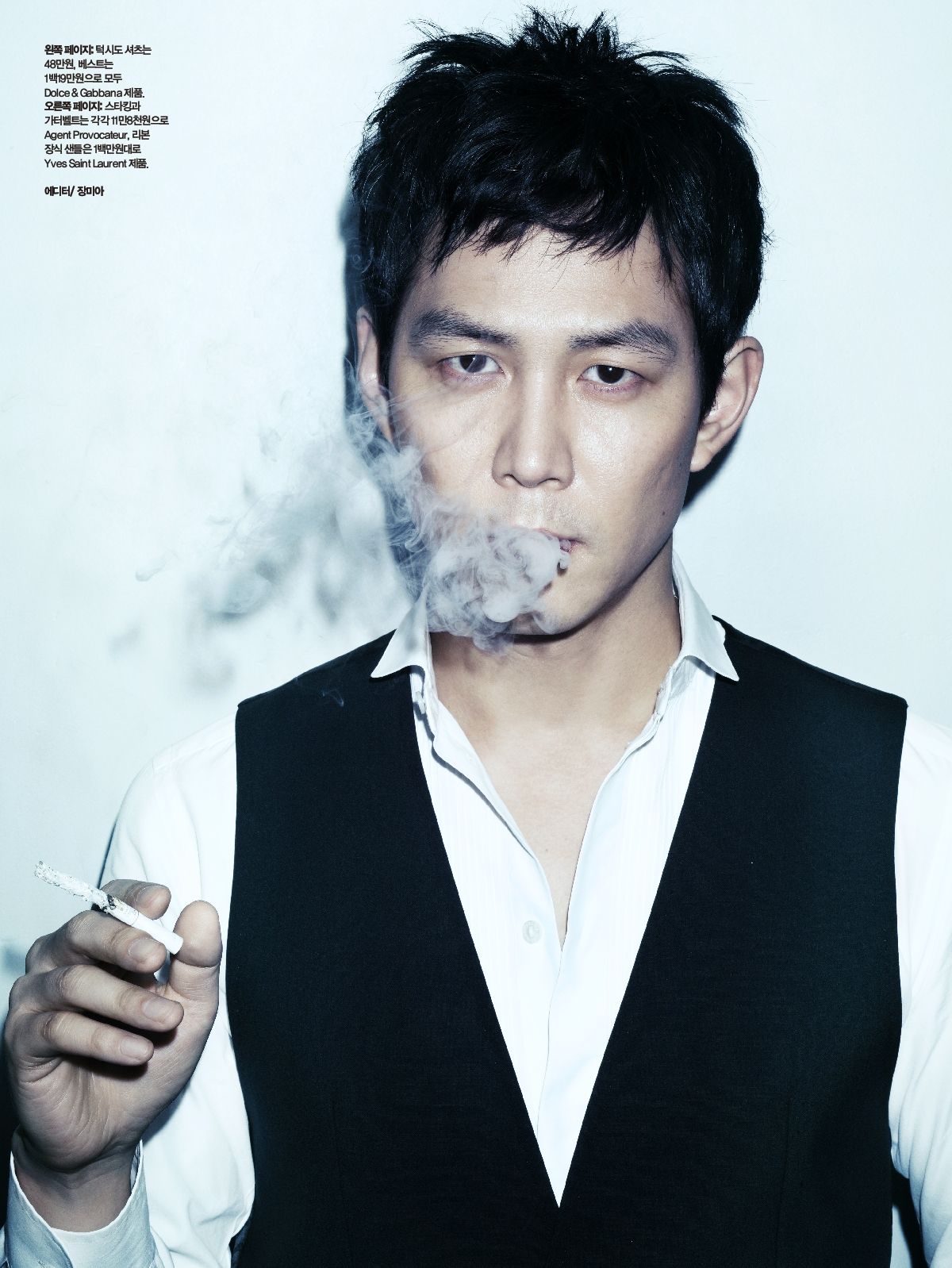
Before the blood-stained green tracksuit and the global obsession with Squid Game, Lee Jung-jae was a very different kind of icon. If you walked through the streets of Apgujeong-dong in 1994, you wouldn’t see a debt-ridden gambler. You’d see a face that defined an entire generation’s aesthetic. Honestly, the way Western fans discovered him is kinda funny because, in Korea, he’s been the "A-list" standard for over thirty years.
He didn't struggle for a decade in bit parts. He was discovered while working at a cafe. Basically, he was serving coffee in Gangnam when designer Ha Yong-soo spotted him. One magazine shoot later, he was a model. A year after that? He was a household name.
The Quiet Bodyguard that Broke the Ratings
Most people think his "breakout" was some gritty movie. It wasn't. It was a 1995 drama called Sandglass.
Lee played Baek Jae-hee, a silent, stoic bodyguard. He barely spoke. He just stood there looking intensely loyal (and incredibly handsome) while protecting the female lead. The show was a cultural phenomenon, hitting a peak rating of 64.5%. To put that in perspective: when Sandglass was on, the streets of Seoul were literally empty because everyone was inside watching it.
His character dies at the end. It was so traumatic for the audience that people actually sent letters begging the writers to bring him back. But Lee Jung-jae wasn't just a face; he was smart. He knew that the "silent heartthrob" role was a trap.
Why Young Lee Jung-jae Disappeared at His Peak
Right when he was the biggest star in the country, he left.
Mandatory military service is a career-killer for many, and Lee had to go. When he came back in 1997, the landscape had changed. The roles weren't the same. He actually went through a bit of a "slump," though by anyone else's standards, he was still famous. He felt his acting was lacking, so he did something most stars wouldn't: he went back to school. He enrolled at Dongguk University to study theater and film, eventually getting his master's.
Then came 1998.
He met Jung Woo-sung on the set of City of the Rising Sun. They played two struggling friends—one a boxer, the other a small-time crook. That movie didn't just win him a Blue Dragon Award for Best Actor; it started the most famous bromance in Korean entertainment history. They’ve been best friends for 25+ years, even starting their own agency, Artist Company, together. People in Korea used to joke they were a "married couple" because they were always together at wine bars or gallery openings.
The Business Side You Probably Didn't Know
Lee Jung-jae isn't just an actor; he’s a massive businessman. This started way back in the 90s.
- Italian Food: He opened a chain of upscale Italian restaurants in Seoul named "Il Mare," named after his famous 2000 time-travel romance film.
- Real Estate: He founded Seorim C&D, a development company.
- Design: He actually wanted to be an architect or a painter. He failed the entrance exam for industrial design at Hanyang University, which is the only reason he ended up in film.
What Most People Get Wrong About His Early Career
There’s a misconception that he only played "cool" guys. Actually, if you look at his 1998 film An Affair, he was playing a guy who falls for his fiancée’s older sister. It was scandalous at the time. He’s always been willing to play characters that are a bit "pathetic" or morally grey, which is exactly why he was able to pull off Seong Gi-hun in Squid Game so well.
He once said in an interview with the Korea Times that as he got older, he was worried about only being offered villain roles. He’s very protective of his image with fans, avoiding what he calls "unforgivable villains." He wants the audience to find something to empathize with, even in a bad guy.
Actionable Insights for Fans and Collectors
If you want to understand the real Lee Jung-jae beyond the Netflix hype, you have to watch his early work. Here is how to actually find the good stuff:
- Watch "Il Mare" (2000): This is the original film that The Lake House (with Keanu Reeves) was based on. It’s peak "Young Lee Jung-jae"—soft, romantic, and visually stunning.
- Look for "City of the Rising Sun": It’s hard to find on Western streaming, but it’s the definitive 90s Korean buddy film. It explains his entire career trajectory.
- Check his Instagram: He only started it after Squid Game, but he often posts "throwback" shots that show his 90s fashion era.
He’s currently worth an estimated $12 million, but he still talks about his early days as a barista with a lot of nostalgia. He didn't just "get lucky" with a viral hit. He spent thirty years building a resume that allowed him to handle that level of fame when it finally went global.
To really appreciate his range, compare his performance in the 2013 film The Face Reader—where his entrance is considered one of the most iconic in cinema history—to his desperate, sweaty portrayal of Player 456. The contrast is where his genius lies.
For those looking to dive deeper into Korean cinema history, tracking down the 4K restoration of The Housemaid (2010) is a must. It’s the bridge between his "pretty boy" years and the intense, masterful actor he is today.