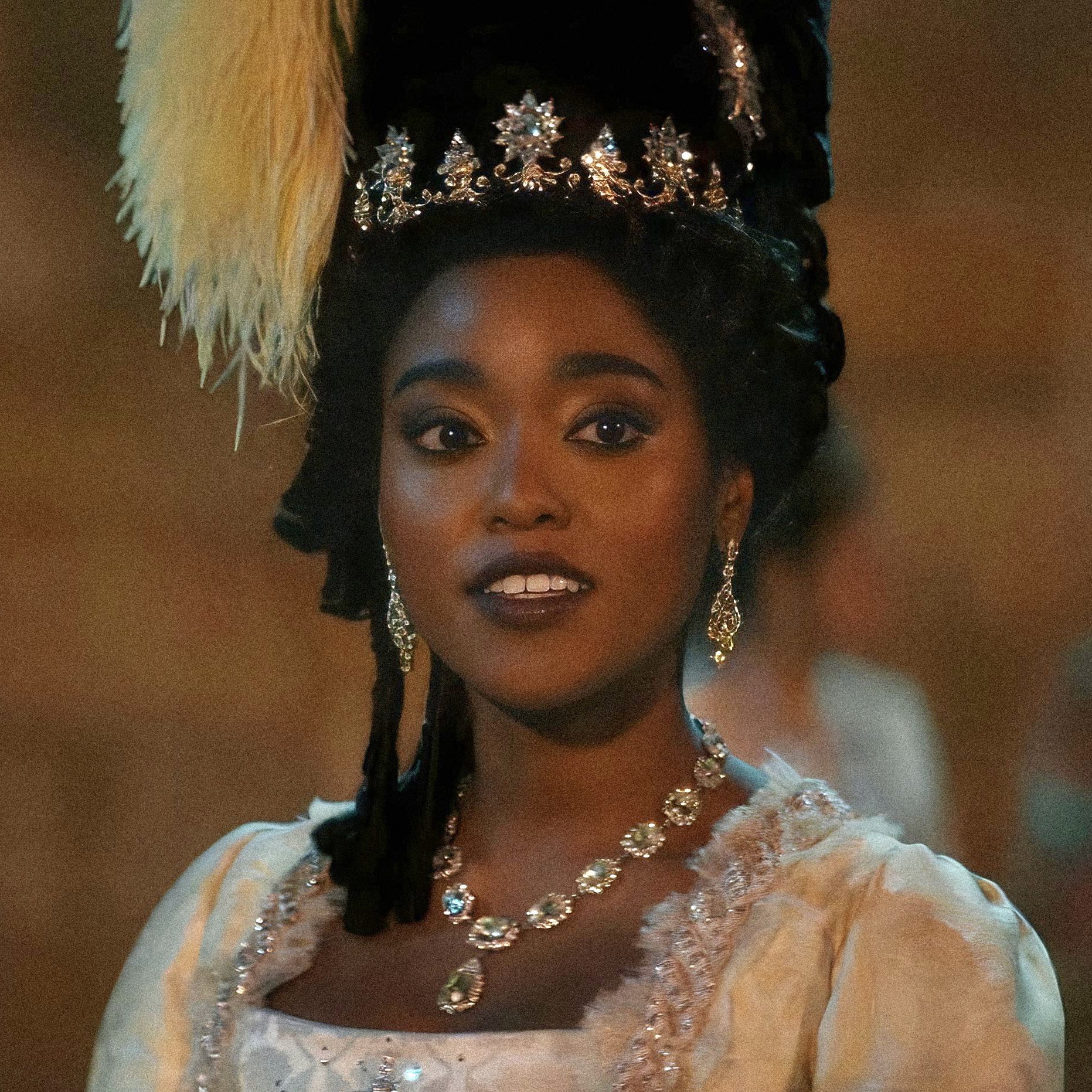
Before she was the sharp-tongued, cane-wielding doyenne of the Mayfair social scene, she was just Agatha. A lot of people forget that. They see the formidable Lady Danbury in Bridgerton and assume she was born with that icy stare and a reservoir of wit. But the prequel series, Queen Charlotte: A Bridgerton Story, finally pulled back the velvet curtain. It showed us Young Lady Agatha Danbury, played with a stunning, quiet desperation by Arsema Thomas. It wasn't pretty. Honestly, it was a bit of a gut-punch for fans who expected more tea parties and fewer marital tragedies.
Agatha wasn't always the architect of her own life. She was a pawn.
Her story is a masterclass in how the Regency era—at least the stylized version we see on Netflix—actually functioned for women of color. It’s about survival. You've got this brilliant, vibrant woman stuck in a marriage to a man decades older who basically treats her like a trophy or a breeding vessel. Lord Herman Danbury was, to put it bluntly, a bore and a burden. Seeing her navigate that while trying to secure her family's future in a society that was only just beginning to "integrate" (thanks to the Great Experiment) is what makes her character so much more than just a supporting role.
Why Young Lady Agatha Danbury Had to Play the Long Game
In the Bridgerton universe, the "Great Experiment" is the pivot point. This is the fictional decree where the marriage of King George III and Queen Charlotte leads to the granting of titles to people of color. Agatha was the one who realized that a title is just a piece of paper unless you have the social capital to back it up.
She was the strategist.
While everyone else was worried about the color of their silk gowns, Agatha was in the ear of Princess Augusta. She knew that the Danbury estate and their newfound status were precarious. If the King and Queen's marriage failed, or if the court's whim changed, the Danburys would be back to being outsiders. This pressure is what forged the steel in her spine. You see her literally coaching her husband on how to behave, how to lead, and how to hold his ground, all while he completely ignores her intellect. It’s infuriating to watch.
But it's also incredibly realistic in the context of power dynamics.
Agatha's friendship with a young Queen Charlotte isn't just a "best friends forever" situation. It's a political alliance. Agatha provides the Queen with the ground-level intel she needs to survive the palace, and in return, the Queen provides the protection the Danburys need to survive the Ton. It’s a transaction that eventually turns into a genuine bond, but the roots are purely about staying afloat in a sea of white aristocrats who were waiting for them to fail.
The Lord Danbury Problem and the Meaning of Freedom
Let's talk about Herman. He was played by Cyril Nri, and he was written to be specifically unlikable in a very mundane way. He wasn't a cartoon villain. He was just a man of his time who saw his wife as an extension of his own needs.
The scenes of their intimate life are notoriously difficult to watch. They aren't romantic. They are a chore for Agatha. This is a huge departure from the high-octane romance the Bridgerton franchise is known for. It serves a purpose, though. It explains exactly why the older Lady Danbury (Adjoa Andoh) is so fiercely protective of her independence later in life.
When Herman finally dies, the reaction isn't one of grief. It’s a literal exhale.
Agatha’s "mourning" period is actually her first taste of true agency. She realizes she doesn't want to marry again. Ever. This is a radical stance in a world where a woman’s security was tied to a husband. She chooses the "widow" life not because she loved her husband so much that no one could replace him, but because she loved her freedom more. She fought for her right to keep her home and her title without a man attached to it. That struggle against the legalities of the time—where property often reverted to male heirs—is a huge part of her arc that people sometimes skim over.
The Secret Romance and the Violet Bridgerton Connection
One of the biggest shocks for viewers was the brief, complicated affair between Young Lady Agatha Danbury and Lord Ledger. Yeah, that’s Violet Bridgerton’s father.
It was messy.
Some fans hated it. They felt it "tarnished" her character or made things weird between her and the adult Violet. But if you look at it through the lens of her life at the time, it makes a weird kind of sense. Lord Ledger was the first person to actually see Agatha as a human being with thoughts and feelings. He was kind. He liked the outdoors. He wasn't Herman.
- It wasn't about true love in the fairy tale sense.
- It was about a woman reclaiming her body and her desire for the first time.
- It created a secret history that explains her deep, almost maternal protectiveness over the Bridgerton family later on.
When you see the older Lady Danbury and Violet Bridgerton having tea in the main series, there’s a layer of subtext now. Violet knows. Or at least, she suspects. The "birthday hats" conversation in the Queen Charlotte finale is one of the most poignant moments in the whole franchise. It’s two women acknowledging the private lives they had before they were just "mothers" or "dowagers."
Breaking Down the "Danbury Way" of Social Engineering
Agatha didn't just survive the Ton; she rewrote the rules. She's the one who basically invented the "Siren's Call" of the social season. By the time we get to the era of Daphne and Anthony Bridgerton, Lady Danbury is the one who decides who is "in" and who is "out."
How did she get there?
By observing the weaknesses of the white aristocracy. She noticed their obsession with tradition and their fear of scandal. She learned how to use gossip as a weapon and a shield. She also realized that the Queen was bored. By providing the Queen with entertainment—the "Diamond" of the season—she made herself indispensable to the throne.
She turned her house into a neutral ground where the most important conversations happened. If you wanted a marriage to happen, you went to Lady Danbury. If you wanted a scandal to go away, you went to Lady Danbury. She built a fortress of social influence that made it impossible for anyone to ever question her place in society again.
What We Can Learn from Agatha’s Rise
Agatha’s story is a reminder that the "good old days" weren't good for everyone. Even in a fantasy version of history, power isn't given; it’s taken. Arsema Thomas played her with a vulnerability that makes the older version of the character even more impressive. You see the cracks in the armor before the armor was fully forged.
She teaches us that:
- Strategic silence is a power move. Agatha knew when to speak and when to let others dig their own graves.
- Independence is worth the cost. She sacrificed the potential for a "second chance" at love to ensure no man would ever control her bank account or her bedroom again.
- Allyship is messy. Her relationship with the Queen was fraught with tension, but they both knew they were stronger together than apart.
Next time you watch Bridgerton and see Lady Danbury thumping her cane on the floor to get everyone's attention, remember the young woman who had to whisper just to be heard at her own dinner table. She didn't just get lucky. She outmaneuvered every person in the room for fifty years straight.
To really understand her, go back and re-watch the scene in Queen Charlotte where she walks through the gardens after Herman’s death. That’s the moment the Lady Danbury we know was actually born. No more scripts, no more acting for a husband, just a woman deciding what she was going to do with the rest of her life. It’s the most pivotal moment in the whole series.
Actionable Insights for Fans and Writers:
- Study the subtext: When re-watching Bridgerton, look at Lady Danbury's reactions to Violet Bridgerton. The history with Lord Ledger changes every interaction they have.
- Analyze the "Great Experiment": If you're interested in the historical inspirations, look up the real-life Queen Charlotte and the debates surrounding her heritage. While the show is fictional, the tensions it portrays regarding race and status in the 18th century have real-world echoes.
- Character Arc Mapping: For writers, Agatha is a perfect example of "Response to Trauma." Her hardness isn't a personality trait; it's a protective layer developed from her youth.
- Watch for the Cane: Notice that in the prequel, she doesn't use the cane yet. The cane is a symbol of her authority and her physical presence in a world that once tried to make her invisible.



