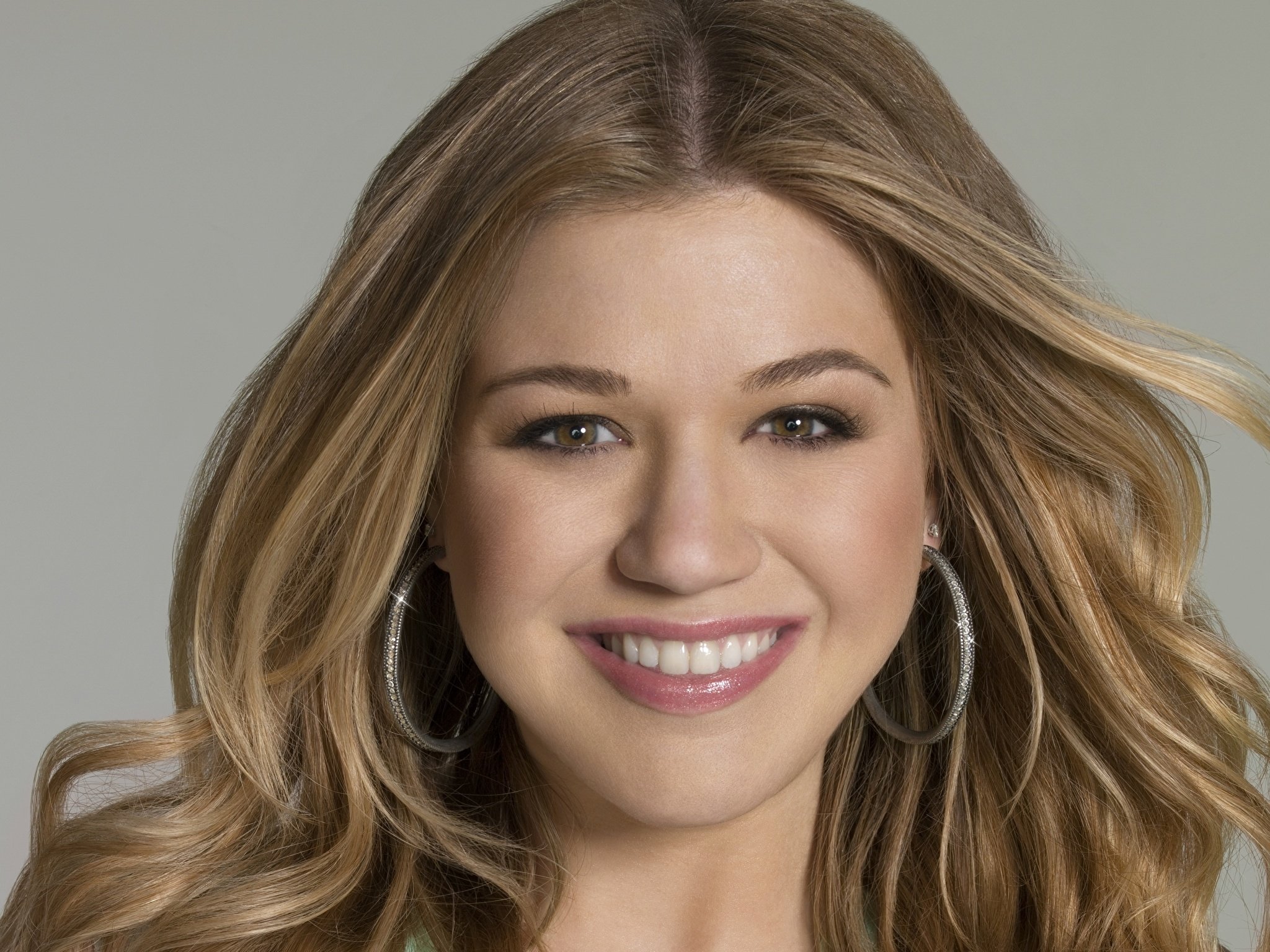
If you see Kelly Clarkson today, you see a polished daytime TV queen with a shelf full of Emmys and a voice that seems to defy physics. But honestly? The version of young Kelly Clarkson that most of us remember from 2002 was basically just a kid from Burleson, Texas, who was one bad day away from total obscurity. She didn't have a stylist. She didn't have a plan. She was just broke.
Most people think her story started with a golden ticket. It didn't.
The Burleson Years and the Shark Phobia
Kelly Brianne Clarkson grew up in a world that was anything but glamorous. Her parents divorced when she was just six, a split that fractured the family so deeply that her siblings went to live with different relatives. Kelly stayed with her mom, Jeanne Ann, an elementary school teacher. They didn't have much.
She wasn't some child prodigy being groomed for the stage, either. In fact, she wanted to be a marine biologist. That dream died a quick death after she watched Jaws. It scared her so bad she decided the ocean was a no-go zone.
Music happened by accident. A choir teacher at Pauline Hughes Middle School, Cynthia Glenn, overheard her singing in the hallway and basically forced her to audition. Kelly had never had a single lesson. She just had this massive, raw voice that she’d been using to mimic the gospel singers at the local Black church her family visited.
By high school, she was the star of every musical, from Annie Get Your Gun to Seven Brides for Seven Brothers. But even with full-ride scholarships to the University of North Texas and Berklee College of Music on the table, she said no.
"I’d already written so much music and wanted to try on my own," she later explained. She figured college would always be there, but her voice might not be.
The Los Angeles Disaster
In 2001, she packed up her life and moved to L.A. It was a total bust.
She worked as a cocktail waitress. She was an extra on Sabrina, the Teenage Witch. She even did a stint at a comedy club. She was trying to get a record deal, but labels told her she sounded "too black" or they tried to pigeonhole her as a bubblegum pop act. She turned down contracts from Jive and Interscope because she knew they’d strip away her identity.
Then, everything literally went up in smoke.
Her apartment caught fire. She lost everything she owned. For three days, the future "Miss Independent" was sleeping in her car, completely destitute.
She gave up. She drove back to Texas, humbled and broke, taking jobs as a Red Bull promoter and a telemarketer just to keep the lights on. That’s when a friend told her about a new show called American Idol.
Why Young Kelly Clarkson Didn't Know She Was on TV
This is the part everyone forgets: nobody knew what American Idol was.
When Kelly showed up for that first audition in 2002, she wasn't looking for fame. She was looking for a way to pay her electric bill. She was so broke she actually stitched her own top out of an old pair of jeans just to have something to wear.
"I didn't even know it was a TV show until the third audition," she told Jimmy Fallon years later. To her, it was just another weird L.A. cattle call that might result in a backup singing gig.
When she finally stood in front of Simon Cowell, Paula Abdul, and Randy Jackson, she was 20 years old and delightfully unimpressed. She even made Randy switch places with her so she could "judge" him. That kind of authenticity is rare now, but back then, it was revolutionary. Simon later wrote in his book that she didn't even stand out at first. She was just "a girl with a good voice."
Then she sang "Respect."
The rest of the season was a masterclass in vocal dominance. While other contestants were nervous, Kelly looked like she was having the time of her life. She was the dark horse who became the frontrunner by sheer force of personality.
The Post-Idol Reality Check
Winning wasn't the "happily ever after" the cameras made it out to be.
The industry was actually pretty cruel to her at first. Because she came from a reality show, "serious" artists looked down on her. Some of the people who are now her peers—even people she’s coached alongside on The Voice—were apparently "really mean" about her win back in the day.
She was also forced into a contract that required her to star in From Justin to Kelly, a movie she famously hated. She spent her early twenties fighting her management just to be allowed to write her own songs. When she finally got her way with the Breakaway album in 2004, she didn't just succeed; she exploded.
What young Kelly Clarkson teaches us is pretty simple: 1. Rejection is usually just redirection. If those early L.A. labels had signed her, we never would have gotten the rock-pop powerhouse we know now. 2. Authenticity scales. She won because she didn't care about the cameras; she cared about the music and her bills. 3. The "easy way" is a myth. Even after winning the biggest show in the world, she had to fight for years to be taken seriously as an artist.
If you’re trying to build something today, take a page out of the 2002 playbook. Don't worry about being "polished" for the algorithm. Be the person who sews their own outfit and swaps seats with the judge.
To really understand her journey, go back and watch her perform "A Moment Like This" on the finale night. You can see the exact second she realizes her life is never going to be the same. It wasn't about the fame—it was about the fact that she’d never have to sleep in her car again.
How to Apply the Kelly Mindset
- Audit your "No" pile. Look at the opportunities you turned down because they didn't feel right. Kelly turned down two major labels before Idol. Trust your gut even when you're broke.
- Focus on the skill, not the platform. Kelly just wanted to sing. Whether it was a comedy club or a stadium, the work was the same.
- Keep it human. The reason she's still relevant 20+ years later isn't just the high notes; it's the fact that she still talks to her audience like she's sitting on a porch in Burleson.
The best way to honor that legacy is to stop waiting for a "golden ticket" and start doing the work where you are, jeans-top and all.



