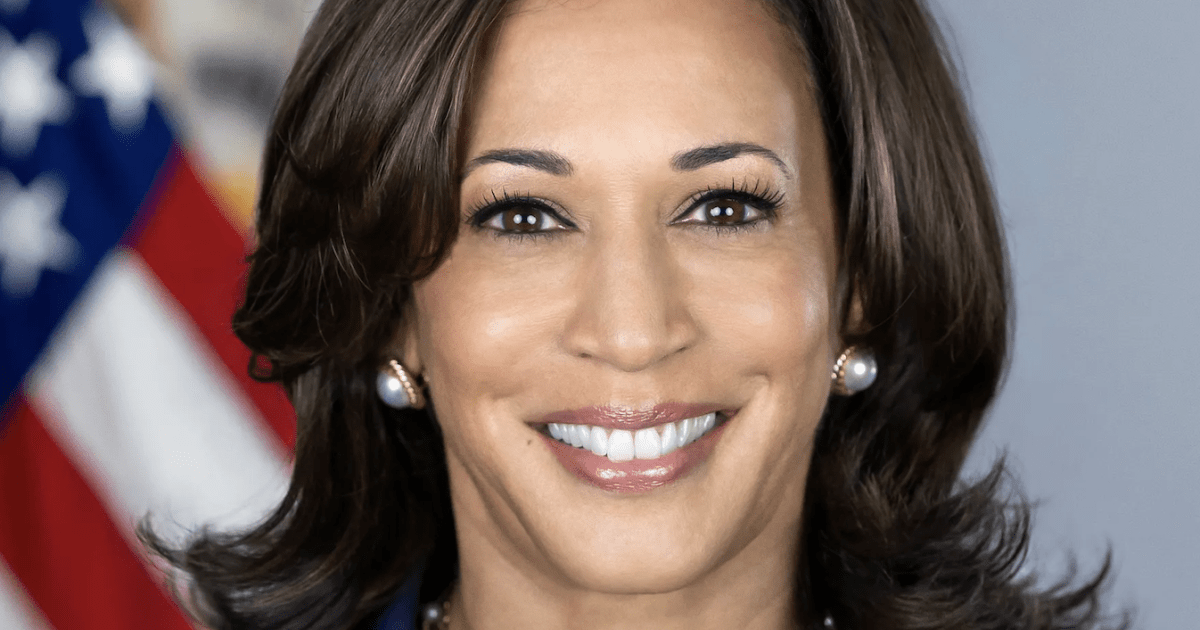
You've likely seen them. Those grainy, sun-drenched snapshots of a young woman in a Howard University sweatshirt or a sharp 90s blazer. Every time a major political shift happens, young Kamala Harris pics start flooding the timeline again. It’s not just about the "face card," as some fans call it on social media. People are genuinely obsessed with the visual timeline of her life because it feels like a bridge between the 1960s civil rights era and the high-stakes politics of 2026.
Honestly, the photos tell a story that the official press releases often miss. You see the transition from a toddler in Oakland to a student in Montreal, then a sorority sister at "The Mecca," and finally a rookie prosecutor in the Bay Area.
The Childhood Archive: Oakland and Berkeley
Most of the earliest photos we see of Kamala Harris aren't your typical Sears portrait studio shots. They’re candid. There’s a particularly famous one of her as a toddler, sitting in a stroller or being held by her mother, Dr. Shyamala Gopalan Harris.
If you look closely at these childhood photos, you’ll notice the setting is almost always "movement-adjacent." Kamala often mentions her "stroller-eye view" of the civil rights movement. Her parents met at UC Berkeley during the height of the 1960s protests. The photos from this era show a kid growing up in the Rainbow Sign culture—a Black cultural center in Berkeley where she saw legends like Nina Simone and Maya Angelou.
One rare shot shows a young Kamala in her mother’s lab. She’s surrounded by pipettes and beakers. Her first "job" was actually cleaning those pipettes, though she later joked that she was so bad at it her mom fired her. It’s a glimpse into the disciplined, scientific household that shaped her.
The Montreal Years: A Major Pivot
By the time she was twelve, the scenery changed. Her mother took a research job at McGill University, and Kamala moved to Montreal.
The photos from Westmount High School are a trip. There she is, looking like a quintessential late-70s/early-80s teenager. She’s often pictured with her best friend, Wanda Kagan. In one yearbook photo from 1981, she's standing with a group of diverse graduates. You can see her navigating that "between" space—the daughter of a Jamaican father and an Indian mother, attending a school where she reportedly said she felt like a "duck" because she was constantly asking "Quoi?" (What?) to keep up with the French.
Why the Howard University Photos Matter Most
If there is one set of images that defines her "origin story," it’s the Howard University collection. This is where the aesthetic of the "Bison" comes in.
- The Pink and Green: You’ve probably seen the shots of her with her line sisters in Alpha Kappa Alpha (AKA). She was part of the "38 Jewels of Iridescent Splendor" (38 J.O.I.S.) in 1986.
- The Campaign Trail: There’s a photo of her running for the Liberal Arts Student Council. She called it her "toughest political race."
- The Yard: Candid shots of her on the Howard "Yard" show her in the mid-80s style—big hair, bold confidence, and that specific Howard energy.
For many, these photos aren't just nostalgia; they are proof of her "identity receipts." In a political world that often questions her roots, these snapshots of her at an HBCU (Historically Black College or University) act as a visual anchor. They show a young woman who chose a specific path long before she was in the national spotlight.
The 90s Prosecutor: A Different Vibe
Transitioning into the 1990s, the photos change. The casual Howard gear is replaced by the "power suits" of the Alameda County District Attorney’s office.
There’s one photo from March 1997 that keeps resurfacing. She’s a deputy DA, standing in the Alameda County Superior Court. She looks intense. It’s the "law and order" chapter of her life. You see her with the blocky, beige computers of the era in the background, reading through case files.
People love this era because it shows the grind. Before she was a Senator or the Vice President, she was a courtroom prosecutor dealing with child sexual assault cases and homicides. The photos capture that transition from a student activist to someone working "inside the system," a point she’s debated heavily throughout her career.
The Montel Williams Photo
We have to talk about it because the internet won't let it go. In 2001, Kamala attended a benefit with talk show host Montel Williams.
The photo shows them on the red carpet at the "Race to Erase MS" event. It goes viral every few months when critics try to use her dating history as a "gotcha." Montel himself eventually stepped in to defend her, basically saying, "Yeah, we dated for a second, so what?" It’s a rare moment where her private life and public image collided in a way that remains a magnet for clicks.
How to Spot "Real" vs. AI-Generated Photos
It’s 2026, and AI is everywhere. Because young Kamala Harris pics are such high-traffic search terms, fake "retro" photos have started appearing.
How can you tell the difference? Look at the hands and the background text. Real archival photos from the 70s and 80s have a specific film grain and often feature identifiable people like her sister, Maya Harris. If the lighting looks too "perfect" or her features look like a plastic doll, it’s probably a deepfake. Stick to verified sources like Getty Images, the Library of Congress, or her own memoir, The Truths We Hold.
Practical Tips for Finding High-Quality Archives
If you're looking for these images for a project or just out of curiosity, don't just trust a random Pinterest board.
- Check University Archives: Howard University’s Moorland-Spingarn Research Center is a goldmine for authentic campus history.
- The Mercury News / SF Chronicle: Since she spent her early career in the Bay Area, these newspapers have the deepest local archives of her as a DA.
- Official Social Media: Kamala’s own Instagram "Throwback Thursday" posts are the most reliable source for childhood family photos that weren't previously in the public domain.
There is a weirdly humanizing quality to seeing a person who currently holds immense power as a messy-haired kid in a yellow duplex on Bancroft Way. It reminds us that every political figure has a "before" story that was just as complicated and uncertain as anyone else's.
If you're diving into the history of American leaders, checking out the Library of Congress Digital Collections is your best bet for high-resolution, watermark-free historical images. You can search by "Kamala Harris" and filter by date to see the evolution from her early California days to the present. For those interested in her specific legal career, searching the California Department of Justice archives provides a more professional, though less "viral," look at her rise through the ranks.