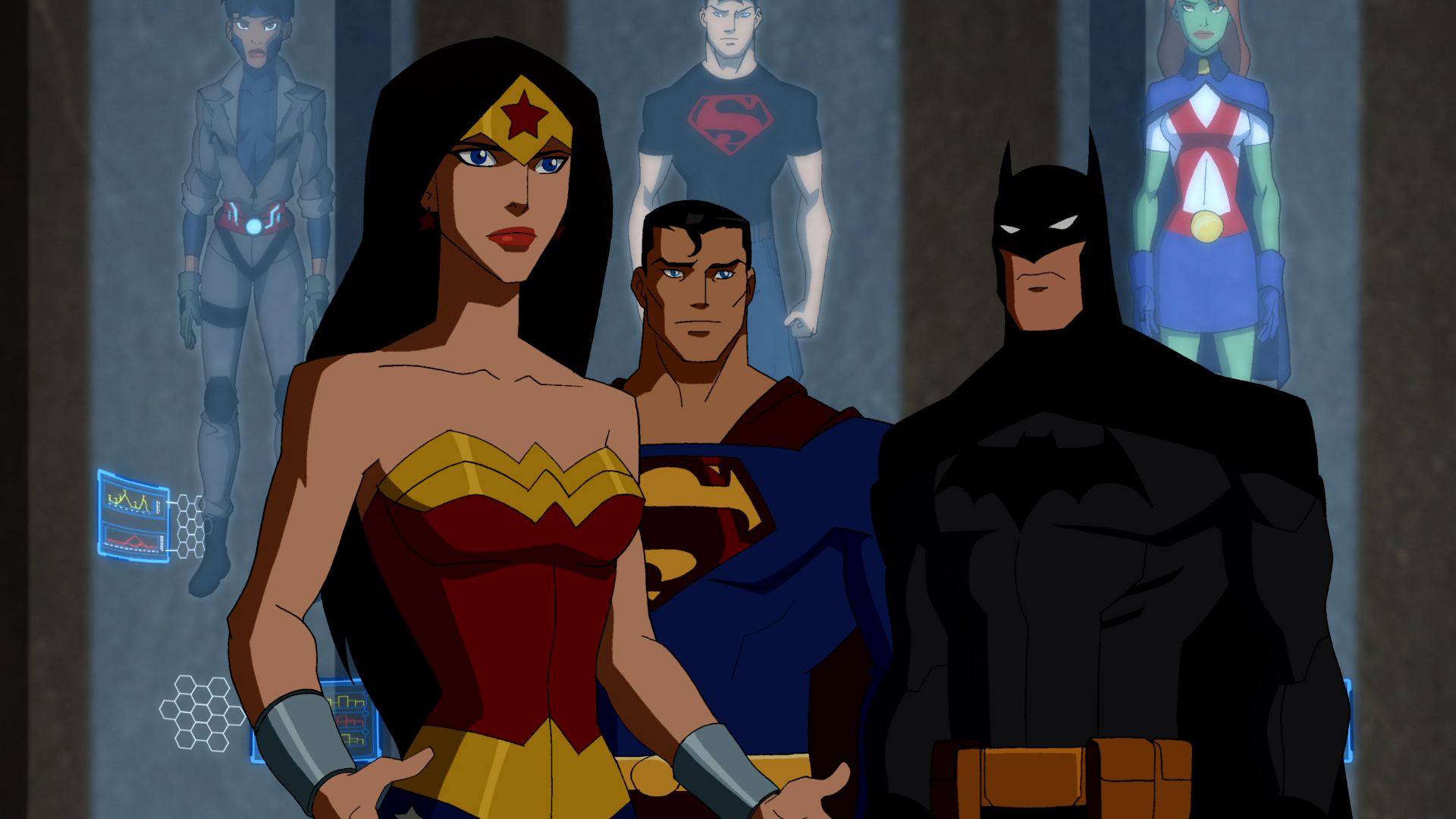
Honestly, if you grew up watching the DCAU or reading the New 52 comics, the Young Justice Wonder Woman might have felt a bit... different. Maybe even a little frustrating at first glance. She isn't the star. She doesn't get the sprawling origin stories or the solo arcs that Batman and Superman hog throughout the seasons. But if you're looking for the most politically savvy, emotionally grounded version of Diana Prince ever put to screen, this is it.
She’s a powerhouse. Obviously. But her role in the Young Justice universe (Earth-16) is defined more by her seat at the diplomatic table than her lasso. While the show focuses on the sidekicks—or "The Team"—Wonder Woman serves as the moral compass of the Justice League, often being the only one willing to call out Batman on his questionable parenting.
The Diana We Never Knew We Needed
In the world of Earth-16, Diana isn't just a warrior from Themyscira; she’s a seasoned diplomat who understands the weight of a legacy. Most fans forget that she was one of the founding members of the Justice League back in 2003 (in-universe time). She didn't just show up to hit things. She was there to build a bridge between the mystical world of the Amazons and the gritty, often cynical world of man.
What makes the Young Justice Wonder Woman stand out is her voice. Literally. Voiced by Maggie Q in the earlier seasons, there's a certain elegance and "done-with-this" energy she brings to the League's briefings. She isn't the "naive fish out of water" trope we see in some origin movies. This Diana is a stateswoman. She understands optics. She understands the League's Charter.
The Debate That Defined Her
Remember that scene in Season 1, "Agendas"? It's the one everyone quotes. The League is debating who should join their ranks, and the conversation shifts to the proteges. Wonder Woman is the one who puts Batman on blast. She points out that Robin (Dick Grayson) was "trained by the Batman to be the Batman" at the age of nine.
It’s a brutal moment.
She sees the danger of weaponizing children, even if it's for the "greater good." This version of Wonder Woman doesn't just blindly follow the Trinity's lead. She challenges the ethics of their entire operation. It shows a level of emotional intelligence that often gets sidelined in favor of her combat prowess in other media.
Power Levels and Combat: More Than Just the Lasso
Let's talk about the actual fighting. In Young Justice, power scaling is actually somewhat consistent, which is rare for superhero cartoons. Diana is Tier 1. When the Justice League goes up against the Reach or the Light, she’s usually on the front lines taking the hits that would vaporize anyone else.
She carries the classic gear:
- The Lasso of Truth (used sparingly but effectively).
- Bracelets of Submission (which can deflect Omega Beams and high-level energy blasts).
- A Shield and Sword (which she leans into more during the later "Outsiders" and "Phantoms" seasons).
Unlike the Justice League unlimited version, she feels less like a brawler and more like a tactical commander. When she fights, every move is deliberate. It’s the Amazonian way. She isn't just swinging wild; she's looking for the leverage.
Relationships and the Wonder Girl Factor
You can't talk about Young Justice Wonder Woman without talking about Donna Troy and Cassie Sandsmark. This show did something the comics often struggle with: it made the "Wonder Family" feel functional yet complicated.
In Season 2 (Invasion), we see Cassie (Wonder Girl) struggling to live up to Diana's shadow. Diana isn't a helicopter parent, but she is demanding. She expects excellence because she knows the world they inhabit doesn't give second chances. There’s a subtle mentorship there that feels earned. She treats Cassie like a soldier in training, which is a stark contrast to how Superman initially handled (or failed to handle) Superboy.
The Subtle Politics of Earth-16
One of the coolest details about this version of Diana is her role in the UN. While Superman is the face and Batman is the shadow, Diana is the negotiator. During the seasons where the Justice League is under fire for "crimes against the galaxy" (thanks to the mind-control incident at the end of Season 1), Diana is the one helping navigate the legal fallout.
It’s not "cool" in the way a laser fight is cool. But it’s realistic.
It adds a layer of E-E-A-T (Experience, Expertise, Authoritativeness, and Trustworthiness) to her character. She isn't just a superhero; she's a world leader. When she speaks to G. Gordon Godfrey or the UN Secretary-General, she does so with the authority of a queen-in-waiting. She knows the laws of men are flawed, but she respects them enough to work within them. That's a level of nuance you just don't get in a 90-minute popcorn flick.
Why She Left the League (Briefly)
In Young Justice: Outsiders, we see a massive shift. Diana, along with Batman and several others, "quits" the League in a public display of defiance against UN regulations. This was a calculated move. A ruse.
Seeing Wonder Woman engage in "black ops" style deception was a trip. It showed that she’s willing to get her hands dirty and play the long game if it means saving the planet from the Reach or Apokolips. She isn't a "goody-two-shoes." She's a strategist.
Addressing the Common Misconceptions
People often complain that Wonder Woman doesn't get enough screen time in Young Justice. That’s fair. It’s a show about the sidekicks, after all. However, "less screen time" shouldn't be confused with "less importance."
- "She's too cold" – Actually, she's professional. In a world where aliens invade every Tuesday, she doesn't have time for fluff.
- "She's weaker than Superman" – In this universe, the gap is much smaller. She’s arguably a better fighter, even if his raw strength is higher.
- "Her origin is ignored" – It isn't ignored; it's assumed. The show treats the audience like they already know the basics so it can focus on the new stuff.
Honestly, the way the show handles her immortality is pretty interesting too. She doesn't age between the five-year time jumps. While we see Black Canary and Green Arrow settle into older roles, Diana remains the eternal sentinel. It adds a bit of loneliness to her character that the show hints at but never beats you over the head with.
Actionable Insights for Fans and Collectors
If you're looking to dive deeper into this specific version of Diana, don't just stick to the show. The tie-in comics (specifically the Young Justice series written by Greg Weisman) fill in a lot of the gaps regarding her early days with the League.
- Watch Season 1, Episode 16 ("Agendas"): This is the definitive "Wonder Woman as a leader" episode.
- Track the "Wonder Family" Evolution: Contrast her treatment of Donna Troy (implied history) with her direct mentorship of Cassie.
- Look for the Details: Notice her combat stance. It changes when she switches from her lasso to her sword, reflecting actual hoplite warfare techniques.
If you're a collector, the Young Justice line of figures from Mattel (though now out of print) featured a decent Diana, but the Greg Weisman-penned scripts are where the real "meat" of the character lives.
Young Justice Wonder Woman proves that you don't need to be the protagonist to be the most compelling person in the room. She’s the glue holding the League's ethics together. Without her, Batman and Superman would probably have turned the world into a police state "for our own good" years ago. She keeps them human. She keeps them honest. And she does it all while looking like she could punch a hole through a mountain.
What should you do now? Go back and re-watch the League meetings in Season 1 and Season 3. Ignore the main plot for a second and just watch Diana’s face. The animators put a lot of work into her expressions of doubt and resolve. It tells a story that the dialogue doesn't always have time to say. Look for the way she interacts with the female members of the Team; she’s building a legacy that goes far beyond the Justice League. That’s the real Diana Prince.
Step one: check out the Young Justice: Phantoms arc involving the New Gods. Diana's presence there, while brief, sets the tone for the entire cosmic conflict. Step two: stop comparing her to the Justice League Unlimited version. They’re different beasts, and this one is far more sophisticated.



